
 +90 533 888 29 50



Where Is Iskele and Why This Coastal Town Is Gaining Attention
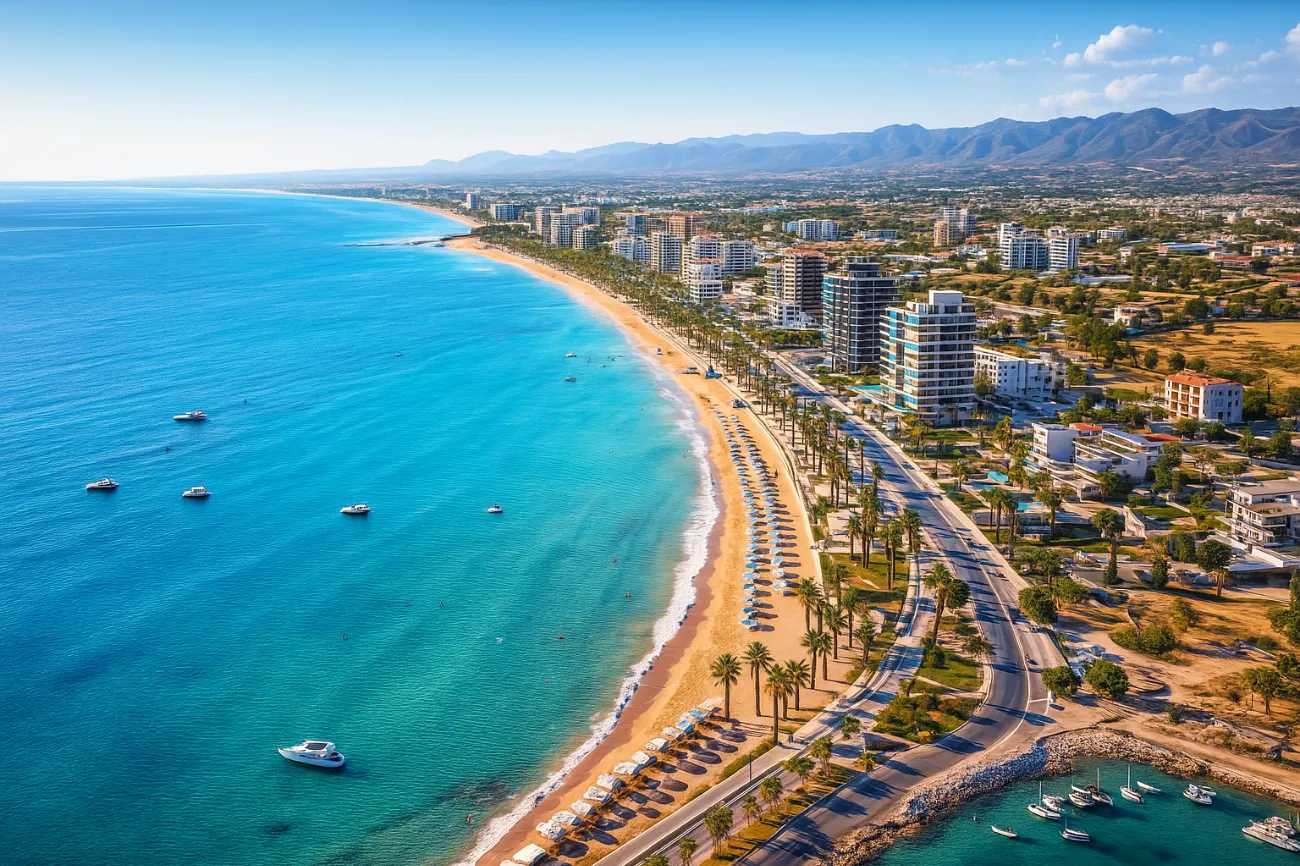
Iskele (Turk. Yeni İskele, historically Trikomo) is a seaside municipality on the eastern coast of Northern Cyprus, administratively linked to the Gazimağusa (Famagusta) region. Stretching along the iconic shoreline of Long Beach, the town serves as the “gateway” to the Karpaz Peninsula, known for its wild beaches, untouched nature, and secluded bays where sea turtles nest.
Key fact: Iskele lies 12–15 km north of Famagusta and 45–50 minutes from Ercan Airport (ECN).
Coordinates of the town center: 35.29 N, 33.89 E.
Geographical Context and Nearby Urban Centers
- Famagusta (Gazimağusa): 12–15 km, 20–25 minutes by car
- Nicosia (Lefkoşa): 65–70 km, 60–75 minutes
- Girne (Kyrenia): 80–90 km, 75–90 minutes
- Golden Beach, Karpaz: 60–70 km, 70–90 minutes
- Larnaca (via border crossing): 90–110 km, 1.5–2 hours depending on queues
Essential point: Iskele sits on the eastern coastline, known for its gently sloping sandy beaches and long seaside promenade; the heart of the resort area is the Long Beach strip.
Accessibility and Transportation
- Primary access is via Ercan International Airport (ECN). Operational updates are available on the TRNC Department of Civil Aviation.
- Local travel options include taxis, private transfers, and dolmuş (shared minibuses) through Famagusta. Car rental is widespread, and driving is on the left.
- Tourism and public information can be found on the TRNC Ministry of Tourism portal.
Important: Driving is on the left, rental cars carry red license plates, and traffic regulations are strictly enforced.
Travel Times and Typical Costs
| Route | Travel Time | Transport | Approx. Cost | Notes |
|---|---|---|---|---|
| ECN Airport → Iskele | 45–50 min | Taxi/transfer | €40–55 | Fixed-price arrangements, no toll roads |
| ECN → Famagusta → Iskele | 60–80 min | Dolmuş | €5–8 | Requires a change at Famagusta bus station |
| Nicosia → Iskele | 60–75 min | Taxi/car rental | €45–70 / €25–45 per day (rental) | Rental prices vary by season |
| Famagusta → Iskele | 20–25 min | Dolmuş/taxi | €2–3 / €15–20 | Frequent daytime service |
Note: Prices shown in euros are approximate; local payments are generally made in Turkish lira. Bank cards are widely accepted.
Urban Layout and Main Districts
- Long Beach: the modern coastal zone with promenades, bike paths, cafés, family-friendly beaches, and numerous residential developments along the first line.
- Yeni İskele town center: municipal services, banks, supermarkets, pharmacies, schools; compact housing and a calm, local atmosphere.
- Boğaz: a charming fishing harbour southeast of the center, lined with seafood restaurants and waterfront promenades.
In essence: Iskele offers a balance between beachside living and everyday convenience — Long Beach for leisure, the town center for daily errands, and Boğaz for seaside dining.
Why Iskele Is Attracting Attention
- Beaches and ecology: long, shallow, sandy beaches with natural dunes; sea turtle nesting areas lie just up the coast on the Karpaz Peninsula.
- Growing infrastructure: the promenade, children’s areas, cafés, and shops operate year-round.
- Cost of living and housing: prices are lower than in Kyrenia or central Nicosia; car rentals from €25–45/day, lunch in a café from €8–12.
- Investment rationale: new beachfront developments, demand for short-term and seasonal rentals, and a growing international community.
- Logistics: an international airport within an hour, toll-free roads, and easy access to Famagusta and major university clusters.
For residents and visitors: entry requirements and stay regulations follow local TRNC rules; updates are available through the official tourism portal.
Administrative and Practical Notes
- Local currency: Turkish lira; euros and dollars are commonly accepted in resort areas.
- Car insurance for crossing the UN buffer zone (if arriving via South Cyprus) is issued at the checkpoint.
- Seasonality: peak period runs from May to October; the off-season is quieter, but services remain operational.
Summary: Iskele is a coastal town on the eastern shore of Northern Cyprus with convenient access from ECN Airport, expanding infrastructure, and strong appeal both for beachside living and long-term investment.
A Brief History of Iskele
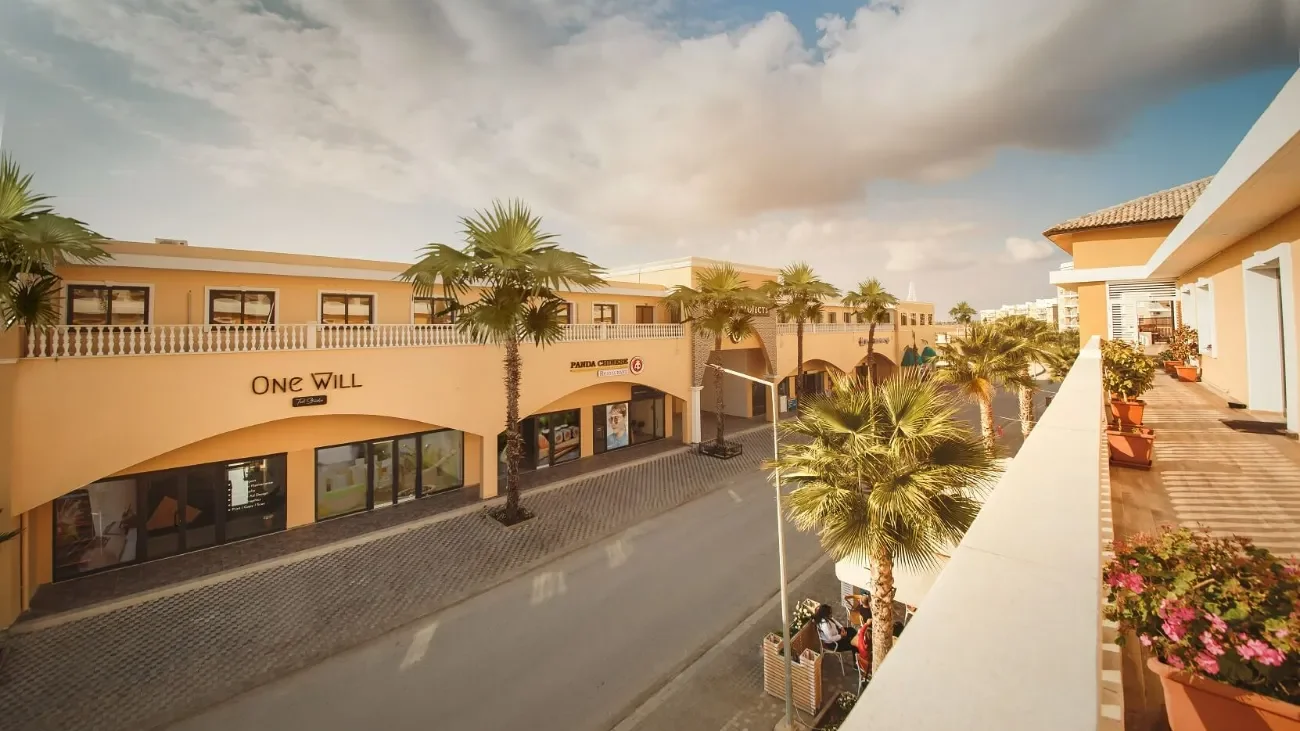
Iskele (historically Trikomo, Turk. Yeni İskele) emerged at a crossroads of the coastal routes of eastern Cyprus—positioned between ancient Salamis and the passes of the Beşparmak Mountains. Its story is one of continuous cultural layering: Hellenistic settlements, Byzantine churches, Latin feudal estates, Ottoman timar lands, British colonial administration, and, finally, the modern seaside municipality of the TRNC.
Key fact: The modern name Yeni İskele came into use after 1974, when Turkish Cypriots from the İskele (Skala) quarter of Larnaca resettled here. The former village of Trikomo was officially renamed, and the municipality was incorporated into the Famagusta district. Historical and administrative overviews can be found on the portals of the TRNC Ministry of Foreign Affairs and the TRNC Ministry of the Interior.
Antiquity and the Byzantine Middle Ages: From Salamis to Rural Clerical Lands
Proximity to the ancient port of Salamis shaped the early development of Trikomo as an agricultural extension of the urban market—producing grapes, olive oil, and preserved foods. After the earthquakes that devastated Salamis and the decline of the city, part of the population migrated inland to more stable rural settlements. During the Byzantine period, ecclesiastical estates and parish communities took shape, traces of which are still visible in the region’s surviving church architecture.
- The most prominent remnant of the era is the Church of Panagia Theotokos (12th–13th c.) in the center of Iskele, now functioning as the Icon Museum.
- Admission to small municipal museums and chapels is typically €1–3; guided tours (1–1.5 hours) run from €20–35 per group.
Noteworthy: The Byzantine legacy in Iskele survives primarily in its sacred sites and the stone carving integrated seamlessly into the modern urban fabric.
The Lusignan and Venetian Periods (1192–1571): A Latin Feudal Landscape
After the Crusaders seized Cyprus and the Lusignan dynasty took power, the area around Trikomo was incorporated into a system of feudal estates and tithes. The Venetians maintained much of this structure: caravan routes fanned out from the coastline, channeling grain and wine toward the warehouses of Famagusta.
- Place names and land divisions around today’s Boğaz reflect an agricultural specialization overseen by the coastal authorities of the time.
- Private collections and local exhibitions in the Famagusta region often include artifacts from this period; typical ticket prices range from €2–5.
Ottoman Rule (1571–1878): Timars, Migration, and Rural Crafts
Under Ottoman administration, the timar landholding system was introduced, encouraging the settlement of Anatolian families. A Turkish-speaking rural community gradually emerged, with coffeehouses, workshops, and caravanserais appearing along the local road network. Routes oriented themselves toward Famagusta and the mountain passes leading to the northern shore.
- Elements of traditional village planning and artisanal practices (pottery, weaving) have survived into the present day.
- Seasonal fairs and agricultural markets trace their origins to Ottoman-era trading customs.
British Administration (1878–1960): Roads, Schools, and Postal Services
The British standardized governance, upgraded dirt roads, and opened schools and post offices. Trikomo strengthened its role as a “satellite” settlement of Famagusta while maintaining its agricultural identity.
- The road to Boğaz and the stretch that now forms the Long Beach area follow the logic of earlier colonial transport routes.
- Archival references to parish schools and warehouse yards confirm the settlement’s gradual expansion.
From Trikomo to Yeni İskele: Renaming and Municipal Status
The year 1974 marked a turning point. Following the island’s political events and population exchanges, Turkish Cypriots from the İskele (Skala) quarter of Larnaca relocated to Trikomo. The settlement was renamed Yeni İskele—“New Harbour”—a tribute to the maritime heritage of the incoming community.
Historical-administrative timeline:
1974 — resettlement and renaming
1983 — proclamation of the TRNC
Iskele becomes an official municipality within the Famagusta district.
For cultural descriptions and regional routes, see the TRNC Ministry of Tourism.
A Concise Timeline (at a glance)
| Period | Key Developments | Visible Legacy in Iskele Today |
|---|---|---|
| Antiquity – Byzantine era | Salamis agricultural belt; parish networks | Foundations of the icon complex; outlines of rural land plots |
| Lusignan – Venetian era | Feudal estates; wine and grain exports | Coastal toponyms; agricultural specialization of the shoreline |
| Ottoman period | Timar system; migration; crafts | Village layouts; artisanal traditions |
| British rule | Infrastructure, schooling, postal services | Road alignments; administrative practices |
| 1974–present | Resettlement from Larnaca, renaming, resort growth | Icon Museum; Long Beach; modern municipal landscape |
Cultural Sites and Approximate Visitor Costs
- Icon Museum (Church of Panagia Theotokos, 12th–13th c.) — admission approx. €1–3.
- Guided tour “Iskele – Boğaz – Long Beach – Byzantine Heritage” (3–4 hours) — €35–60 for a small group.
- Full-day trip to the ruins of Salamis and old Famagusta — €45–80 per person with a guide; DIY taxi trip €40–55 each way.
Note: Prices vary by season and group size. Payments are often accepted in euros, though the base currency is the Turkish lira.
Conclusion
The history of Iskele is, above all, the story of continuous coastal life. From the rural estates surrounding ancient Salamis to today’s sea-facing promenade along Long Beach, the town has adapted to shifting political contexts while preserving its essence—its connection to the sea and its role as the eastern gateway to the Karpaz Peninsula.
How to Get to Iskele — Transport Options and Routes
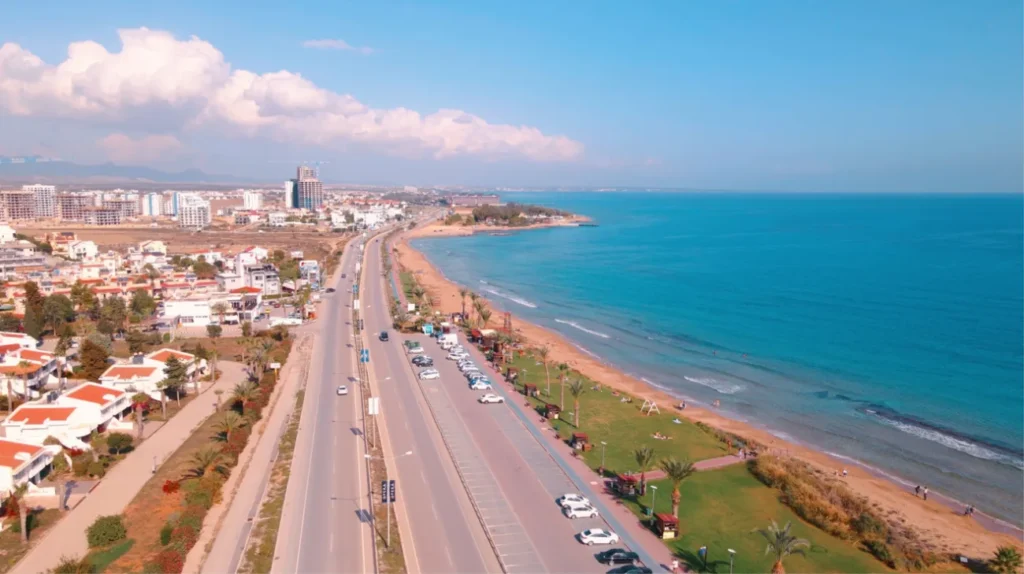
Key point: The quickest and most convenient way to reach Iskele is via Ercan Airport (ECN), followed by a 45–55 minute taxi or private transfer. Alternatives include flying into Larnaca or Paphos with a border crossing, or arriving by ferry from Turkey to the ports of Famagusta or Kyrenia.
Main Points of Entry
- Air travel: Ercan Airport (ECN) serves as the primary “domestic gateway” of the TRNC. Operational updates are available through the TRNC Department of Civil Aviation.
- Border crossings with the Republic of Cyprus: Vehicle and pedestrian checkpoints include Metehan/Ayios Dometios, Lokmaci, and Ayios Nikolaos (near Famagusta). Important guidance on crossing procedures is provided on the TRNC Ministry of Foreign Affairs.
- Tourist transport information: route maps and public guidance can be found on the TRNC Ministry of Tourism.
Important: Driving is on the left; an international driving licence is required. If crossing by car, TRNC insurance must be purchased at the checkpoint.
From Ercan Airport (ECN) to Iskele
- Taxi/private transfer: 45–55 minutes; approximately €40–55 per car during the day. Night rates usually add 10–20%.
- Car rental at the airport: €25–45 per day, depending on season and provider (a deposit is typically required).
- Route: ECN → Nicosia bypass → Famagusta (Gazimağusa) → Iskele (Yeni İskele). Roads are toll-free and generally in very good condition.
Note: The standard travel time from ECN to Iskele is around 50 minutes, not including traffic.
Via the Republic of Cyprus (Larnaca/Paphos) — Border Crossings and Routes
- From Larnaca (LCA) → Ayios Nikolaos checkpoint (towards Famagusta) or Metehan checkpoint (towards Nicosia) → Iskele.
- By taxi: Larnaca → checkpoint €35–60; onward taxi to Iskele €35–55. Total cost typically €70–110.
- By rental car: Allowed provided the rental agreement does not forbid crossing to the North. TRNC car insurance must be purchased at the checkpoint (from €25 for 3 days for a standard car).
Reminder: TRNC insurance is issued at the checkpoint. Some “southern” rental companies restrict or prohibit crossing into the North—check the contract before booking.
By Sea: Ferries from Turkey (Famagusta/Kyrenia)
- Arrival ports: Famagusta (Gazimağusa) and Kyrenia (Girne).
- ** onward travel:** Taxi from Famagusta to Iskele costs €15–25 (20–25 minutes); from Kyrenia €45–65 (75–90 minutes).
- Ferries operate daily during peak season; always confirm schedules and departure controls with the ferry operator.
Getting Around Locally: Dolmuş, Taxis, and Car Rental
- Dolmuş (shared minibuses): Iskele ↔ Famagusta every 20–40 minutes during daylight hours; €2–3 per ride.
- Taxis: Short local trips cost €5–10; intercity travel is usually fixed-price or negotiated in advance.
- Car rental: €25–45/day depending on season. Child seats €2–4/day, GPS €2–3/day. Fuel averages €1.2–1.4 per liter.
Safety note: Traffic rules are strictly enforced; speed cameras are common. Seatbelts are mandatory for all passengers.
Route Overview Table — Getting to Iskele
| Starting Point | Route | Travel Time | Transport | Approx. Cost |
|---|---|---|---|---|
| Ercan (ECN) | ECN → Famagusta → Iskele | 45–55 min | Taxi/transfer | €40–55 per car |
| Ercan (ECN) | ECN → Famagusta → Iskele | 60–80 min | Dolmuş (with change) | €5–8 per person |
| Larnaca (LCA) | LCA → checkpoint → Iskele | 1.5–2.5 hrs | Taxi + taxi | €70–110 total |
| Larnaca (LCA) | LCA → checkpoint → Iskele | 1.5–2.5 hrs | Rental car | €25–45/day + €25 TRNC insurance (min. 3 days) |
| Famagusta Port | Port → Iskele | 20–25 min | Taxi | €15–25 |
| Kyrenia (Girne) | Girne → Nicosia bypass → Iskele | 75–90 min | Taxi/rental car | €45–65 / €25–45 per day |
Practical Tips
- Allow an extra 20–30 minutes for border crossings during peak season or evening hours.
- Plan to pay for TRNC insurance in cash (euros or lira), even if card payments are accepted elsewhere.
- For late-night arrivals, booking a transfer in advance is strongly recommended to avoid delays.
Bottom line: For speed and convenience, fly to ECN and take a taxi or rental car. The most budget-friendly option is flying into Larnaca and crossing the border with a rental car plus TRNC insurance.
Iskele’s Climate — Seasonal Weather Overview
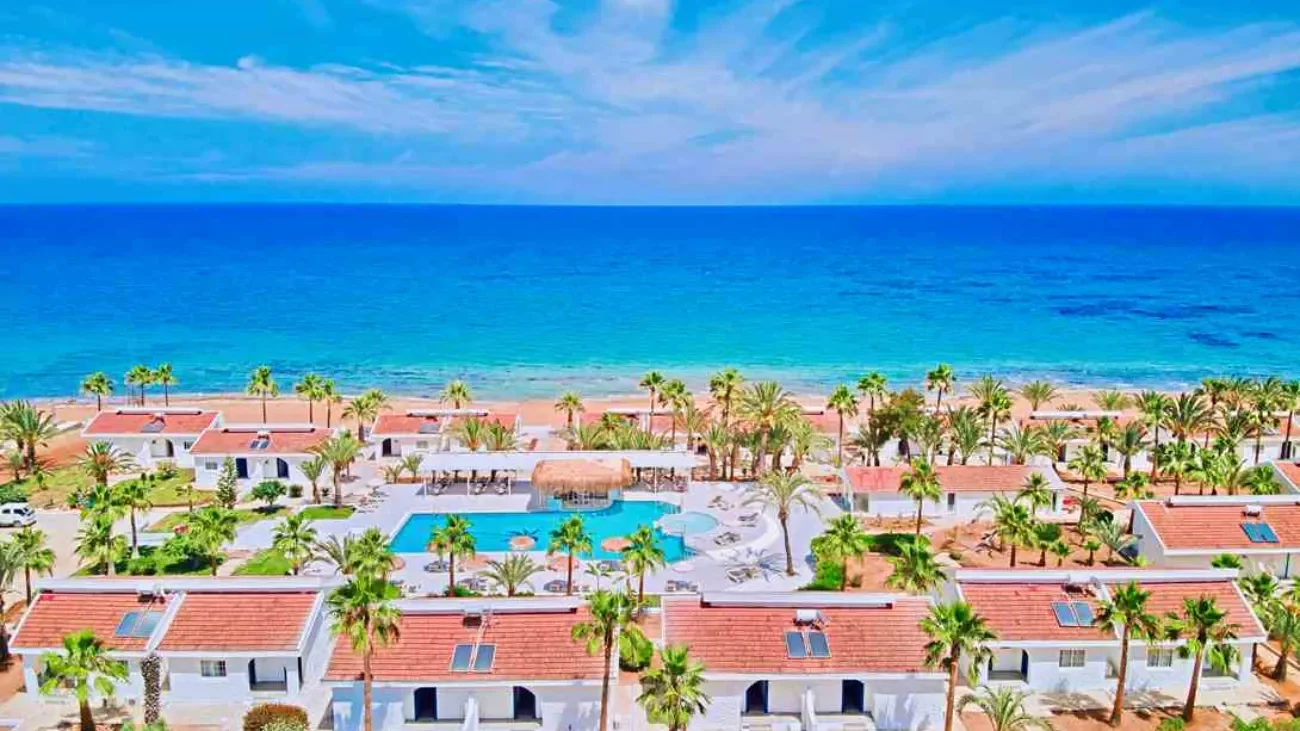
Iskele lies within the classic Eastern Mediterranean climate zone, characterized by mild winters, very warm and dry summers, and brief periods of rain from late autumn through winter. According to long-term coastal observations, the area enjoys an extended “resort season” that typically runs from late April until early November.
Key facts: Over 300 sunny days a year, hot and dry summers (daytime highs of 34–36°C), and mild winters (15–18°C during the day). The wettest months are December through February. Current forecasts and climate bulletins are published by the TRNC Department of Meteorology.
Monthly Climate Norms: Temperature and Rainfall
Approximate averages for the eastern coastline (Iskele/Famagusta region):
| Month | Day / Night Temperature | Rainfall (mm) |
|---|---|---|
| January | 16 / 8 | 75 |
| February | 17 / 8 | 55 |
| March | 19 / 9 | 35 |
| April | 22 / 12 | 20 |
| May | 27 / 16 | 10 |
| June | 31 / 20 | 5 |
| July | 34 / 22 | 1 |
| August | 34 / 23 | 1 |
| September | 31 / 20 | 5 |
| October | 27 / 16 | 20 |
| November | 22 / 12 | 45 |
| December | 18 / 9 | 80 |
Sea temperatures: The water warms to 21–23°C in May, peaks at 27–29°C in August, and generally remains above 20°C until early November. Seasonal tips for travelers are available from the TRNC Ministry of Tourism.
Seasonal Weather Patterns
- Spring (March–May). Stable dry weather sets in by late April. Daytime temperatures reach 22–28°C, with cooler nights early in the season. By late May the sea warms to 22–23°C. Ideal for walking the Long Beach promenade or exploring the Karpaz Peninsula.
- Summer (June–September). Hot and cloudless, with 31–36°C daytime temperatures. A steady sea breeze keeps conditions manageable, and humidity remains moderate. The most comfortable hours for outdoor activities are mornings and evenings. UV levels peak in July and August.
- Autumn (October–November). The “velvet season”: 22–28°C and warm seas. The first rains typically arrive in November—usually at night or as brief passing fronts.
- Winter (December–February). Short and mild. Daytime temperatures remain around 15–18°C, with cool nights. Most rainfall and occasional coastal storms occur between December and February. Sunny breaks between weather systems are common.
Note: In spring, occasional Saharan dust events may briefly reduce visibility and create a light haze for 1–2 days, after which the air clears quickly.
Climate & Travel: When It’s Most Convenient to Visit
- Shoulder seasons (April–May, October). Comfortable weather for property viewings and exploring neighborhoods. Taxi ECN → Iskele typically €40–55; car rentals €25–40/day. Dry roads, moderate queues at border checkpoints if arriving via Larnaca.
- High season (June–September). Hot weather and heavier resort traffic. Taxis ECN → Iskele €45–60, car rentals €35–55/day. Advance booking for transfers and cars is strongly recommended. Airport-related updates are issued by the TRNC Civil Aviation Department.
- Winter (November–March). Showers are short-lived, though coastal winds may increase. Car rentals are cheaper (€20–30/day). Evening dolmuş service is less frequent; allow extra time for transfers in Famagusta.
Seasonal Practical Tips
- Summer: Plan outings before 11:00 or after 17:00. Use sun protection and a hat. Air-conditioning is the main contributor to electricity bills; expect an additional €40–80 per month in July–August with moderate use.
- Spring/Autumn: A light windbreaker is useful near the sea; a thin sweater for cooler evenings. Perfect season for cycling along the Long Beach promenades.
- Winter: Short but occasionally intense downpours; non-slip footwear is recommended for walks on wet promenades. Heating is typically provided by reverse-cycle air-conditioning and is relatively economical.
Common Seasonal Costs
- Taxi ECN → Iskele: €40–60 depending on time of day and season
- Car rental: €20–55/day (lowest in winter, highest in July–August)
- Beach set (umbrella + 2 loungers) at Long Beach in summer: €6–12/day
- Surf/SUP rental on windy days: €15–25/hour
Bottom line: The best balance of weather and value is from late April to May and October. Summer offers “near-guaranteed sunshine,” but requires mindful scheduling and early reservations for transport and accommodation. Climate and tourism updates are available from the TRNC Department of Meteorology and the TRNC Ministry of Tourism.
Things to Do in Iskele — Beaches, Nature, Gastronomy
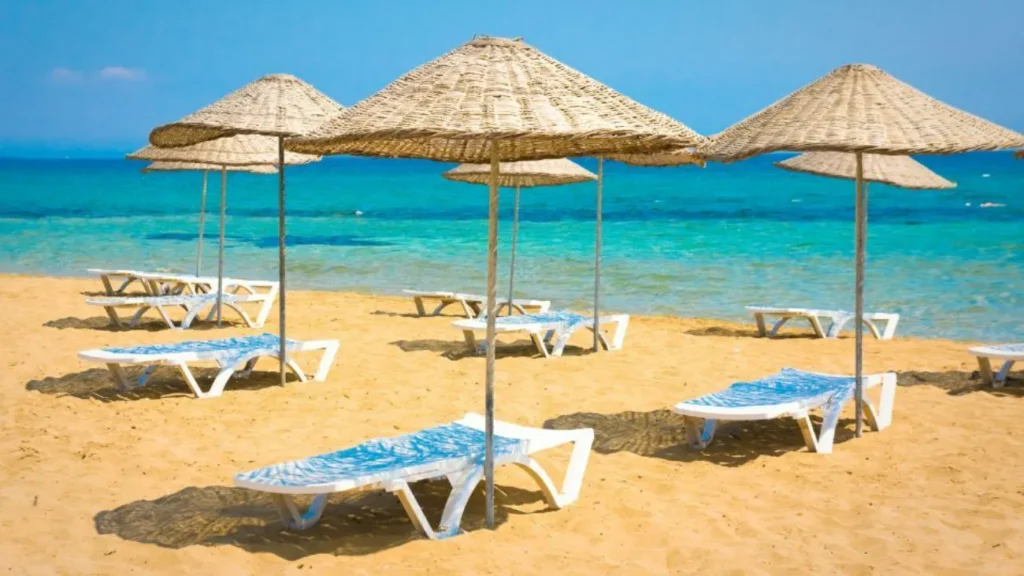
Iskele is a relaxed seaside resort on the eastern coast of Northern Cyprus, centered around the long, sandy sweep of Long Beach, leisurely waterfront walks, day trips to the Karpaz Peninsula, and atmospheric fish tavernas in Boğaz. It’s a place where you can effortlessly combine swimming, light outdoor activities, cultural excursions to ancient Salamis, and an introduction to Cypriot cuisine.
Good to know: The resort season runs from late April to early November, with over 300 sunny days a year. Weather calendars and forecasts are published by the TRNC Department of Meteorology.
Beaches in Iskele and Surrounding Areas
The main swimming area is Long Beach, which stretches into a chain of natural coves toward Boğaz and further on to the Karpaz Peninsula. The sand is fine, the entry into the water is gentle, and the seabed is safe for children.
| Location | Beach Type & Conditions | Infrastructure | Best For | Approx. Costs |
|---|---|---|---|---|
| Long Beach (Iskele) | Fine sand, shallow entry, breezy | Promenade, showers, shaded areas, cafés, rentals | Families, SUP/kayak, jogging/cycling | Lounger+umbrella €6–12/day; SUP/kayak €15–25/hr |
| Boğaz Public Beach | Sand/pea gravel | Waterfront, tavernas, parking | Quiet beach + lunch by the sea | Coffee €2–3; meal €10–18 pp |
| Glapsides (towards Famagusta) | Sand, shallow, very clear water | Beach bars, surf/SUP rentals | Young visitors, active beachgoers | SUP/windsurf €15–30/hr |
| Silver Beach (Salamis) | Sand, crystal water | Minimal facilities | Snorkeling near ruins | Mask/snorkel €5–8/day |
| Golden Beach (Karpaz) | Dunes, wide coastline, waves | Very limited services | Wild beach & photography | Taxi/tour from Iskele: €80–120 per car or €35–60 pp (group) |
Important: During turtle nesting season (June–August), respect marked nest zones and follow volunteer guidelines. Nature trail and beach information is available on the TRNC Ministry of Tourism portal.
Nature and Outdoor Activities
- Long Beach Promenade: perfect for morning runs, Nordic walking, and cycling. Bike rentals €8–15/day; e-scooters €10–20/day.
- Karpaz Peninsula (National Park): wild beaches, roaming donkeys, sweeping views across twin bays. A full-day trip takes 7–9 hours with stops for swimming and lunch.
- Water activities: SUP, kayaking, and snorkeling at Silver Beach and the Salamis coastline. Kitesurfing lessons start at €45–70 per session (equipment included).
Reminder: In summer, UV levels peak at midday; the best time for activities is before 11:00 and after 17:00.
History and Sightseeing Nearby
- Ancient Salamis & St. Barnabas Monastery (15–25 minutes from Iskele): ancient city, basilicas, mosaics, museum, and icon collection. Admission €2–5.
- Old Town Famagusta: Venetian walls, Othello Tower, Gothic churches, and coastal promenades.
- Panagia Theotokos Icon Museum in central Iskele: a 12th–13th-century Byzantine church with a small local exhibition (€1–3).
Up-to-date descriptions of sites and routes are available from the TRNC Ministry of Tourism.
Gastronomy — What and Where to Try
- Boğaz (fishing harbour): grilled dorado/sea bass €12–18, charcoal-grilled octopus €14–22, fish meze set €6–10 pp.
- Iskele & Long Beach: kebabs and seafood €10–16; traditional Cypriot breakfast (eggs with loukaniko, olives, cheeses, flatbreads) €7–10.
- Coffee & desserts: Cypriot coffee €2–3; baklava/katmer €3–5 per serving.
Tip: Book waterfront tables in July–August; tipping of 5–10% is customary but not mandatory.
Season-by-Season: What’s Best When
The season shapes the style of your stay. A simple guide:
- Spring (April–May): walks, cycling, first swims; water 20–23°C.
- Summer (June–September): all-day beach time; best hours for activities are morning and evening; water 25–29°C.
- Autumn (October–November): velvet season—ideal for food and wine excursions in mild weather.
- Winter (December–February): museums, fishing, long seaside lunches; short, occasional showers. Detailed forecasts: TRNC Department of Meteorology.
Transport and Routes to Popular Spots
| From → To | Travel Time | Transport | Approx. Cost | Notes |
|---|---|---|---|---|
| Iskele Center → Long Beach | 5–10 min | Walk/bike/taxi | Free / €3–5 | Dedicated bike lane along promenade |
| Iskele → Boğaz Harbour | 10–15 min | Taxi/dolmuş | €8–12 / €1.5–2 | Great for lunch + beach combo |
| Iskele → Salamis/St. Barnabas | 20–25 min | Taxi/rental car | €12–18 (one way) / €25–45/day | Easy to combine with Famagusta |
| Iskele → Famagusta Center | 20–25 min | Dolmuş/taxi | €2–3 / €15–20 | Most frequent buses run during the day |
| Iskele → Karpaz (Golden Beach) | 70–90 min | Taxi/tour/rental | €80–120 per car or €35–60 pp | Minimal services on site—bring water |
Note: During peak season, coastal breezes can reach 4–6 m/s—excellent for SUP/kite sessions, but secure umbrellas and loungers properly. Tourist maps and updated recommendations are available from the TRNC Ministry of Tourism.
Cost of Living and Quality of Life in Iskele — Is It Comfortable to Live Here?
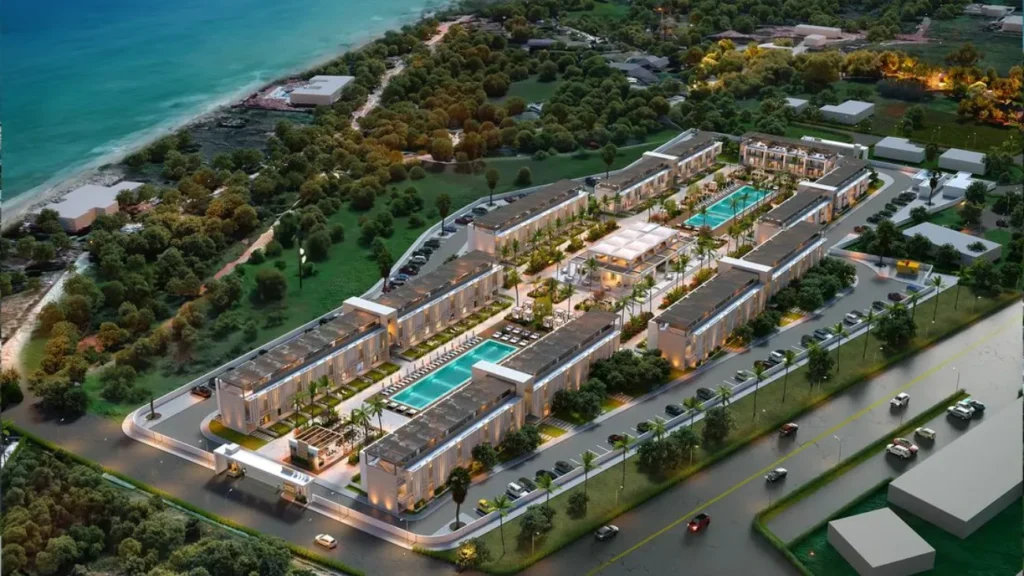
Iskele is a quiet coastal town with steadily growing infrastructure, manageable day-to-day expenses, and a long beach season. For residents and long-stay visitors, three factors matter most: proximity to the sea (Long Beach), easy access to Famagusta, and predictable prices for everyday services.
Key point: A realistic monthly budget starts at €850–1,200 for a single resident, €1,200–1,700 for a couple, and €1,700–2,500 for a family of 3–4—not including rent if you own your home. Consumer price updates are published by the TRNC Statistical Institute.
Essential Expenses: Category Benchmarks
| Groceries (supermarket) — from ~ | Restaurants/Cafés — from ~ | Car Rental — from ~ | Transport | Wi-Fi / Mobile |
|---|---|---|---|---|
| Milk (1 L) €1.0–1.3; bread €0.9–1.2; eggs (12) €2–3; chicken fillet (1 kg) €4.5–6.5; cheese (1 kg) €6–10; olive oil (1 L) €6–9; tomatoes (1 kg) €1.2–2.0 | Coffee €2–3; breakfast €7–10; café lunch €8–12; grilled fish €12–18; pizza €7–10 | Low season €20–30/day; high season €35–55/day | Dolmuş Iskele–Famagusta €2–3; city taxi €5–10; fuel €1.2–1.4/L | Home internet 25–50 Mbps €18–30/mo; mobile 20 GB €10–15/mo |
Important: Local payments are made in Turkish lira, though euros and bank cards are widely accepted in the resort area.
Utilities and Connectivity
- Electricity: For a 60–80 m² apartment, expect €40–70 in shoulder seasons; during summer, with heavier A/C use, €60–120. Inflation and tariff indexation are reported by the TRNC Statistical Institute.
- Water & waste collection: €8–18/month, depending on municipal rates and usage.
- Gas (cylinder for cooking): €10–15 for 10–12 kg (typically lasts 1–2 months).
- Internet & mobile: €18–30/month for home broadband; €10–15/month for mobile data packages.
Transport and Everyday Mobility
- Dolmuş: Iskele ↔ Famagusta every 20–40 minutes during the day; €2–3.
- Taxis: Within Iskele €5–10; Iskele → Famagusta €15–20; Iskele → Boğaz €8–12.
- Car rental: €20–55/day depending on season; child seat €2–4/day.
- Parking: Municipal and roadside parking near the Long Beach promenade is generally free.
Typical Routes:
| Route | Travel Time | Mode | Cost |
|---|---|---|---|
| Iskele Center → Long Beach | 5–10 min | Walk/bike/taxi | Free / €3–5 |
| Iskele → Famagusta (center) | 20–25 min | Dolmuş/taxi | €2–3 / €15–20 |
| Iskele → Boğaz (harbour) | 10–15 min | Taxi/dolmuş | €8–12 / €1.5–2 |
Reminder: Driving is on the left. An international licence is required. During peak holiday periods, expect longer waits for both taxis and dolmuş services.
Leisure Budget: What a Day at the Beach Costs
- Long Beach: lounger + umbrella €6–12/day; coffee €2–3; light lunch €8–12; SUP/kayak €15–25/hour.
- Boğaz (fishing harbour): seafood lunch €12–18 per person; dessert/tea €2–4; waterfront parking is generally free.
- Karpaz (Golden Beach) excursion: taxi €80–120 per car roundtrip (with waiting time), or group tours €35–60 per person. Seasonal beach and travel information is published by the TRNC Ministry of Tourism.
Tip: In summer, plan activities before 11:00 or after 17:00 to reduce home cooling costs and enjoy the beach in more comfortable conditions.
Seasonal Weather and Its Impact on Budget
| Season | Typical Weather (Daytime) | Practical Notes | Budget Effects |
|---|---|---|---|
| April–May | 22–28°C, dry | Ideal for relocations & viewings | Car rental €25–40/day; moderate utility bills |
| June–September | 31–36°C, sunny | High UV, heavy A/C use | Electricity bills rise to €60–120; car rental €35–55/day |
| October–November | 22–28°C | Velvet season, warm sea | Stable prices, fewer queues |
| December–March | 15–18°C, intermittent rain | Short “wet” season | Cheaper car rental (€20–30/day); heating via A/C |
Healthcare, Education, and Safety
- Healthcare: Both public and private clinics operate in Iskele and Famagusta; listings and updates are available from the TRNC Ministry of Health.
- Private GP/pediatrician visits: €20–35; basic lab tests €15–30. Insurance availability and costs vary by provider, age, and coverage.
- Childcare: Private nurseries/daycare centers from €150–300/month; after-school programs and hobby classes €20–40/month per activity.
- Safety: Iskele has a high level of street safety for a resort town; municipal CCTV operates along the promenades.
Important: For long-term stays, foreign nationals should verify visa and residency requirements with the relevant TRNC authorities; administrative updates are issued through official government channels.
Example Monthly Budgets (Excluding Rent)
| Profile | Groceries | Transport | Utilities/Internet | Leisure/Cafés | Approx. Total |
|---|---|---|---|---|---|
| Single Resident | €180–260 | €40–90 | €60–110 | €120–220 | €850–1,200 |
| Couple | €280–380 | €60–120 | €80–140 | €180–300 | €1,200–1,700 |
| Family (3–4 people) | €420–600 | €90–160 | €100–180 | €220–400 | €1,700–2,500 |
Summary: Iskele is a comfortable place to live if you value the sea, a peaceful environment, and stable day-to-day costs. Expenses peak in summer due to electricity and mobility, while the shoulder seasons offer the best balance of weather and affordability. Official references on seasonal trends and infrastructure can be found via the TRNC Ministry of Tourism, the TRNC Department of Meteorology, and the TRNC Statistical Institute.
Real Estate in Iskele
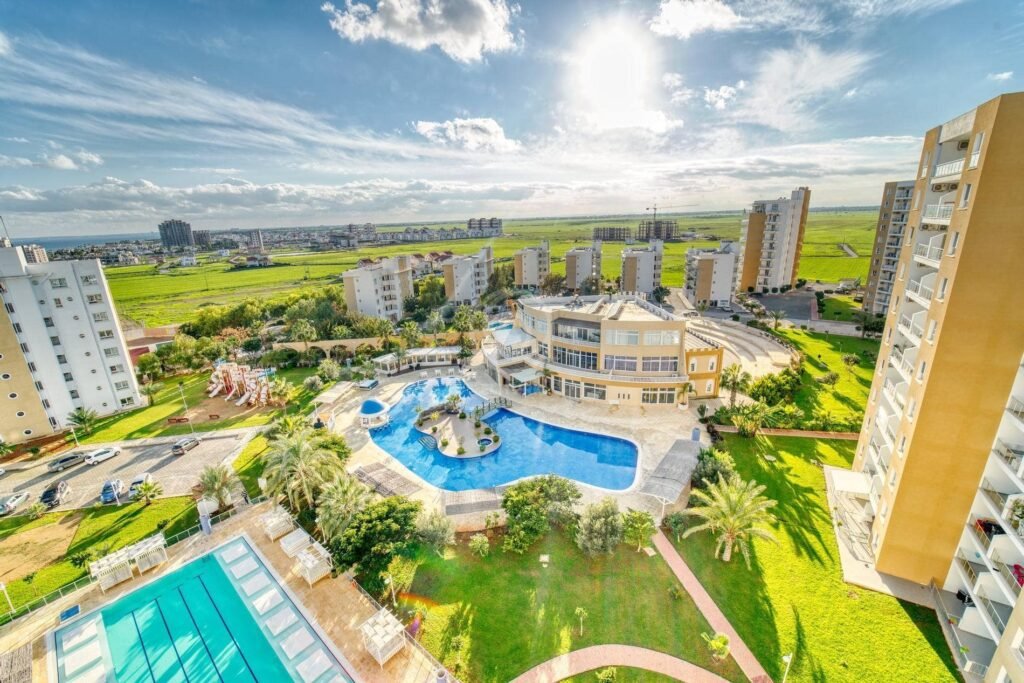

 Iskele
 from 60м²
Iskele has taken shape as a coastal hub for new-build residential property in Northern Cyprus, defined by its long stretches of first- and second-line development along Long Beach, a calm everyday environment, steady seasonal rental demand, and continuously expanding infrastructure. Its main advantages are proximity to the sea, convenient access to Ercan Airport (ECN), and its location near the university and business cluster of Famagusta.
Important: The bulk of transactions involve new-builds purchased with developer installment plans, and the most liquid properties are those on the first and second lines of Long Beach. Residency rules and general administrative guidelines are published by the TRNC Ministry of Foreign Affairs and the TRNC Ministry of the Interior.
Districts and Development Formats
- Long Beach (first–second lines): contemporary resort-style residential complexes, a well-developed promenade, and family-oriented facilities.
- Town Center (Yeni İskele): low-rise housing, supermarkets, schools, and municipal services.
- Boğaz (fishing harbour): low-rise apartments and townhouses by the water, seafood restaurants, access to sheltered coves.
- Towards the Karpaz Peninsula: a quieter, more natural setting with low-density development, villas, and townhouses.
Price Benchmarks for Purchases (New-Builds & Resale)
| Location / Type | Studio | 1 Bedroom | 2 Bedrooms | Townhouse/Villa |
|---|---|---|---|---|
| Long Beach — 1st line | €120,000–160,000 | €150,000–230,000 | €220,000–350,000 | €420,000–800,000 |
| Long Beach — 2nd–3rd lines | €95,000–130,000 | €130,000–190,000 | €190,000–290,000 | €350,000–650,000 |
| Town Center (Yeni İskele) | €70,000–100,000 | €110,000–160,000 | €160,000–250,000 | €280,000–500,000 |
| Boğaz & nearby bays | €85,000–120,000 | €130,000–200,000 | €190,000–300,000 | €320,000–700,000 |
Key insight: Pricing is strongly influenced by distance to the sea, sea views, complex quality, and installment terms. The TRNC Ministry of Tourism provides useful regional tourism and infrastructure information.
Rentals and Yield
- Long-term rentals (12 months):
- 1 bedroom: €600–900/month (Long Beach), €500–750/month (town centre)
- 2 bedrooms: €800–1,300/month (Long Beach), €700–1,100/month (town/Boğaz)
- Short-term rentals (high season, June–September):
- Studios/1 bedroom: €50–120/night (depending on complex and month)
- 2 bedrooms: €80–180/night
- Average gross yield: 5–9% annually; net yield is typically 1.5–2.5 pp lower due to management costs, utilities, and seasonal vacancy.
Important: Occupancy peaks from May to October; rental strategies should align with the resort calendar and complex rules.
Ownership & Operating Costs
- Maintenance fees (HOA/management): €40–120/month for standard buildings; €80–200/month for large resort-style complexes with pools, aqua zones, or spas.
- Utilities (estimates):
- Electricity: €40–70/month in shoulder seasons; €60–120/month in summer with heavy A/C use
- Water/sewage/waste: €8–18/month
- Internet: €18–30/month
- Home insurance: basic coverage from €60–120/year.
Legal Process and Transaction Fees
Key requirement: Foreign buyers must obtain a Permission to Purchase (PTP), overseen by the TRNC Ministry of the Interior.
Typical steps and cost benchmarks:
- Independent solicitor: contract review, title checks, permits — €1,500–2,500
- Reservation & contract: developer/seller deposit €2,000–5,000; contract registration fees according to tariff
- Taxes & duties (approx., for new-builds):
- VAT (KDV): usually 5% on primary sales
- Stamp duty: approx. 0.5% of contract value
- Title transfer fee: up to 6% (one-time reduced rate of 3% available depending on current regulations)
- Utilities connection/activation: €1,000–3,000 depending on project infrastructure (water/electricity/transformer contributions).
Note: Rates and incentives may change. Always verify current rules and administrative guidance through TRNC government portals, including the Ministry of Foreign Affairs.
Financing: Installments and Bank Options
- Developer installment plans: 12–48 months; often interest-free until completion, followed by a fixed rate on remaining balances. Down payments typically 30–50%.
- Bank financing: limited availability; terms usually 5–10 years, with higher down payment requirements and collateral conditions.
Important: Most international buyers rely on developer installment plans. Review the payment schedule and penalty clauses carefully before signing.
How Climate and Seasonality Influence Property Choice
- Orientation & sunlight: south-facing and corner units perform better in winter but require stronger cooling in summer.
- Ventilation & noise: first-line units benefit from the sea breeze in hot months; in July–August, consider the impact of poolside and promenade animation.
- Utility performance: expect higher A/C usage in summer; in shoulder seasons, natural ventilation significantly reduces utility costs.
Transport Access and Location Liquidity
Good transport links directly enhance liquidity and rental potential.
| Location | To the Beach | To Famagusta | To ECN Airport | Taxi Estimate |
|---|---|---|---|---|
| Long Beach (1st–2nd lines) | 0–5 min walk | 20–25 min | 45–55 min | ECN → Long Beach €40–55 |
| Town Center (Yeni İskele) | 10–20 min walk / 5–7 min taxi | 20–25 min | 45–55 min | Center → Long Beach €3–5 |
| Boğaz | 2–5 min | 25–35 min | 55–75 min | Iskele → Boğaz €8–12 |
Reminder: Tourism and infrastructure updates, including seasonal flow and district information, are published by the TRNC Ministry of Tourism.
Risks and Compliance: What to Check Before Buying
- Title & encumbrances: have your solicitor request full land and project records, ensuring alignment between permits, plans, and registry documents.
- Developer reputation: review completed phases, delivery timelines, and quality of common areas.
- Complex rules: rental policies (short-term/long-term), pets, parking, and reserve fund arrangements.
- Technical inspection: check waterproofing, glazing, engineering systems, and utility readiness (water/electricity).
Pros and Cons of Living in Iskele
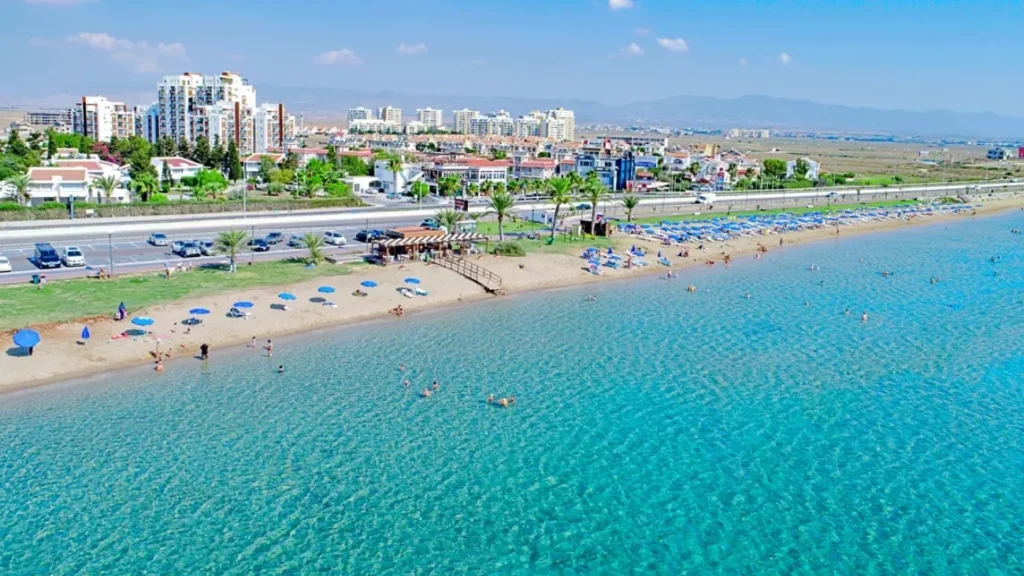
Iskele is a calm seaside town on the eastern coast of Northern Cyprus, known for its long beach season, steadily developing infrastructure, and expanding residential areas along Long Beach. Below is a balanced look at everyday living conditions, seasonal nuances, and transport accessibility.
Important: Iskele is a seasonal resort town: activity and prices peak from June to September, while the best balance of comfort and cost is usually in April–May and October. Current climate data is provided by the TRNC Department of Meteorology.
Pros
- Seaside lifestyle: daily walks along the Long Beach promenade, safe shallow waters, and clean coastal air.
- Lower cost of living compared to major urban centers on the island: café lunches from €8–12, coffee €2–3, short taxi rides €5–10.
- Good transport accessibility: Ercan Airport (ECN) is 45–55 minutes away by taxi, with toll-free highways throughout the region. Operational updates are available through the TRNC Civil Aviation Department.
- Family-friendly infrastructure: promenades, playgrounds, cycling paths; and in nearby Famagusta, an extended range of services and a major university cluster.
- Rental and investment potential near the sea: robust seasonal demand and well-developed residential complexes.
Cons and Limitations
- Modest urban scale: fewer cultural events outside the high season; for more extensive shopping or specialised medical services, Famagusta (20–25 minutes away) is more convenient.
- Seasonal demand → seasonal pricing: summer brings higher car-rental costs (€35–55/day versus €20–30 in winter) and greater pressure on services.
- Car recommended for daily mobility: dolmuş minibuses are convenient during the day but run less frequently in the evening.
- Climate extremes: July–August can be very hot, increasing air-conditioning costs (an extra €40–80 per month with moderate use).
Bottom line: If you’re looking for a bustling “city that never sleeps,” Iskele may feel quiet; but if your priority is the sea, space, and tranquility, it offers comfortable year-round living.
Who Is Iskele Best Suited
Iskele is a coastal town on the eastern side of Cyprus with a long swimming season, a calm atmosphere, and steadily expanding infrastructure around Long Beach. It works well for families, long-stay winter residents, remote professionals, and investors seeking seasonal rental income — as well as for anyone who wants a convenient base for exploring the natural landscapes of the Karpaz Peninsula. Current climate reports and seasonal recommendations are available from the TRNC Department of Meteorology, travel routes on the TRNC Ministry of Tourism portal, and flight-related information from the TRNC Civil Aviation Department.
Important: The best balance of weather and prices is found in April–May and October. Summer (June–September) offers “guaranteed sunshine” but requires early booking of both transport and accommodation.
Who Iskele Is Ideal For: Profiles & Conditions
| Profile | What They Value | Recommended Months | Best Areas | Approx. Daily/Monthly Budget |
|---|---|---|---|---|
| Families with children | Gentle beaches, promenades, parks | April–June, September–October | Long Beach (1st–2nd lines) | Beach set €6–12/day; local taxi €5–10 |
| Remote workers | Reliable internet, quiet environment | October–May | Long Beach (2nd–3rd lines), town centre | Home internet €18–30/mo; coffee €2–3 |
| Retirees / winter residents | Mild winters, access to medical care | November–March | Town centre, Boğaz | Private doctor €20–35; basic medicines €5–15 |
| Investors (rental market) | Seasonal demand, liquidity | May–October (peak rentals) | Long Beach | Yield 5–9% gross annually |
| Nature & outdoor lovers | Karpaz dunes, SUP/snorkeling | May–June, September–October | Boğaz, routes toward Karpaz | SUP/kayak €15–25/hr; Karpaz tour €35–60 pp |
| Students / academics | Proximity to Famagusta, transport links | Year-round | Town centre, Long Beach (2nd–3rd lines) | Dolmuş to Famagusta €2–3; lunch €8–12 |
Key takeaway: Families and long-stay winter residents appreciate the calm rhythm and infrastructure around Long Beach, while investors focus on the “sea premium” and strong rental occupancy from May to October.
Conclusion & a Light, Non-Intrusive CTA
Iskele is all about the sea, a predictable climate, and straightforward logistics: warm water from May to October, a long coastal promenade at Long Beach, and roughly 50 minutes to Ercan Airport (ECN). Whether you’re considering it for family life, a winter stay, remote work, or investment rentals, the advantages are consistent and easy to evaluate.
Key insight: The best balance of comfort and cost comes in April–May and October, while the peak season for activity and demand runs from June to September. Current weather updates are available from the TRNC Department of Meteorology, tourist sites and routes from the TRNC Ministry of Tourism, and aviation information from the TRNC Civil Aviation Department.
If you’re exploring Iskele for a holiday, a long winter stay, or a home by the sea, feel free to share your criteria — timing, budget, lifestyle. We’ll recommend the most suitable areas (Long Beach, the town centre, Boğaz) so you can save time on the ground and avoid unnecessary expenses.
 Real estate in Georgia
 Real estate in Montenegro
 Real estate in the UAE
 Real estate in Bali
 Real estate in Thailand
 Real estate in Spain
 Real estate in Saudi Arabia
 Real estate in Turkey
 Real estate in Zanzibar
 +90 533 888 29 50
 hello@cypria.homes
 Karsıyaka Sokak 8, Girne


 Get catalogue of TOP-7 objects