
 +90 533 888 29 50



Esentepe is not laid out like a typical Mediterranean resort. There is no pedestrian promenade lined with hotels, bars, and souvenir shops. Instead, the area stretches across three very different settings: the old village on the hillside, the coastal strip with beaches and a golf course, and the Beşparmak mountain range rising directly behind the houses.
That is why you cannot simply walk around Esentepe’s main sights in a single evening. Some places of interest are located within Esentepe itself, others are scattered along the coast a few kilometres away, and several of the most impressive attractions — such as Alagadi Turtle Beach or Buffavento Castle — lie outside the immediate area and require a short drive or a separate trip. A car is the most practical way to explore Esentepe and its surrounding attractions independently, although taxis and limited dolmuş services can cover some journeys along the coast.
This point will come up repeatedly throughout the article, because it affects both holidays and everyday life here.
Below are ten places genuinely worth including in your itinerary, with clear geographical context, practical information on access, opening hours and costs, as well as observations for anyone considering Esentepe as a place to live.
Esentepe’s Main Attractions at a Glance
| Place | Type | Best for | Time to allow | In Esentepe or nearby |
|---|---|---|---|---|
| Esentepe Village | Traditional village | First impressions, coffee, sea views | 1–2 hours | In Esentepe itself |
| Esentepe Public Beach and coastline | Beach, small coves | A quiet day by the sea | Half a day | Esentepe coast |
| Korineum Golf & Country Club | Golf, landscaped surroundings | Golfers and anyone who enjoys scenic views | 1–2 hours without playing, half a day with a round | Esentepe coast |
| Alagadi Turtle Beach | Protected natural beach | Nature, families, SPOT programmes | 2–3 hours during the day, evening for organised programmes | Short drive west |
| Antiphonitis Church | Byzantine monument | History, architecture, tranquillity | 1–1.5 hours | Short drive into the mountains |
| Buffavento Castle | Medieval ruins | Panoramic views, active travellers | 2–3 hours including the climb | Separate trip |
| Beşparmak Mountains | Mountains, hiking | Walking, outdoor activities | From 2 hours to a full day | Above Esentepe and along the ridge |
| Incirli Cave | Gypsum cave | Families, geology enthusiasts, hot-weather outings | Half a day including travel | Separate trip |
| Coves and sea activities | Snorkelling, SUP, beach clubs | Active time on the water | 2–4 hours | Esentepe and Bahçeli coastline |
| Kyrenia (Girne) | Town, harbour | Evenings, restaurants, museums, shopping | Half a day or an evening | Separate trip |
Times are approximate and depend on the season, your pace, and where you are starting from.
If you only have one day, focus on Esentepe Village, the public beach or nearby coves, and Alagadi, with Kyrenia as an optional evening stop. With two or three days, add Antiphonitis, a section of the Beşparmak Mountains, and either Buffavento or a separate trip east to Incirli Cave.
What You Need to Know About Esentepe
The name “Esentepe” is used to describe areas of different sizes depending on the source, which often causes confusion for visitors. In the narrow sense, it refers to a traditional village on the northern slopes of the Beşparmak Mountains, set above the coastal road. Before 1974, it was known by its Greek name, Agios Amvrosios. The historic village centre is home to a mosque, the municipal offices, cafés, and a handful of small shops.
In a broader sense, Esentepe refers to an entire coastal area east of Kyrenia. This includes the stretch along the sea with residential developments, the Korineum golf course, a public beach, and several small coves. A few kilometres of winding road separate the village from the coast, and in practical terms they feel like two very different places: traditional rural life and sweeping views in the hills above, and the sea with more modern development below.
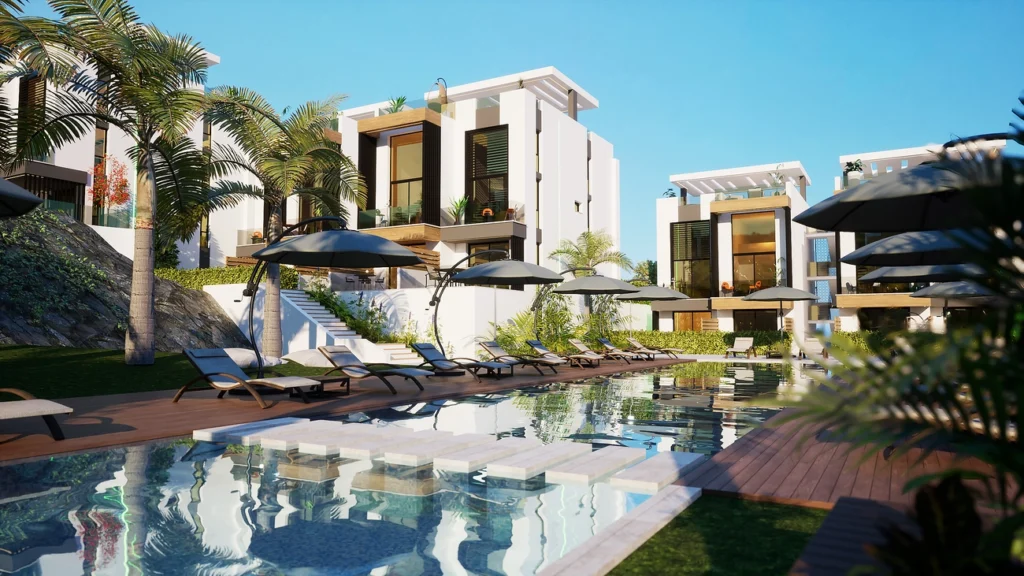

 Esentepe
 from 49м²
 Esentepefrom 125м²

To the west, towards Kyrenia, lies the protected coastline of Alagadi. Further east are the coastal settlements of Bahçeli and Tatlısu. To the south, the entire area is framed by the Beşparmak Mountains, also known as the Five Finger Mountains or the Kyrenia Range.
This geography is precisely why our list includes more than just places within the village itself. An honest guide to Esentepe should reflect where people staying in the area actually go — and that includes Alagadi, historic sites in the mountains, and Kyrenia. For each place listed below, we specify exactly where it is located.
Esentepe is not a resort centre where everything is concentrated along a single street. It is a peaceful base between the sea and the mountains, where the experience comes from short drives and day trips rather than from strolling along a waterfront promenade.
1. Esentepe Village

In Esentepe itself
The village is the best place to begin exploring the area, even if the coast is your main reason for visiting. This is where you can see what Esentepe was like before the arrival of the modern coastal developments and how the community continues to function today outside the tourist season.
Location and how to get there
The village sits on the hillside above the coastal road linking Kyrenia with the eastern stretch of the north coast. A winding road climbs from the shoreline to the village centre, and the drive takes only a few minutes. From Kyrenia, the journey to the Esentepe area usually takes around half an hour.
It is possible to walk up from the coast, but the gradient is steep, and in summer the climb can be particularly demanding.
What to see
The centre of the village is compact, with a square, a mosque, the municipal building, several cafés, bakeries, small grocery shops, and local stores. This is not an open-air museum but a working village where everyday life continues as usual.
The local atmosphere is most noticeable in the morning, when residents stop to buy bread, drink tea, and catch up on the latest news. During the hottest part of the afternoon, the streets become much quieter.
The main visual attraction is the scenery. From many points around the village, there are sweeping views across the hillsides, olive and carob trees, and down towards the sea. Traditional stone houses stand alongside more recent buildings, and the contrast offers a clear sense of how the area has evolved over the past few decades.
For anyone considering living here, the village is also a useful point of reference. “Living in Esentepe” can mean living in the village itself, with local amenities close at hand, or living in a coastal residential development where reaching those services requires a drive. The difference becomes apparent almost immediately.
Opening hours and cost
The village is an open public area, so there is no admission charge and no restriction on when you can visit. Cafés and shops operate according to their own schedules, which may vary depending on the season and the day of the week. During the low season, some businesses close earlier.
Who it suits and how much time to allow
Esentepe Village is a good choice for travellers interested in seeing everyday life in Northern Cyprus rather than focusing exclusively on the beaches.
Allow around one to two hours for a relaxed walk, a coffee, and stops at the viewpoints. It also combines conveniently with a visit to Antiphonitis Church, as the road leading towards the church passes through the village.
2. Esentepe Public Beach and the Coastline
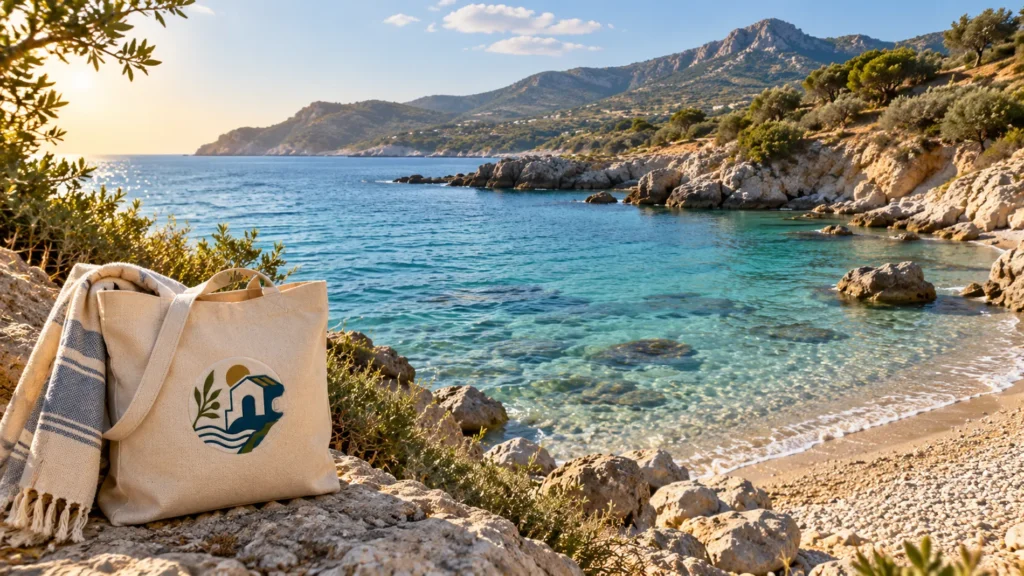
On the Esentepe coast
The municipal beach is the most obvious place to swim in the area and one of the best ways to get a feel for the character of Esentepe’s coastline. It is noticeably different from the broad, sandy beaches found on the eastern side of the island.
Where it is and how to get there
The beach lies beside the coastal road below the village. The easiest way to find it is to search for Esentepe Public Beach or Esentepe Halk Plajı in your navigation app. Parking is available nearby.
If you are travelling without a car, you can reach the beach by taxi or by dolmuş minibus along the coastal road, although local timetables should be checked in advance as services can vary.
What to see and expect
Esentepe’s coastline is varied. The public beach itself has sandy sections, but there is also shingle, while rocky shelves at the water’s edge mean you need to take care when entering the sea. The water is generally clear, making this stretch of coast attractive for snorkelling.
The beach has basic municipal facilities, including showers, toilets, changing cabins, a café, and sunbed rental during the summer season.
Continue along the coast and you will find small coves, rocky stretches, and places where the shoreline remains almost completely natural. These spots are ideal for a quiet swim, but they rarely offer shade or any facilities.
The season changes the experience considerably. In summer, the beach operates at full capacity, while in winter the facilities may be closed, the sea can be rougher, and the shoreline becomes better suited to walking than swimming.
There is also one important point for both visitors and prospective residents. On a map, the sea appears to be very close to almost anywhere in Esentepe. In reality, being close to the coast as the crow flies does not necessarily mean the beach is within easy walking distance. In many locations, the coastal road, steep changes in elevation, or private land stand between residential areas and the shoreline.
Opening hours and cost
Entry to the public beach is free, and you are welcome to bring your own umbrella and towels. Free entry refers to access to the beach itself; loungers, showers, restaurant services, and other optional facilities may involve separate charges. Sunbeds, parasols, and other services are charged separately. Prices and café opening hours vary from season to season, so it is best to confirm the current details locally.
What to bring to Esentepe’s beaches:
- water shoes, especially useful where the entry into the sea is rocky;
- a mask and snorkel if you plan to explore underwater;
- your own shade or beach umbrella for coves without facilities;
- plenty of drinking water and sunscreen;
- a small amount of cash in case the café or rental facilities do not accept cards.
Who it suits and how much time to allow
The beach is well suited to couples, families, and anyone who prefers a quieter stretch of coastline to busy resort beaches. Allowing half a day is usually reasonable.
For younger children, water shoes are particularly useful because of the rocks at the shoreline.
3. Korineum Golf & Country Club

On the Esentepe coast
Korineum Golf & Country Club is one of the defining landmarks of the area. Even for visitors who have never picked up a golf club, it helps explain why Esentepe appeals so strongly to people drawn to an outdoor-oriented lifestyle.
Location and how to get there
The course lies along the coastal stretch of Esentepe, between the sea and the mountain slopes. According to the official North Cyprus tourism portal, it is around a 20-minute drive from central Kyrenia, while the protected Alagadi Beach is approximately 7 kilometres away. The easiest way to get there is by car or taxi.
What to see
Korineum is an 18-hole, par-72 course measuring approximately 6,200 metres and covering around 65 hectares. The fairways wind through natural woodland filled with pine, carob, and olive trees, while some of the more elevated holes offer views of both the mountains and the Mediterranean. The complex also includes a driving range and a golf academy with professional instructors.
For non-golfers, the main attraction is the landscape itself. Korineum offers a clear example of how carefully maintained greens can be integrated into the natural Mediterranean terrain rather than imposed upon it. The tourism portal also highlights the course’s conservation aspect: native plants and small wildlife are preserved across the grounds, while spring brings displays of anemones, cyclamen, and rock roses.
For Esentepe, the golf course matters as more than simply a sporting facility. Developments of this kind tend to create their own distinctive rhythm of life, shaped by early-morning rounds, a club-oriented social scene, restaurants, and an international community. Residential areas around Korineum can feel quite different from the traditional village higher on the hillside, with newer development, golf-related amenities, and a more resort-oriented atmosphere. This is a matter of atmosphere and lifestyle rather than a financial conclusion: the presence of a golf course alone says nothing about how local property values may perform in the future.
Opening hours and prices
Green fees, equipment rental, golf academy lessons, and access to the practice facilities depend on the club’s current pricing and the season. Tee times are best booked in advance.
Opening hours for the clubhouse and restaurant, as well as access arrangements for guests who are not playing golf, should be confirmed directly with the club before visiting.
Who it suits and how much time to allow
Golfers of any ability should allow around half a day for a full round. Visitors who simply want to see the course and have lunch with a view will usually find one to two hours sufficient.
The best seasons for golf are spring and autumn, along with milder winter days. In summer, players generally head out early in the morning to avoid the hottest part of the day.
4. Alagadi Turtle Beach

An easy drive west from Esentepe
Alagadi is one of the most important natural sites on the north coast and one of the main reasons many travellers become aware of the Esentepe area in the first place. It should not, however, be treated as an ordinary beach.
Location and how to get there
The beach lies west of Esentepe on the road towards Kyrenia, between the coastal highway and the sea. It is around 7 kilometres from Korineum Golf & Beach Resort. The easiest way to reach it is by car. There are several restaurants near the coast, as well as an information centre run by SPOT, the Society for the Protection of Turtles.
What to see
Alagadi is a nesting site for two species of sea turtle found in the Mediterranean: the green turtle and the loggerhead turtle. Alagadi is a specially protected coastal area of major importance for sea-turtle nesting. SPOT describes the site as a Natura 2000 specially protected area; however, EU legislation is suspended in the northern part of Cyprus, so the designation should not be confused with the ordinary legal status of Natura 2000 sites where the EU acquis applies, and turtle nests here have been monitored for more than three decades. SPOT’s conservation work is closely linked to scientific research, including collaboration with the University of Exeter.
During the day, visitors can walk along the beach and stop at the SPOT information centre, where volunteers explain the conservation project and show a short film. The beach itself is sandy and largely free from dense development, which is precisely why it is so important as a turtle nesting habitat.
The most important thing to understand before visiting is that there is no guarantee that you will see turtles. The arrival of adult females and the emergence of hatchlings are governed by nature, not by a tourist timetable. Even at the height of the season, there are nights when no turtles come ashore.
Alagadi is not an attraction where seeing turtles is “included” with your ticket. It is a protected beach where visitors are guests. People adapt to the rules of conservation, not the other way around.
According to SPOT, three types of turtle-watching experience are available during the season. In June and July, visitors can join evening sessions to observe females nesting and burying their eggs. Groups are kept small, only a limited number of people are accepted each evening, reservations are made through SPOT’s online booking system, and places tend to fill quickly.
From late July until the end of September, the team carries out excavations of nests after the hatchlings have emerged. These sessions are announced on the same day. Hatchling releases also take place during this period: on weekdays, attendance is arranged by telephone on the day of the event, while public releases are held at weekends without advance booking.
The rules are simple but compulsory: do not enter the beach at night during nesting season, do not use torches or camera flashes, never touch nests or turtles, and always follow the volunteers’ instructions. For night programmes, bring warm clothing, as it can become cool and windy by the water after dark, as well as closed-toe footwear because you may need to walk over uneven ground in low light.
Opening hours and cost
According to SPOT, the Alagadi information centre operates from late May until the end of September, generally from around 9:00 a.m. to 8:30 p.m. During nesting season, the beach is closed to visitors at night, with access restricted to volunteers and conservation authorities.
Participation in the night-watching programme is supported by a suggested donation. The recommended amount can change, so check the current information on SPOT’s booking page before your visit. Conditions may change, so current rules, dates, and arrangements should always be checked on SPOT’s website or social media channels before visiting.
Who it is suitable for and how much time to allow
Alagadi is particularly well suited to families with children, nature lovers, and anyone willing to respect the rules of a protected area. Two to three hours is enough for a daytime visit.
For a night observation session, allow the entire evening and part of the night. It is therefore best to schedule it for a day when you do not have an early start planned for the following morning.
5. Antiphonitis Church
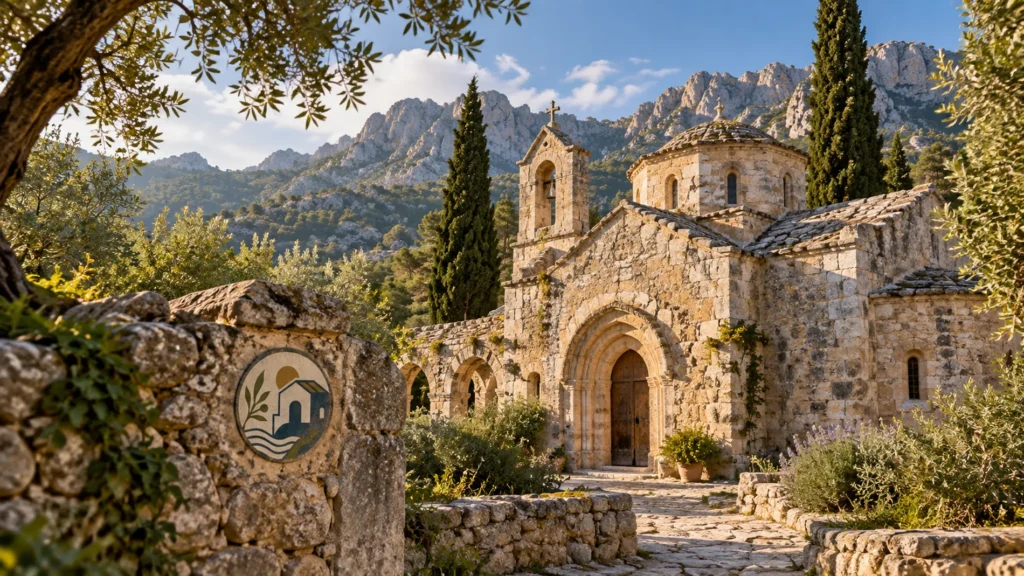
A short drive into the mountains from Esentepe village
Christ Antiphonitis Church is the most important historical landmark in the area around Esentepe. Set in a wooded mountain valley, the church feels distinctly removed from the coastal landscape, with even the drive there offering a noticeable change of scenery.
Location and how to get there
The church lies approximately 8 kilometres south of Esentepe village, in the mountains. The route passes through the village before continuing along a narrow, winding forest road; it can also be approached from the Bahçeli side. There is no public transport to the site, so you will need a car or taxi. A gravel parking area is available in front of the church.
What to see
Christ Antiphonitis Church once formed the heart of a monastery, although very little remains of the surrounding monastic buildings. The main structure of the church is generally dated to the 12th century. Its most distinctive architectural feature is its dome supported by eight columns, an unusual design among Byzantine churches in Cyprus.
Later, during the Lusignan period, a narthex and an open arcade were added on the southern side. These Gothic additions remain clearly visible against the earlier Byzantine core of the building.
Inside, fragments of frescoes from several different periods have survived. A substantial part of the painted decoration was damaged or lost during the second half of the 20th century, and today the interior feels less like a perfectly preserved church than a monument marked by a complicated history.
On the lower sections of the walls, visitors can still see inscriptions left by pilgrims between the 18th and 20th centuries — an unusual and tangible record of local popular history. Today, visitors primarily encounter Antiphonitis as a historic monument valued for its architecture and surviving wall paintings.
Another important part of the experience is the setting itself. The church is surrounded by woodland, with views of the mountain slopes from the courtyard, and the quiet atmosphere encourages a slow, unhurried visit away from the crowds.
Opening hours and admission
Current opening arrangements and admission details are not consistently published by an authoritative source. If seeing the interior is important to your trip, check the latest access information locally before driving into the mountains.
Who will enjoy it, and how much time to allow
The church is particularly worthwhile for visitors interested in history, Byzantine architecture, and quiet, atmospheric places. An hour to an hour and a half is usually enough to explore the church and spend some time relaxing in the courtyard, but once the mountain drive is taken into account, it is sensible to set aside roughly half a morning for the visit.
6. Buffavento Castle
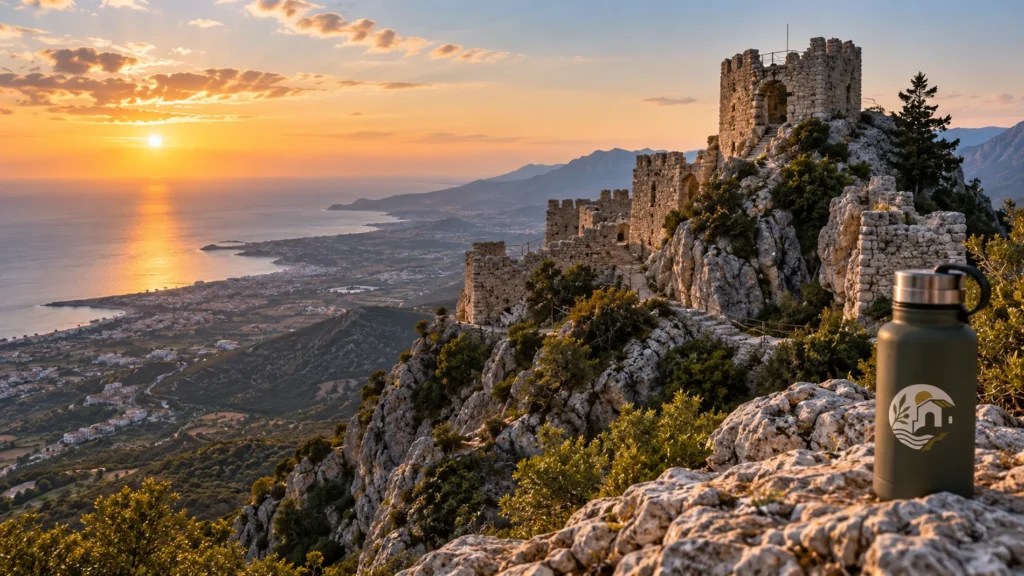
This requires a separate trip from Esentepe — the castle is not located in the village itself.
Buffavento is the highest of the three medieval castles along the Kyrenia mountain range. People come here for the dramatic sense of elevation and sweeping panoramic views rather than for exceptionally well-preserved fortifications.
Location and how to get there
The castle stands high on the mountain ridge west of Esentepe. According to Visit North Cyprus, the access road begins at a turn signposted Buffavento Kalesi near the Beşparmak Pass. From there, it is roughly a 15-minute drive along a mountain road to the parking area.
The road is narrow and winding, with steep drops in places, so it is best approached slowly and carefully. From Esentepe, allow approximately an hour for the journey, depending on your exact starting point. From the parking area, a walking trail with numerous steps leads up to the ruins.
What to see
The ruins stand at an elevation of around 940 metres above sea level. The castle’s Italian name is associated with the wind, which rarely seems to let up at this altitude.
Little is known with certainty about Buffavento’s earliest history. In 1191, the castle came under the control of Richard the Lionheart. The Lusignans later used it as both a prison and a signalling post: from the summit, it was possible to maintain visual contact with St Hilarion Castle to the west and Kantara Castle to the east. Under Venetian rule, the fortress gradually fell into disuse.
The lower and upper sections of the fortifications survive, together with remains of towers and defensive walls. The real highlight, however, is the panorama. On one side, the view opens across the northern coastline; on the other, it stretches over the Mesaoria Plain in the centre of the island. In clear weather, this is one of the broadest and most impressive viewpoints in Northern Cyprus.
The climb itself is an essential part of the experience. The route from the parking area involves around 600 steps. The official tourism portal estimates the ascent at approximately 20 minutes, although many visitors will need longer. There is almost no shade along the trail, and winds at the summit can be strong even on a warm day.
The practical lesson is simple: proper closed footwear, sufficient water, a reliable weather forecast, and choosing the right time of day matter far more than getting the perfect photograph. Fog and low cloud can completely obscure the views, while hot weather can turn the climb into a genuinely demanding physical effort.
Opening hours and admission
Current opening arrangements, admission conditions, and visitor facilities should be checked before setting out. Plan the climb for daylight hours and carry your own drinking water rather than relying on facilities being available at the access point.
Who is it suitable for, and how much time should you allow?
Buffavento is best suited to physically active travellers and anyone who enjoys dramatic mountain scenery and panoramic viewpoints. The roughly 600-step ascent is physically demanding, especially in hot weather. Visitors should consider their own mobility and fitness, avoid the hottest part of summer days, and allow more time than the published 20-minute ascent estimate if needed.
Allow around two to three hours for the drive to the upper access point, the climb, time at the summit, and the descent. Including the journey from Esentepe, it is best treated as a half-day excursion.
7. The Beşparmak Mountains
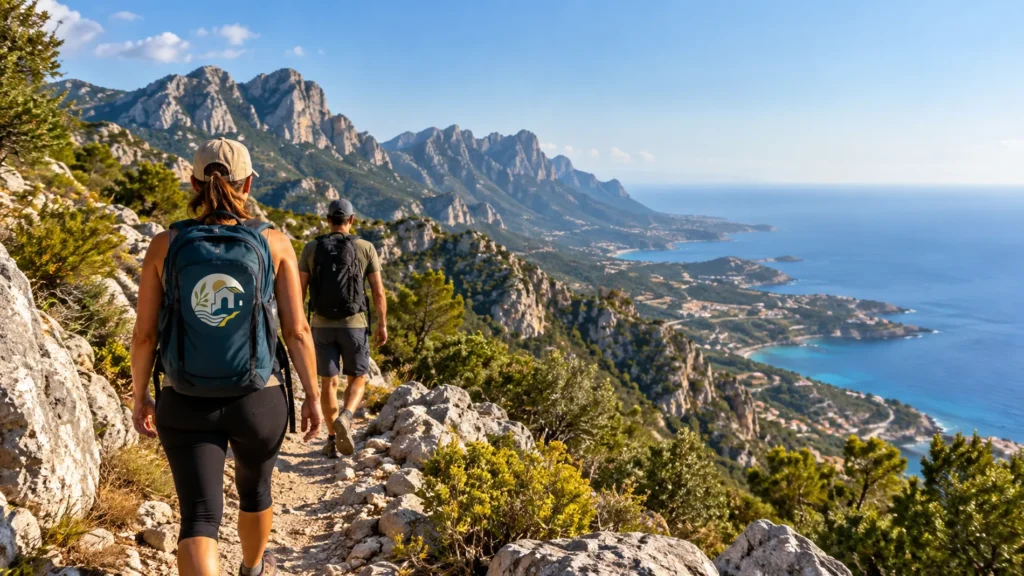
Above Esentepe and stretching along the entire mountain range
The Beşparmak Mountains are not a single attraction marked on a map, but rather the backdrop to everyday life throughout the area. For many residents and visitors to Esentepe, the mountains are one of the main reasons they fall in love with the region.
Location and how to get there
The range runs parallel to the northern coast, rising directly behind the village of Esentepe. From the village, mountain roads lead towards the forested area of Alevkayası and the Church of Antiphonitis. The Kyrenia Mountain Trail, Northern Cyprus’s official long-distance hiking route, follows the range, and individual sections can be completed in a few hours. Visit North Cyprus describes the full route as roughly 260 kilometres across 18 stages, stretching from Cape Kormakitis in the west to Cape Zafer on the Karpaz Peninsula. Most visitors around Esentepe will naturally choose only an individual section rather than attempt the entire trail. A car is generally needed to reach the starting points for most walks and hikes.
What to see
The defining feature of the Beşparmak Mountains is the combination of mountains and sea within the same panorama. From the northern slopes, there are sweeping views over the coastline, while from the ridge you can look south across the central plain. The slopes are covered with pine forests, carob and olive trees, interspersed with exposed rocky outcrops. In spring, the mountains are particularly green, wild plants are in bloom, and the air is still pleasantly cool.
Spring and autumn generally offer the most comfortable conditions for hiking. In summer, cooler early-morning hours are usually preferable because daytime temperatures can make exposed routes much more demanding.
Winter can bring rain and strong winds, but there are also plenty of clear, cool days that are ideal for hiking. Choose a route that matches your fitness level, rather than one that simply looks impressive in social media photos: many of the trails are rocky and involve significant elevation gain.
For anyone considering living in the area, the mountains can become part of everyday life: morning walks, cycling, and weekends spent on the trails. This kind of outdoor lifestyle is genuinely accessible here, although it does require a car and, during the warmer months, a willingness to start the day early.
Opening hours and cost
The mountains are an open natural area, and hiking is free of charge. Guided hikes and organised outings run by local clubs may involve a fee; prices and schedules vary depending on the organiser.
Tips for hiking in the mountains:
- set out early in the morning so you can finish before the heat of the day;
- carry enough drinking water for the length of your route, the temperature, and your personal needs;
- wear closed hiking shoes with good grip, as loose stones are common on the trails;
- download an offline map in advance, as mobile reception can disappear in the mountain valleys;
- if you are hiking independently, tell someone your planned route and approximate return time.
Who is it suitable for, and how much time should you allow?
The Beşparmak Mountains are ideal for hikers, photographers, cyclists, and anyone who wants to experience a side of Northern Cyprus beyond its beaches. A short walk can take around two hours, while a more substantial outing, including travel time, can easily fill an entire day.
8. Incirli Cave
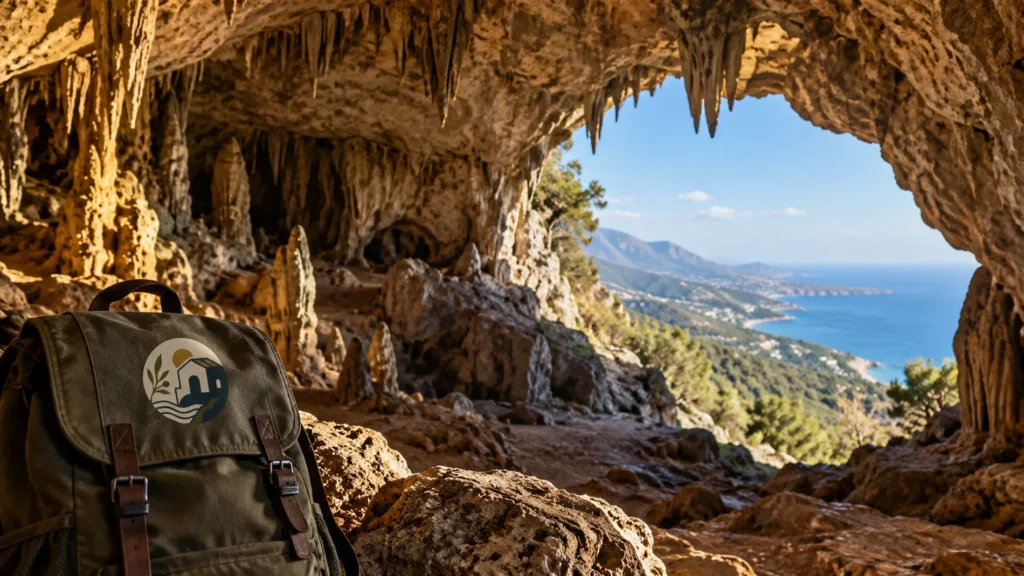
Best treated as a separate trip from Esentepe — it is farther away than any of the other places on this list.
Incirli Cave (İncirli Mağarası) is a good option for travellers who want to add something completely different from beaches and ancient ruins to their itinerary. It is important to keep the geography in perspective, however: the cave is not in Esentepe, or even in a neighbouring village.
Where it is and how to get there
The cave is located approximately 2 kilometres northeast of the village of Çınarlı, in the Iskele district, at the southern foothills of the Beşparmak Mountains. From Esentepe, the route initially follows the coast eastward before continuing through the mountains, and the journey is considerably longer than to the other places on this list.
There is virtually no practical public transport to the cave, so travelling by car is the most realistic option. Incirli is easy to combine with a wider trip through the eastern part of the island — for example, with a visit to the top attractions in Iskele.
What to see
Incirli is a gypsum cave, which sets it apart from the more familiar limestone caves found in many other destinations. According to Visit North Cyprus, it is the only known developed gypsum cave in Northern Cyprus that is open to visitors.
Inside, you can see stalactites, stalagmites, columns, and unusual white formations resembling cauliflower florets. Only a small section of the cave system is accessible to the public — around 70 metres have been illuminated and equipped for visitors.
The wider cave extends for roughly 250 metres, which helps explain why the public route represents only part of the formation.
The cave takes its name from the fig tree — incir in Turkish — growing near the entrance, which also helps visitors locate the relatively small opening. Access is via steps, and the path inside is uneven, with changes in level along the way. The temperature remains cool and relatively constant, making the cave a welcome break from the heat on a hot day.
For that reason, it works particularly well as a half-day stop. The cave itself does not take long to explore, but the drive and the opportunity to combine it with nearby places can easily fill half a day.
Opening hours and admission
Opening days, hours, and admission arrangements can change and are not reliably published in one authoritative source. Check the current access details before making the drive from Esentepe.
Admission conditions may change, so check the current opening days, hours, and any applicable entrance fee before setting out. This is especially important when travelling from Esentepe, as the cave requires a separate drive east.
Who it is suitable for and how much time to allow
The cave is likely to appeal to families with school-age children, geology enthusiasts, and travellers looking for something unusual beyond the island’s better-known attractions.
Visitors with limited mobility may find access difficult because of the steps and uneven floor inside the cave. If you are travelling from Esentepe, allow around half a day for the entire trip.
9. Bays and Sea Activities
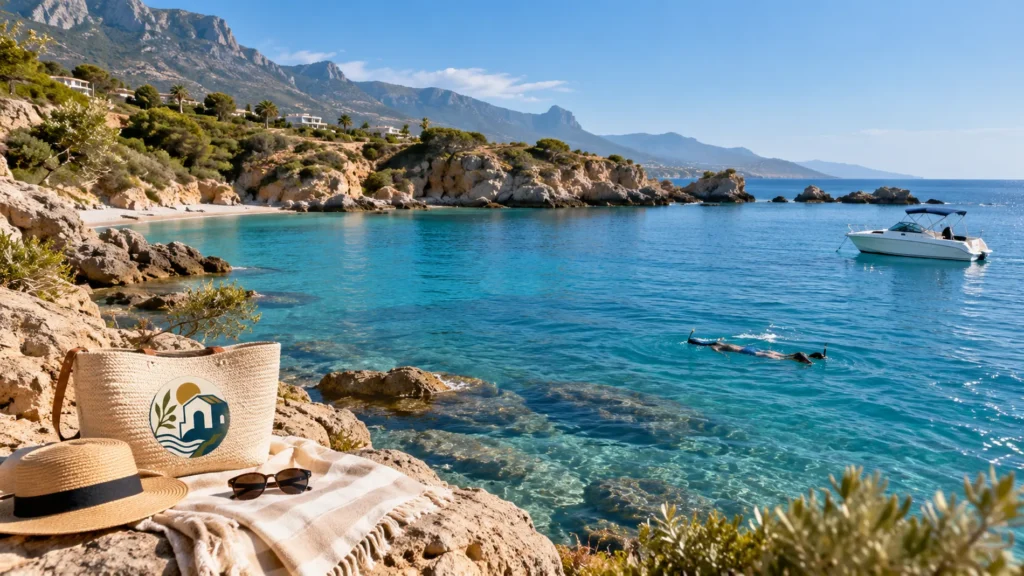
The Esentepe and Bahçeli Coastline
Beyond the municipal beach, the coastline in this part of the region is dotted with small coves and stretches of shore where you can snorkel, swim, or try stand-up paddleboarding. This section is not intended as a directory of activity providers, but rather as a practical guide to what you can expect from the sea along this coast.
Where It Is and How to Get There
The most appealing swimming spots are scattered along the coastal road east of Esentepe, towards Bahçeli and farther on to Tatlısu. Some coves can be reached via unpaved access roads, while others are accessible only through a beach club or residential complex.
Near the Korineum golf course, there is a private beach club with paid access. Travelling between the different coves without a car is inconvenient, so having your own transport makes exploring the coastline considerably easier.
What to See and Do
The rocky shoreline may not be ideal for sunbathing, but it is well suited to snorkelling. The water around the rocks is often clearer, and there is generally more marine life to observe underwater. In many places, swimming and exploring the coastline are more rewarding than simply spending the day lying on the sand.
SUP boards, kayaks, and other water-sports equipment are usually available at established beach clubs during the warmer months.
There is an important distinction between a developed beach club and a natural stretch of coastline. At a beach club, you can expect sun loungers, shade, showers, food and drinks, and sometimes a pontoon that makes getting into the water easier. The trade-off is that access comes at a cost, and popular clubs can become busy during peak season.
A natural cove, by contrast, is free and usually much quieter, but there may be no shade, lifeguards, facilities, or easy access to the water.
Sea conditions vary not only by season but from one day to the next. Northerly winds can create noticeable waves along the coast, and swimming near rocks may become unsafe. Sea urchins are also found in some areas, so water shoes are a sensible precaution rather than an unnecessary extra.
For anyone considering living in the area, the conclusion is much the same as with the beaches themselves: the coastline can look spectacular on a map, but whether a particular spot is genuinely suitable for everyday swimming depends on road access, the type of shoreline, and the exact micro-location.
Opening Hours and Cost
Undeveloped stretches of coastline may have no entrance charge where public access is available, but access arrangements vary from one cove to another. Beach clubs usually charge either an entrance fee or for sun loungers, while SUP boards and other equipment are rented separately.
Prices, opening hours, and the availability of services vary depending on the season and the individual venue.
Who It Suits and How Much Time to Allow
This type of coastal experience is best suited to active travellers, snorkelling enthusiasts, and visitors who have already spent time at the area’s main beach and want to explore something different.
For a single cove or beach club, allowing around two to four hours is usually enough.
10. A Trip to Kyrenia
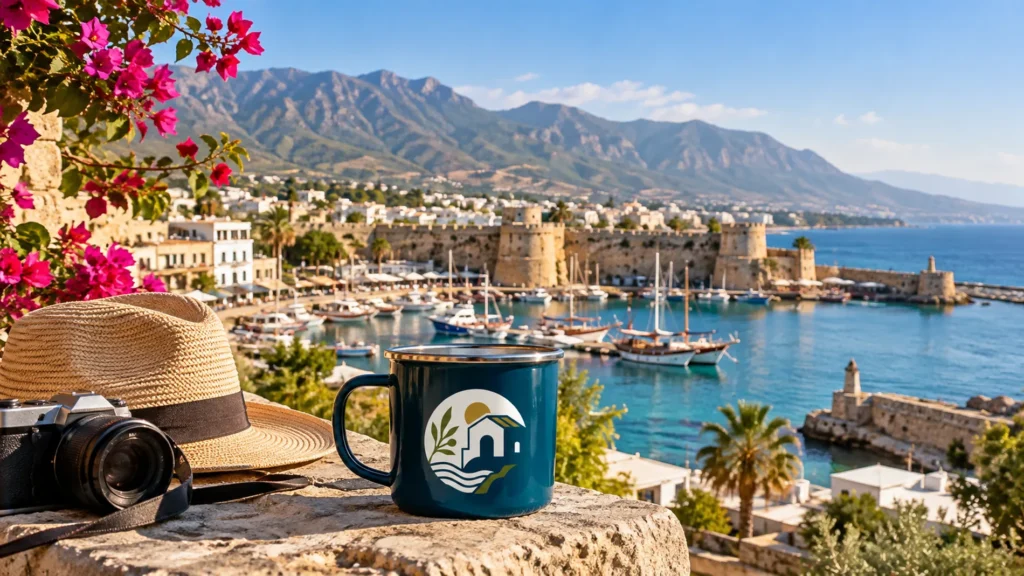
An easy side trip from Esentepe
Kyrenia (Girne) is not part of Esentepe, but it is one of the most practical day or evening trips for visitors staying in the area. The city complements Esentepe’s tranquillity with exactly what the village lacks: urban energy, convenience, and a much wider range of choices.
Where it is and how to get there
Kyrenia lies to the west, roughly a 30-minute drive along the coastal road. In addition to driving or taking a taxi, you can use the minibuses that run along the coast. However, if you are planning an evening trip and expect to return late, a car or taxi is the more practical option. Parking in central Kyrenia can be difficult during the high season.
What to see
The main attraction is the Old Harbour, with its waterfront promenade and restaurants, which become particularly lively in the evening. Overlooking the harbour is Kyrenia Castle, home to the Shipwreck Museum and the remains of an ancient merchant vessel. Beyond the city itself, notable attractions include Bellapais Abbey and St Hilarion Castle. If you would like to explore the area in greater depth, see our detailed guide to the 10 top attractions in Kyrenia.
Beyond sightseeing, Kyrenia also provides the everyday amenities that matter when you are staying in the area for any length of time: large supermarkets, a much broader selection of restaurants and cafés, pharmacies, medical centres, banks, and service companies. Esentepe provides a quieter base, while Kyrenia offers a considerably broader range of shops, services, restaurants, healthcare facilities, and other urban amenities. You notice this distinction even during a holiday, and it becomes especially important if you are considering moving to the area.
Opening hours and admission
Walking around the harbour and the old town is free. The castle, museums, and other historic sites charge admission and operate according to seasonal opening hours. It is best to check current schedules and ticket prices on official sources before visiting.
Who it suits and how much time to allow
Kyrenia is a good choice for anyone looking for an evening meal by the water, shopping, or a cultural outing. An evening is enough for a leisurely walk and dinner, while visiting the castle and museum requires an additional two to three hours.
Which attractions should you choose?
Not everyone needs to visit all ten places. The table below will help you quickly decide which attractions best match your interests.
| If you enjoy… | Where to go | Why | Best time | How much time to allow |
|---|---|---|---|---|
| The sea | Esentepe Public Beach and the coves towards Bahçeli | Clear water and a peaceful atmosphere | June to October | Half a day |
| Nature | Alagadi and the Beşparmak Mountains | A protected beach and forested mountain slopes | Spring and autumn; summer for the SPOT season at Alagadi | 2–3 hours or a full day |
| History | Antiphonitis, Buffavento, and Kyrenia | Byzantine and medieval heritage | Spring, autumn, and mild winter days | A separate day |
| Golf | Korineum Golf & Country Club | A golf course set between the mountains and the sea | Autumn to spring; early morning in summer | Half a day |
| Travelling with children | The beach, Alagadi, and Incirli Cave | Calm water, turtles, and a cool cave | June to September for turtle season | 2–4 hours per attraction |
| Active holidays | Beşparmak, Buffavento, and SUP in the coves | Hiking trails, climbs, and water activities | Spring and autumn | Half a day to a full day |
| Exploring the area before relocating | Esentepe village, the coast, and the road to Kyrenia | A realistic sense of everyday life and local transport logistics | If relocation is the goal, visiting in more than one season gives a more realistic picture of daily life | 2–3 days |
A One-Day Itinerary Around Esentepe
You cannot fit all ten places into a single day, nor should you try. A realistic one-day itinerary should focus on Esentepe itself: the village, the sea, and the western stretch of coastline. The historic sites in the mountains, Buffavento, and Incirli Cave are better saved for another day, as reaching them takes a significant amount of time and calls for a different kind of outing.
Morning. Start in Esentepe village before the day gets too hot. Have coffee and breakfast at a local café, walk through the centre, and stop at a viewpoint overlooking the coast. Allow around an hour and a half.
Late morning. Head down to the sea, either to Esentepe Public Beach or one of the coves towards Bahçeli. Go for a swim and snorkel around the rocks while the sun is still relatively low.
Lunch. Spend the hottest part of the day in the shade at a coastal café or restaurant. If golf interests you, this is also a good time to stop at Korineum and have a look at the course without spending too long out in the midday sun.
Afternoon. Continue west towards Alagadi. Take a walk along the coastal area during the day and visit the SPOT information centre if it is open. Be sure to follow the rules of the protected area carefully.
Sunset and evening. For a more urban evening, continue on to Kyrenia for a walk around the harbour and dinner by the water. If you are visiting in June or July and have booked a nighttime SPOT turtle-watching experience in advance, it is better to devote the evening to the turtles and have dinner at one of the restaurants near Alagadi.
Practical tips for planning your route:
- Start early: in summer, the comfortable hours for walking are largely over by midday.
- Keep drinking water, water shoes, and a change of clothes in the car.
- Check the wind forecast in the morning if you are planning to swim in the coves.
- Do not add Buffavento to a “beach day” — tackling the climb after hours in the sea and sun is unnecessarily exhausting.
- Book Night Watch sessions in advance, but check SPOT on the day for nest excavations and hatchling-release opportunities, as these depend on current nesting activity and use different booking arrangements.
When is the best time to visit?
The best time to visit Esentepe depends on what you want to do: summer suits swimming and turtle-related programmes, while spring and autumn are generally more comfortable for hiking, golf, and sightseeing.
When you come will largely determine whether your trip is centred on swimming, hiking in the mountains, or watching sea turtles.
| Season | What to do | Advantages | What to keep in mind |
|---|---|---|---|
| Spring (March–May) | Hiking, Buffavento, Antiphonitis, golf | Green landscapes, wildflowers, comfortable weather for outdoor activities | The sea is still cool for extended swimming |
| Summer (June–August) | Beaches, snorkelling, SUP, SPOT programmes | Warm sea and the widest seasonal availability of beach facilities and water activities | Intense heat; outdoor activities are best limited to mornings and evenings |
| Autumn (September–November) | Swimming, golf, mountain walks | Warm sea, fewer visitors, mild weather | Some seasonal venues gradually begin to close |
| Winter (December–February) | Golf, walks, trips to Kyrenia, exploring the area | Peace and quiet, clear and pleasantly cool days | Rain, wind, and limited beach services |
A separate note on the turtles: the programme season at Alagadi follows the nesting and hatchling periods, generally running from late spring until the end of September, while the type of observation experience changes from month to month. Beach access rules and activity schedules should always be checked with SPOT before your visit, as they depend on natural conditions and may be adjusted from year to year.
Transport and practical advice
The main practical feature of the Esentepe area is that there is no compact, walkable centre with all the attractions clustered around it. The village sits on the hillside, the beach is down by the main road, the golf course occupies part of the coastal strip, Alagadi lies several kilometres to the west, and the historic sites are up in the mountains. Walking between these places is inconvenient and, in some sections, potentially unsafe because there are no pavements along the main road.
Minibuses do operate along the coastal road, but services are limited and they do not travel up into the mountains. Taxis can be useful for individual journeys, but if you plan to make several trips in a day, hiring a car is almost always more convenient and often more economical. Bear in mind that traffic in Northern Cyprus drives on the left.
Mountain trips require a little more care. The roads to Antiphonitis and Buffavento are narrow and winding, with blind bends and steep sections. They are best driven in daylight, without rushing, and with plenty of fuel in the tank. During the shoulder seasons and in winter, fog and rain can make these roads considerably more demanding.
One final point: many attractions in the area do not have official websites with reliably updated opening information, and details found online can quickly become outdated. It is therefore sensible to recheck the opening hours of historic sites, beach fees, and SPOT programme schedules shortly before your visit.
For most visitors who want to explore beyond their immediate accommodation, a car is the most practical way to get around Esentepe. Without one, your choice of beaches, mountain sites, and evening trips becomes considerably more limited.
Before setting out, check:
- the weather and wind forecast — this is particularly important for both mountain trips and sheltered coves;
- current access to historic sites, including Antiphonitis, Buffavento, and Incirli Cave;
- Alagadi rules and schedules via SPOT’s website or social media channels;
- your route in your navigation app and whether you have offline maps available;
- suitable footwear: closed shoes for the mountains and water shoes for rocky beaches;
- a sufficient supply of drinking water, as there is nowhere to buy it at many mountain sites;
- mobile coverage and your phone battery level when travelling into sparsely populated mountain areas.
What Esentepe can tell a prospective resident
Exploring the local attractions is one of the best ways to understand what everyday life in the area might actually feel like. Tourist impressions can easily become practical insights when viewed from a slightly different perspective.
The first takeaway is that Esentepe is considerably quieter than an urban centre. On holiday, that is an advantage: less traffic, more peace, and dark night skies. For permanent living, however, it is something worth considering carefully. Anyone accustomed to evening walks along lively streets may find themselves missing the energy of a town or city.
The second is that everyday life almost always revolves around having a car. On holiday, you need one to reach beaches and attractions. As a resident, there are many more reasons to drive: the supermarket, doctor, school, sports facilities, or meeting friends in Kyrenia. For a tourist, this may feel like a minor inconvenience. For a permanent resident, it becomes part of the daily routine and household budget.
The third is that the name “Esentepe” covers a surprisingly wide range of micro-locations. The hillside village, residential developments around the golf course, and coastal homes closer to Bahçeli may all be described as Esentepe, but day-to-day life in each can be very different. Distance to the sea, shops, and the main road varies, as do noise levels, views, and the character of the neighbouring community.
The fourth is that the sea, mountains, golf, and outdoor lifestyle genuinely can become part of everyday life here. An early-morning round of golf, a swim before work, or a weekend on a mountain trail are real possibilities for local residents rather than simply images from a property brochure. But this lifestyle still requires planning: early starts in summer, access to a car, and a willingness to adapt your routine to the season.
The fifth is that a beautiful holiday setting is not automatically a practical place to live year-round. A house with panoramic views on a mountain slope may be wonderful during a holiday, but in winter it may be reached by a narrow road, while the nearest shop could still require a drive. These are the kinds of details that should be checked before making a decision, not afterwards.
For everyday life in Esentepe, the precise micro-location matters more than the general name of the area. Two properties marketed as being in Esentepe can offer noticeably different day-to-day experiences depending on their position relative to the village, coast, main road, shops, and other services.
| Factor | For a Tourist | For a Permanent Resident |
|---|---|---|
| Beaches | A place to relax for half a day, with the freedom to choose a different beach each day | What matters is how easy it is to reach the sea regularly and throughout the year |
| Car | Convenient for trips to local attractions | Often the most practical option for shopping, appointments, schools, work, and trips to Kyrenia |
| Shops and services | Nearby cafés and small shops are usually enough | Larger purchases and specialist services often require a trip to Kyrenia |
| Peace and quiet | One of the main advantages of a holiday here | A benefit or a drawback, depending on your lifestyle |
| Restaurants | Plenty of choice for a holiday, especially during the high season | Options become more limited in winter, and greater variety usually means heading into the city |
| Outdoor lifestyle | Memorable experiences for a few days | A regular part of everyday life: golf, mountains, and the sea |
| Proximity to Kyrenia | An easy evening trip | Can significantly affect day-to-day convenience if you regularly rely on Kyrenia for work, shopping, healthcare, or services |
| Seasonality | You can simply choose the best month to visit | You need to be comfortable with both the summer heat and the quieter winter months |
If you are comparing Esentepe with a more urban environment, our guide to living in Kyrenia may be useful. The contrast can help you decide which pace of life suits you best.
Considering Esentepe for more than just a holiday? Take the short World Estate Homes property-matching quiz. It will help narrow down your options based on your budget, purchase goals, and location preferences, so your next visit to the area can be more focused and productive.
Esentepe is likely to appeal to those who come to Northern Cyprus looking not for a lively resort atmosphere, but for a balance of sea, mountains, and tranquillity. The area is particularly well suited to couples, families, golfers, hiking and nature enthusiasts, as well as travellers who enjoy exploring the surrounding region by car. It works especially well as a peaceful base for a week-long stay, with easy day trips to historic sites, the turtle beach, and Kyrenia.
It is less suitable for visitors who do not intend to rent a car, expect nightlife within walking distance of their hotel, or prefer long sandy beaches with a full range of facilities. Esentepe becomes especially quiet in winter, which is part of its appeal for some people but will not suit everyone.
For anyone considering buying property in the area, spending time exploring Esentepe before making a decision is one of the most useful ways to understand how the location works in everyday life. Driving from the village down to the coast, going out to buy groceries, spending an evening in Kyrenia, and then making the journey back can reveal far more about everyday life in Esentepe than any photograph with a beautiful view ever could.
 Real estate in Georgia
 Real estate in Montenegro
 Real estate in the UAE
 Real estate in Bali
 Real estate in Thailand
 Real estate in Spain
 Real estate in Saudi Arabia
 Real estate in Turkey
 Real estate in Zanzibar
 +90 533 888 29 50
 hello@cypria.homes
 Karsıyaka Sokak 8, Girne



 Get catalogue of TOP-7 objects