
 +90 533 888 29 50



An apartment is often a practical choice for buyers who prefer a more manageable living space and want to delegate some maintenance responsibilities to a property management company. A villa may be more appealing to those who value privacy, outdoor space, and direct control over their home and grounds.
Neither option is inherently better. The right choice depends on the specific property, verified ownership rights, total budget, and intended use. A spacious apartment in a premium residential development can easily cost more to purchase and maintain than a modest villa. What matters is comparing genuinely comparable properties rather than relying on their labels.
This guide examines both property types through the same considerations: purchase price and total budget, maintenance, comfort, ownership rights, rental potential, resale prospects, and location. Where general rules have important exceptions, we explain them explicitly.
Any figures used in the examples should not be interpreted as actual market data. Property prices, fees, and taxes depend on the individual property, developer, legal status, and buyer’s circumstances.

What Types of Property Are We Comparing?
The term “apartment” covers a surprisingly wide range of properties in Northern Cyprus. It might refer to a studio in a multi-storey resort development with swimming pools and restaurants, an apartment in a low-rise building without shared amenities, or a ground-floor residence with a private garden.
There are also properties that fall somewhere between these categories. A duplex is a home arranged over two levels, while a penthouse typically occupies the top floor and offers a large terrace. A garden apartment is another hybrid: it provides some of the outdoor benefits associated with a house while retaining the rules, shared facilities, and communal expenses of an apartment development.
The term “villa” is even less precisely defined. The clearest example is a detached house standing on its own plot. However, a villa within a managed residential development may occupy a relatively small plot surrounded by communal grounds, security facilities, internal roads, and sometimes a shared swimming pool. In such cases, certain maintenance costs are shared among owners.
Properties with adjoining walls are also frequently marketed as villas, even though their privacy and ownership arrangements may resemble those of townhouses more closely.
The description used in a property advertisement does not establish its legal classification. What matters is the floor plan, supporting documentation, and precise description of the rights being transferred.
Property layouts are commonly advertised as 1+1 or 2+1: one or two bedrooms plus a living room, which may incorporate an open-plan kitchen. This notation does not establish the usable floor area, the number of bathrooms or whether the layout suits your household. For both apartments and villas, check the approved floor plan, room dimensions, storage and access to outdoor space rather than relying on the advertised bedroom count.
Floor areas also require careful comparison. An apartment’s advertised area may include covered terraces or a proportion of communal space, while a villa’s stated floor area may exclude the garden and outdoor living areas entirely.
For a meaningful comparison, internal usable area, covered terraces, uncovered terraces, any allocation of communal space, and plot size should be listed separately.
Table 1. Comparing Apartment and Villa Features
| Criterion | Apartment | Villa | What to Check |
|---|---|---|---|
| What you are buying | An individual unit within a building, with an interest in communal areas | A house, often with a plot, although separate ownership rights to the land are not always included | Property description and boundaries in the contract and plans |
| Area measurements | Advertised area may combine internal space, terraces and an allocation of communal areas | Advertised building area may combine internal space and terraces; plot size is a separate measurement | Separate internal usable area, covered and uncovered terraces, any communal-area allocation, plot size and pool area; confirm the measurement basis |
| Land | Shared interest in the plot or rights to use it | Individually held or jointly owned plot | Land documentation and registered boundaries |
| Outdoor space | Terrace, balcony, sometimes a garden or roof terrace | Garden, courtyard, terrace | Ownership, usage rights, and maintenance responsibilities |
| Expenses | Service charges plus costs within the apartment | House and grounds maintenance plus possible development service charges | What is included in each charge to avoid double-counting |
| Management | More commonly handled through a management company | Self-managed or maintained through contractors | Management agreement, rules, and maintenance schedule |
| Privacy | Depends on floor level, layout, and neighbouring properties | Depends on development density and terrain | Viewings at different times of day |
| Parking and access | Space in a communal parking area; lift or stair access | Private driveway or access road, potentially involving slopes | Route from parking to the entrance |
| Swimming pool | Usually communal, although some apartments have private pools | Private pool or communal pool within a development | Who maintains it and who pays |
| Ownership rights | Rights relating to communal areas and development rules | Plot boundaries, easements, and compliance with permits | Registered rights and planning documentation |
| Rental use | Check legal eligibility for the intended rental activity, development restrictions, insurance and management arrangements | Check the same requirements, including any development restrictions and responsibility for private outdoor facilities | Applicable registration and operating permissions, development rules, insurance terms and management contract |
| Resale | Assess competing units, asking price, condition, management quality and documentation | Assess competing houses, asking price, condition, running costs and documentation | Comparable properties, evidence of completed sales where available, outstanding liabilities and transfer requirements |
This table provides a starting point. The reasons behind these differences, along with important exceptions, are explored in the sections below.
Purchase Price and Total Budget
The advertised price represents only part of the cost of acquiring a property.
For both apartments and villas, the full budget should include the purchase price, transaction taxes and fees, independent legal and technical due diligence, utility connections and deposits, furniture and appliances, any work needed to bring the property up to the promised standard, and a contingency reserve.
The exact amounts depend on whether the property is newly built or being resold, its legal status, and the buyer’s circumstances. It would therefore be misleading to assume that taxes and fees are always identical for apartments and villas.
The distinction between completed and off-plan properties applies to both categories.
With a completed home, buyers can inspect the building, check for damp, examine the roof and equipment, and identify visible defects before committing. An off-plan property does not offer the same opportunity. Its eventual quality depends on the developer, construction schedule, and handover process.
An instalment payment plan changes when the buyer pays, but it does not automatically make a property cheaper overall. The developer’s terms, any difference between the cash and instalment prices, and the total cost of ownership should be assessed separately.
There are two sensible ways to compare apartments and villas.
The first is to set an identical total budget and examine what each property category offers within that amount.
The second is to compare the cost of meeting a particular need, such as accommodating a family of four for several months each year. Under this approach, a 120 m² villa and a 120 m² apartment may fall into different price brackets, but the comparison becomes more useful because it reveals what the buyer is actually paying for.
Locations, property condition, bedroom count, and construction quality should also be broadly comparable.
Comparing a studio at the excavation stage with a completed villa featuring a swimming pool tells buyers very little about the difference between apartments and villas. The price gap primarily reflects differences in property class, construction stage, and specifications.
Key takeaway: Total purchase budget. Compare the final cost after due diligence, registration, utility connections, furnishing, and contingency allowances—not simply the advertised price. A property that initially looks cheaper may ultimately cost more once it is ready for occupation.
Checklist 1. What to Request When Calculating the Total Purchase Cost
- A written specification of everything included in the purchase price, including furniture, appliances, swimming pool, landscaping, parking, and storage.
- An itemised estimate of transaction taxes and fees based on your buyer status and the specific property.
- The cost of connecting electricity, water, and internet services, including any required deposits.
- A payment schedule showing the expected completion date and the contractual provisions governing delays.
- Details of service charges, pool and garden maintenance, and other owner expenses for recent periods.
- A cost estimate for completing outstanding work or repairs needed to bring the property up to the advertised standard.
- Independent assessments of the property’s technical condition and legal documentation, including the fees charged by the relevant specialists.
Maintenance and Property Management
Actual running costs in Northern Cyprus do not always match the estimates provided before purchase.
They depend on the size and condition of the property, the age and efficiency of its equipment, seasonal conditions, and whether the owners live there permanently or visit for only a few weeks each year.
To make the comparison meaningful, apartments and villas should be assessed against the same expense categories—first during normal occupation and then during extended periods when the property is vacant.
Annual Running Costs
Both property types involve utility bills, fixed charges, insurance, routine maintenance, and provisions for major repairs.
Check the applicable electricity tariff in KIB-TEK’s official tariff section and confirm the category used for the property’s meter. Tariffs can change, so request recent bills as well as a full year of historical bills, and distinguish private consumption from any communal electricity charged through the development.
An apartment does not maintain itself.
Service charges may cover communal facilities, while owners normally arrange upkeep of their interiors and private equipment. Responsibility for a particular leak, window defect or shared installation depends on its cause, the legal status of the affected component, warranties, insurance and the development’s governing documents. A problem appearing inside an apartment is not automatically the apartment owner’s financial responsibility.
A villa adds responsibilities for the exterior walls, roof, plot, and often a private swimming pool.
A villa within a residential development may also be subject to communal service charges alongside its private maintenance expenses.
It is essential to establish exactly what each charge covers to avoid counting the same service twice. For example, maintaining communal landscaping and looking after a villa’s private garden may be entirely separate expenses.
Insurance policies for both property types have limits. Buyers should review what is covered, what is excluded, and how the insured value is determined.
The amount that should be reserved for major repairs depends on the property’s age, construction, and equipment.
For an apartment development, one particular risk lies in how communal maintenance is funded. If the management budget is inadequate, some owners fail to pay their contributions, or there is no accumulated reserve fund, residents may face additional one-off assessments.
For a detached villa outside a managed development, the owner needs a clear arrangement for maintaining the building and grounds. This can involve coordinating individual contractors or appointing a property manager under a written agreement. For both apartments and villas, check which tasks are delegated, which costs remain payable separately and how completed work is reported.

Table 2. Comparing Ongoing Expenses
| Expense | Apartment | Villa | Documents to Check | Does the Cost Continue When Vacant? |
|---|---|---|---|---|
| Electricity | Consumption within the apartment and communal electricity costs | House, swimming pool, outdoor lighting | Bills and current electricity tariffs | Partly: refrigeration, pumps, climate control |
| Water | Charges relating to the apartment | Household use, irrigation, swimming pool | Bills and water supply arrangements | Fixed charges may continue |
| Development service charges | Usually applicable | Applicable if the villa is part of a managed development | Management rules, budget, service breakdown | Yes |
| Communal areas | Typically funded through service charges | Funded through service charges or maintained independently | Property management agreement | Yes |
| Insurance | Apartment and contents | House, outbuildings, swimming pool | Insurance policy and exclusions | Yes |
| Routine repairs | Within the apartment | House, roof, façade, grounds | Condition report and maintenance history | Partly: deterioration can occur without occupants |
| Major repair reserve | Lifts, roof, and building façade through service charges or special assessments | Roof, waterproofing, equipment | Owners’ meeting records and reserve fund reports | Yes |
| Swimming pool | Communal pool through service charges; private pool separately | Private pool maintained at owner’s expense; communal pool through charges | Pool maintenance agreement | Yes, when operating seasonally |
| Garden and irrigation | Where the apartment includes private outdoor space | Usually a significant maintenance responsibility | Gardening agreement and water bills | Yes, to prevent deterioration |
| Equipment | Air conditioning, water heater, pumps | Similar equipment plus pool and pumping systems | Equipment documentation and service records | Partly |
| Property inspections | Concierge, management company, trusted representative | Contractor or trusted representative | Inspection agreement and schedule | Yes |
| Local charges and taxes | Depend on the property and owner’s status | Depend on the property and owner’s status | Previous owner’s receipts and professional advice | Yes |
When the Owner Is Away
For owners who spend most of the year outside Northern Cyprus, running costs do not disappear. Instead, reliable property supervision becomes even more important.
Problems in an empty apartment may develop unnoticed: a leak from the flat above, a malfunctioning air-conditioning system, or mould caused by prolonged periods without ventilation.
A vacant villa faces different vulnerabilities. A swimming pool can deteriorate quickly without maintenance, gardens become overgrown, and the property’s perimeter needs regular inspection.
A residential development’s management company may handle some of these responsibilities, but rarely all of them.
Owners should establish who opens and ventilates the property, who handles maintenance requests, how inspections are documented, and who is responsible when damage occurs.
A detached villa may have no management structure at all. In that case, the owner will need to appoint a contractor or trusted representative under an agreement that clearly defines the services provided and the reporting arrangements.
Checklist 2. Questions to Ask a Management Company or Contractor
- What exactly is included in the service charge or management fee, and which services are billed separately?
- How frequently is an unoccupied property inspected, and what type of report will you receive?
- Who is responsible for damage caused by leaks, equipment failures, or unauthorised entry?
- Does the development have a reserve fund, and what additional one-off charges have been imposed in recent years?
- How is contractor access arranged, and who coordinates emergency repairs?
- What happens when some owners fall behind on payments, and how does this affect services for other residents?
- Which swimming pool and garden maintenance expenses are covered by the management company, and which remain the owner’s responsibility?
- How are owners’ meetings conducted, and how are owners living abroad kept informed?
Comfort for Year-Round Living
Comfort depends less on whether a property is labelled an apartment or villa than on a combination of practical details.
The most useful approach is to examine these factors individually rather than trying to decide which property type is universally better.
Noise and neighbouring properties. Apartment residents may have neighbours beside, above, and below them, making sound insulation between floors and the quality of windows more important than attractive façades.
A fully detached villa has no shared walls, but in densely developed areas, neighbouring windows may still be only a few metres away.
Privacy depends on the layout, surrounding terrain, and landscaping—not simply on the word “villa” in an advertisement.
Natural light and orientation. Apartments on higher floors often benefit from better views and more daylight, but they may also experience greater solar heat gain during summer.
A villa may be shaded by neighbouring buildings or a hillside, while a garden can provide natural protection from the sun.
Ventilation and humidity deserve separate attention. A corner apartment with effective cross-ventilation may be more comfortable than a villa with poorly positioned windows. Equally, roof waterproofing problems can affect either property type.
Cooling and heating. An apartment is not automatically more energy-efficient than a villa.
Energy consumption depends on floor area, floor level, roof construction, glazing, insulation, equipment, and how the property is used.
Winters in Northern Cyprus can be cool and damp. A well-insulated villa with underfloor heating may therefore be more comfortable than an unheated ground-floor apartment with inadequate ventilation.
Stairs, lifts, and access from parking. A top-floor apartment without a lift and a hillside villa reached by a flight of steps can be equally inconvenient for older residents or families with pushchairs.
When viewing a property, assess the entire route from the parking space to the front door while imagining carrying shopping bags or luggage—not just the layout shown on the floor plan.
Storage, home offices, children, and pets. A villa may make it easier to create a dedicated study, workshop, or storage room, although a spacious apartment can meet these needs too.
A private swimming pool requires suitable barriers and clear safety rules when children are present. In an apartment development, the safety of a communal pool also depends on the management company’s arrangements.
Everyday amenities. Access to shops, pharmacies, medical facilities, and schools can determine whether a car is needed for every small errand.
Security services within a residential development may reduce certain risks, but they cannot eliminate them.
Conversely, a villa without on-site security is not necessarily unsafe. Much depends on the neighbourhood, street lighting, fencing, and alarm systems.

Property Documents and Ownership Rights
Buying property in Northern Cyprus involves legal and financial considerations that require particular care.
The following sections outline the general checks and differences between apartments and villas. They are not a substitute for advice from an independent lawyer who has examined the documents relating to the specific property.
Checks Required for Both Property Types
Before buying any property in the northern part of Cyprus, five fundamental questions must be answered:
- Who is selling the property, and what is their legal authority to do so?
- What rights are registered, and what is the history of the land?
- Are there any mortgages, other encumbrances, or legal disputes affecting the property?
- Does the building as constructed comply with the relevant permits and approved plans?
- Is the particular foreign buyer legally permitted to acquire the property?
The final question depends on the buyer’s status and the procedures in force at the time of the transaction. Outdated information about ownership quotas, application deadlines, or permissions should never be assumed to remain valid.
The purchase contract and all supporting documents should be read in full.
Pay particular attention to the payment schedule, the developer’s liability for delays, the specification of included fixtures and finishes, the handover process, and warranty obligations.
If marketing materials and the draft contract differ, ask your independent lawyer to resolve the discrepancy before signing and record any agreed feature or promise in the contract and its attachments. Keep copies of advertisements and correspondence, as their legal relevance depends on the applicable law and the circumstances of the transaction.
Land ownership rights require special attention.
Unresolved property ownership issues in Northern Cyprus are linked to the island’s division and competing claims, including claims by people displaced in 1974 and their successors. Describing someone as a previous owner does not establish that their legal rights have ended.
These risks concern the underlying land and can affect both apartments and villas. Registration under the system administered in the north does not, by itself, resolve competing ownership claims. Depending on the property and the parties’ actions, transactions involving land without the legally recognised owner’s consent may lead to civil claims and criminal proceedings under the laws of the Republic of Cyprus. An independent lawyer should assess the title history and the potential consequences in each relevant jurisdiction before you sign or pay.
The UK government’s official guidance on buying property in Cyprus specifically highlights these issues in its section on the northern part of the island.
The guidance was updated in 2019, making it useful for understanding the nature of the risks rather than as a definitive source of current transaction procedures.
The Government of Canada also advises travellers to obtain legal advice before purchasing or renting property in the northern part of Cyprus.
Such guidance is a warning about potential legal complications, not a legal opinion on any particular plot.
An independent lawyer must investigate the history of the land beneath the property you are considering before you assume contractual or financial obligations.
It is also important not to apply the property laws and procedures of the Republic of Cyprus automatically to transactions in the north. The relevant institutions, registration arrangements, and legal consequences differ.
Differences Between Apartments and Villas
When buying an apartment, establish exactly what is being acquired as a separate unit, which rights have been registered, and whether any part of the registration process remains incomplete.
You should also confirm your interest in the land and communal areas, how parking and storage spaces are allocated, and who holds the rights to any garden or roof terrace associated with the apartment.
Read the development’s rules carefully, particularly restrictions concerning alterations, rental activities, pets, and the use of communal facilities.
For a villa, the focus shifts towards plot boundaries, whether the land rights are individually or jointly held, access roads, easements, utility connections, and whether the house, swimming pool, and extensions comply with the relevant permits.
An unauthorised extension may create difficulties during resale, registration, or insurance.
One distinction is particularly important: having the right to use a garden is not necessarily the same as owning the land beneath it.
Terraces, roofs, and parking spaces also require documentary confirmation.
A parking space described as “allocated to the apartment” in promotional materials does not automatically mean that the buyer acquires ownership of it.
Key takeaway: Garden and land rights. Descriptions such as “with garden,” “with parking,” or “sea view” refer to property features, not necessarily enforceable ownership rights. Those rights must be established through the legal documents and plans attached to the purchase agreement.
The term koçan refers to a document evidencing a registered property right.
Having a koçan is an important consideration, but it is not a universal guarantee of legal security. The type of title, the history of the land, and the building’s permits must still be examined independently.
Checklist 3. Documents and Confirmations Required Before Making a Non-Refundable Payment
- Verification of the seller’s or developer’s identity and legal authority.
- Confirmation of registered property rights and the land’s ownership history, prepared by your lawyer.
- Evidence regarding mortgages, encumbrances, and legal disputes.
- Planning and building permits, together with confirmation that the completed property matches the approved plans.
- The complete purchase agreement, including all attachments and detailed specifications.
- For apartments: development rules, a breakdown of service charges, and documents confirming rights to allocated spaces.
- For villas: plot boundaries, documents relating to access roads and utility connections, and permits for swimming pools and extensions.
- A written legal opinion confirming whether the particular foreign buyer can acquire the property and explaining the applicable procedure.
Rental Potential and Financial Performance
Apartments and villas often appeal to different types of tenants and holiday guests.
Apartments tend to attract couples, smaller families, and people who value on-site facilities and a more accessible rental price.
Villas are generally aimed at families and groups seeking additional space, a swimming pool, and greater privacy, although they usually command higher rental prices.
These distinctions do not guarantee demand.
Rental performance depends heavily on location, property condition, photography, pricing, and management quality.
Long-term letting and short-term holiday rentals operate under different financial models.
A long-term tenancy can reduce guest turnover and the associated day-to-day workload, but income still depends on payment reliability, vacancies and the tenancy terms. Compare annual receipts and owner expenses rather than a monthly rent with a holiday-rental nightly rate. The tenancy agreement, permitted use, insurance and tax treatment should be checked for the proposed arrangement.
Holiday rentals may command higher nightly rates but are more seasonal and labour-intensive.


 Lapta
 from 153м²
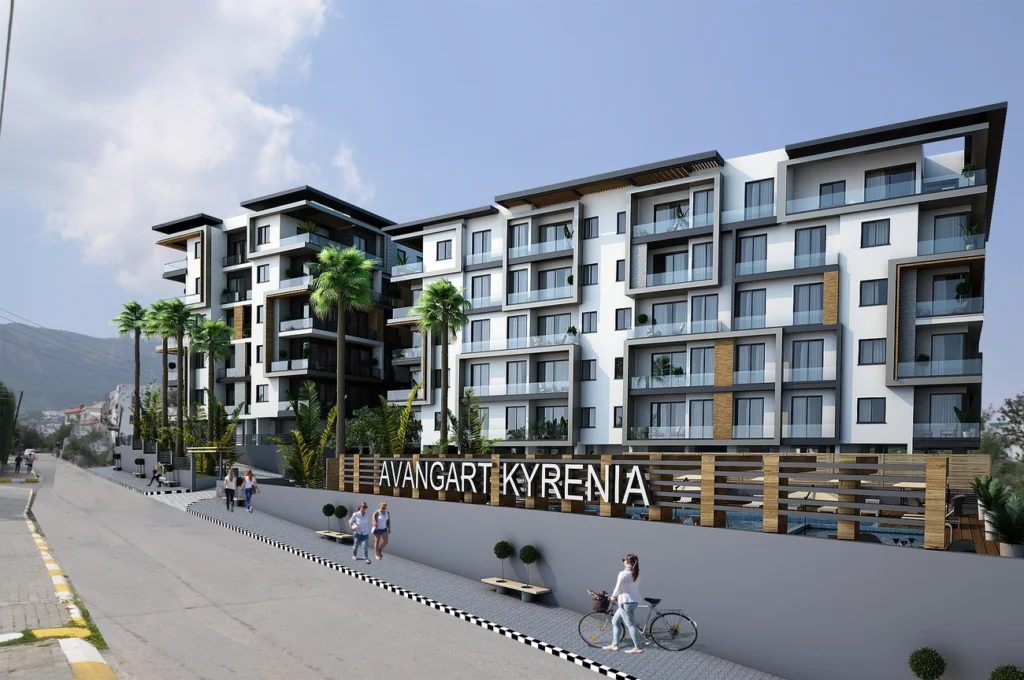 Kyreniafrom 85м²
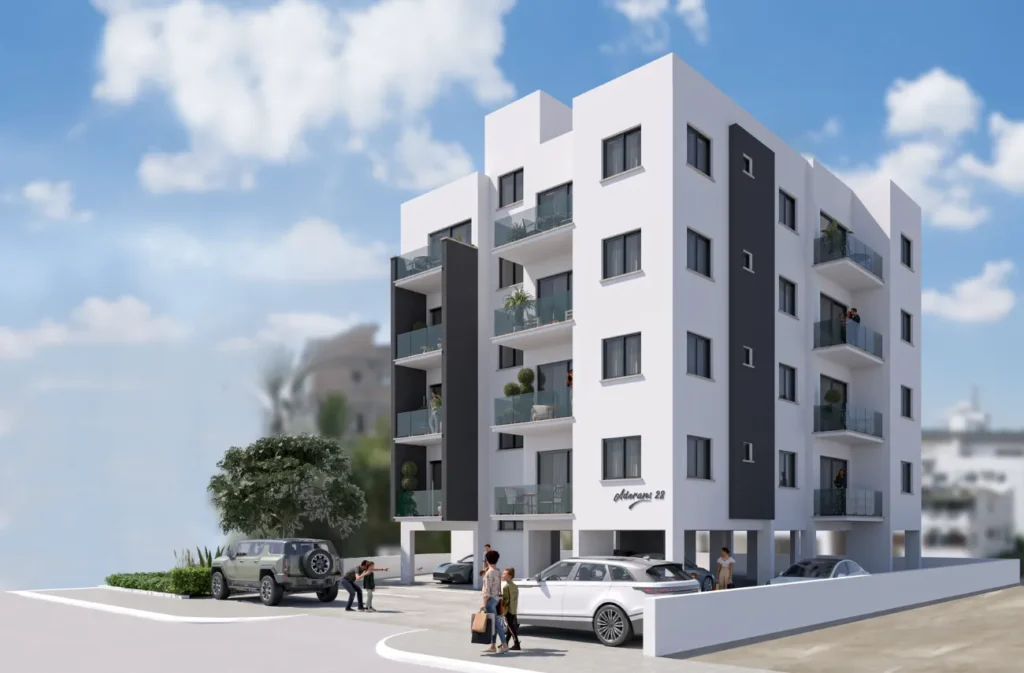 Esentepefrom 75м²
They require cleaning, linen changes, replacing worn or damaged household items, guest communication, and planning for vacant periods.
Personal use also reduces the number of nights available to paying guests.
Before including holiday-rental income in a purchase calculation, have an independent lawyer confirm whether the specific property and proposed operator meet the applicable registration and operating-permission requirements. Check the current requirements with the Tourism Planning Department, as well as the development’s rules, insurance conditions and tax obligations. Permission from a management company does not, by itself, establish that the proposed rental activity is lawful.
A high nightly rental rate does not automatically produce a high net return.
Start by distinguishing potential revenue at full occupancy from rental revenue actually collected. Unbooked periods reduce the first figure; management fees, cleaning, utilities and other operating costs are then deducted from collected revenue. A separate allowance for future repairs and replacement of furniture can support cash-flow planning, but it should not duplicate costs already included elsewhere. Accounting depreciation is different from cash set aside for future expenditure.
Key takeaway: Revenue versus profit. Gross rental revenue shows the scale of the rental business; income after expenses reveals its actual financial performance. A property charging a high nightly rate may generate less income for its owner than a more modest property with lower operating costs.
The following is a hypothetical calculation, not a representation of market prices or a rental yield forecast.
Both properties use the same calculation method and the same percentage assumptions for revenue lost to vacancy, management fees and the maintenance reserve. Initial investment, potential rental revenue and operating expenses differ, as shown below:
- Both operate as short-term holiday rentals.
- Vacancy losses amount to 35% of potential gross rental revenue.
- Management fees equal 20% of actual rental revenue.
- Management fees cover guest check-in, cleaning, and laundry, so these services are not charged again as separate owner expenses.
- An annual maintenance reserve equals 1% of the initial investment.
- For this hypothetical model, owner operating expenses are assumed to include utilities, service charges, insurance, pool and garden maintenance, booking-platform charges not included in the management fee, and recurring administrative or operating-permission costs where applicable. These are illustrative totals, not verified quotes. Routine operating costs and the separate repair reserve must not count the same expense twice.
- All calculations are expressed in euros, before taxes and financing costs.
Table 3. Illustrative Financial Comparison of Two Properties
| Financial Indicator | Apartment (€) | Villa (€) |
|---|---|---|
| Total initial investment | 160,000 | 280,000 |
| Potential gross revenue at full occupancy | 30,000 | 50,000 |
| Vacancy losses (35%) | −10,500 | −17,500 |
| Actual rental revenue | 19,500 | 32,500 |
| Management fees (20% of actual revenue) | −3,900 | −6,500 |
| Owner operating expenses | −3,600 | −6,400 |
| Maintenance reserve (1% of investment) | −1,600 | −2,800 |
| Cash surplus after reserve, before taxes and financing | 10,400 | 16,800 |
| Annual cash return after reserve, before taxes and financing | 6.5% | 6.0% |
The calculation uses two formulas for this illustrative annual cash-flow model:
Cash surplus after reserve, before taxes and financing = Potential gross rental revenue × (1 − Revenue loss assumption) − Management fees − Owner operating expenses − Maintenance reserve.
Illustrative annual cash return after reserve, before taxes and financing = Cash surplus after reserve ÷ Total initial investment × 100%.
This is not a calculation of total investment return. It excludes changes in the property’s value, selling costs, taxes and financing. The reserve is a budgeting allowance, not necessarily an expense incurred during that year.
In this example, the villa generates more income in absolute terms but delivers a slightly lower return relative to the capital invested.
The difference is just half a percentage point—small enough to disappear if any of the underlying assumptions change.
A higher nightly rate for the villa, for instance, could improve its relative performance. Conversely, higher-than-expected maintenance costs could reduce it further.
The next step is to examine how sensitive these results are to changes in expenses or occupancy.
Scenario 1: Additional lost bookings equivalent to one-twelfth of full-occupancy revenue
For this sensitivity test, assume that additional lost bookings reduce annual revenue by €2,500 for the apartment and €4,166.67 for the villa, on top of the original 35% revenue loss. These amounts equal one-twelfth of each property’s hypothetical full-occupancy revenue. They do not represent the expected revenue of any particular calendar month: actual losses depend on seasonal rates and the bookings that would otherwise have occurred.
With management fees remaining at 20% of collected revenue and all other annual costs held unchanged, the cash surplus falls by €2,000 for the apartment and €3,333.33 for the villa.
- Apartment: €10,400 − €2,000 = €8,400, or 5.25% of the initial investment before taxes and financing.
- Villa: €16,800 − €3,333.33 = €13,466.67, or approximately 4.81% of the initial investment before taxes and financing.
The unchanged-cost assumption is deliberately simplified. Some consumption-related costs may also fall when bookings decrease.
Scenario 2: Owner expenses increase by 20%
If the owner’s operating expenses rise by 20%, the apartment incurs an additional €720 in costs, while the villa’s expenses increase by €1,280.
The resulting figures are:
- Apartment: €10,400 − €720 = €9,680, equivalent to a 6.05% return.
- Villa: €16,800 − €1,280 = €15,520, equivalent to approximately 5.5%.
Even relatively modest changes in the assumptions can significantly alter the final results—and these examples are based entirely on hypothetical starting figures.
Resale Prospects and Exit Strategy
Apartment buyers and villa buyers often have different priorities, but a property’s resale potential depends on much more than its category.
Price, condition, legal documentation, neighbourhood, and competing properties all influence liquidity.
An apartment in a large residential development may compete with dozens of similar units, including newly launched projects whose developers offer instalment plans and substantial marketing support.
A villa is typically more individual, but its pool of potential buyers may be smaller. Viewings and preparation for sale can also require additional time.
A wider potential buyer market does not guarantee that an apartment will sell quickly.
Likewise, owning an interest in a plot does not guarantee that a villa will appreciate in value.
There are no universally reliable figures for how long properties take to sell or what discounts buyers can negotiate. Both depend on market conditions at the time and the characteristics of the individual property.
For either property type, the financial model should include the potential costs of selling:
- Estate agent commissions.
- Applicable taxes and transaction expenses.
- Repairs or improvements needed before marketing.
- Settlement of outstanding service charges and utility bills.
The amounts must be established according to the rules and circumstances applicable when the property is sold. Without verified evidence, they should not be presented as universal fixed costs.
Where ownership registration has not yet been completed, two different transactions must be distinguished: the assignment of contractual rights and the sale of a registered property.
Whether contractual rights can be assigned depends on the applicable law, any restrictions affecting the buyer or property, the original agreement, required consents, taxes and the registration status. An independent lawyer should confirm that the proposed transfer is permitted and identify the required steps before it is marketed or agreed.
The ability to assign those rights cannot be guaranteed in advance.
These matters should be discussed with an independent lawyer before purchasing, rather than only when the owner eventually decides to sell.
How Location Changes the Comparison
Location can influence the choice between an apartment and a villa just as strongly as the property type itself.
The following descriptions provide general guidance rather than a ranking.
Specific prices, rental yields, and demand figures are not included because they change over time and require reliable supporting evidence.
For a property in Kyrenia (Girne) or its suburbs, compare the actual routes to shops, healthcare, schools and other services you expect to use. Check an apartment and a villa against the same daily destinations: a central address, a hillside location and a suburban development can involve very different walking and driving conditions.
There are more opportunities to manage daily life without a car, particularly in central areas, although development is also denser.
An apartment in this setting may be particularly convenient for year-round living, while a villa in the suburbs can offer greater privacy at the cost of increased dependence on a car.
Iskele and Long Beach are known for large modern residential developments situated near an extensive stretch of coastline.
Everyday errands often require driving, and some services may operate on a more limited basis during winter.
An apartment within a managed development benefits from its on-site facilities, while villas are more commonly found in gated communities or separate residential areas.
Buyers should investigate planned construction on neighbouring plots and the ongoing costs of maintaining the development.
Esentepe and Tatlısu offer quieter coastal and foothill settings, where villas and smaller residential developments are often built on sloping terrain.
Sea views and privacy can be attractive features, but journeys to shops and medical facilities may be longer.
Steep slopes and changes in elevation can also make some properties less accessible for residents with reduced mobility.
Famagusta (Gazimağusa) is a university city with a historic centre, and its student population helps shape both the character of the area and the composition of its residential market.
Compare the specific neighbourhood rather than assuming that every property in Famagusta serves the same market. Check nearby university facilities, traffic, noise, year-round services and the actual suitability of the apartment or villa for your intended use.
Lapta and Alsancak are green residential areas between the mountains and the sea, within reach of Kyrenia.
They offer a combination of villas and low-rise apartment developments and may appeal to buyers seeking a quieter lifestyle without being too far from urban amenities.
No district is automatically suitable for every apartment buyer or every villa buyer.
What ultimately matters is the specific location: the actual walking route to the beach, road noise, terrain, possible future construction on neighbouring plots, the availability of services during winter, and whether maintenance contractors can reach the property when needed.
How to Make the Right Choice
Your intended use is a helpful starting point, but it rarely determines the ideal property type on its own.
The table below illustrates the conditions that may shift the balance towards an apartment or a villa.
Table 4. Buyer Scenarios and Deciding Factors
| Scenario | When to Consider an Apartment | When to Consider a Villa | Deciding Factor |
|---|---|---|---|
| Family relocation | Smaller household; nearby amenities are important | More space, a garden, separate rooms for children | Schools, healthcare, transport, annual budget |
| Holiday use for a few weeks each year | Easier to lock up and leave between visits | Privacy and a private garden are priorities | Who maintains and checks the property while you are away |
| Remote ownership | Reliable management company and transparent service charges | Dependable contractor with clear reporting procedures | Quality of supervision rather than property type |
| Long-term rental | Demand for smaller homes and a lower initial investment | Demand for family houses with gardens | Location and legally permitted rental use |
| Holiday rental | Managed development with amenities and permission for short-term letting | Swimming pool, privacy, accommodation for larger groups | Rental rules, vacancy periods, and net income after expenses |
| Accessibility as residents age | Lift access, step-free routes, proximity to services | Single-storey home without stairs | Access from parking and internal layout |
The following process cannot replace professional advice, but it can help ensure that important considerations are not overlooked.

Checklist 4. A Step-by-Step Property Selection Process
- Define how the property will be used and who will be living or staying there.
- Establish your total purchase budget, including due diligence, registration, and furnishing.
- Set an acceptable annual running-cost budget and decide how much maintenance responsibility you are willing to take on.
- Shortlist comparable locations and properties, taking account of property class, condition, and bedroom count.
- Arrange independent legal and technical inspections to verify documentation and the property’s physical condition.
- Compare management arrangements and usage restrictions, including development rules, contractor agreements, and rental conditions.
- Consider your eventual exit strategy, including who might buy the property and how ownership or contractual rights could be transferred.
To compare apartments and villas against your budget, household needs and intended use, complete our property selection questionnaire. When discussing the options, specify your annual running-cost limit and how much maintenance you are prepared to organise.
Which Property Is Right for Your Needs?
The right choice depends on the property’s legal documentation, total budget, your lifestyle, management arrangements, and specific location.
An apartment is a sensible starting point if you spend long periods away, prefer to delegate some maintenance responsibilities to a property management company, and value having everyday amenities close by.
A villa is worth considering first if privacy and a private garden are priorities, and you are prepared to take responsibility for maintaining the house and grounds, either personally or through appointed contractors.
Whichever option you choose, compare properties of a similar standard and carefully verify ownership rights relating to the land and communal areas.
This article is provided for informational purposes only and does not replace personalised legal or tax advice.
 Real estate in Georgia
 Real estate in Montenegro
 Real estate in the UAE
 Real estate in Bali
 Real estate in Thailand
 Real estate in Spain
 Real estate in Saudi Arabia
 Real estate in Turkey
 Real estate in Zanzibar
 +90 533 888 29 50
 hello@cypria.homes
 Karsıyaka Sokak 8, Girne



 Get catalogue of TOP-7 objects