
 +90 533 888 29 50




Yes. Many visitors combine sightseeing with property viewings. Current budgets typically start at around €85,000–150,000 for seaside apartments, €180,000–350,000 for apartments in residential complexes, and €250,000–600,000 for villas. Additional costs for legal services and due diligence usually range from €1,500–3,000. If you plan to view properties, it is advisable to schedule in-person or video tours in advance.
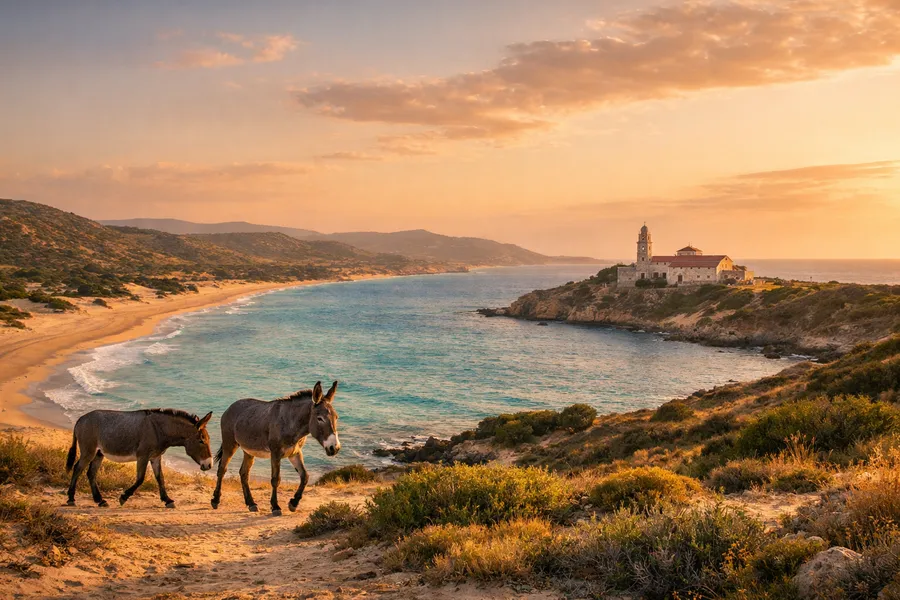
Karpasia (the Karpaz Peninsula) is the most untouched—and perhaps the most cohesive—stretch of Mediterranean coastline in Northern Cyprus. Here you will find pristine beaches, protected natural areas, active monasteries, and a rare sense of quiet that is increasingly difficult to encounter in the region’s resort destinations.
According to official sources and specialist agencies—from the Cyprus tourism portal Visit Cyprus to the Department of Antiquities of the Republic of Cyprus, and the Department of Fisheries and Marine Research, which oversees sea turtle conservation programs—the peninsula is widely recognized as a territory where landscapes, biodiversity, and cultural heritage converge in a uniquely balanced way.
Residential complexes in Northern Cyprus
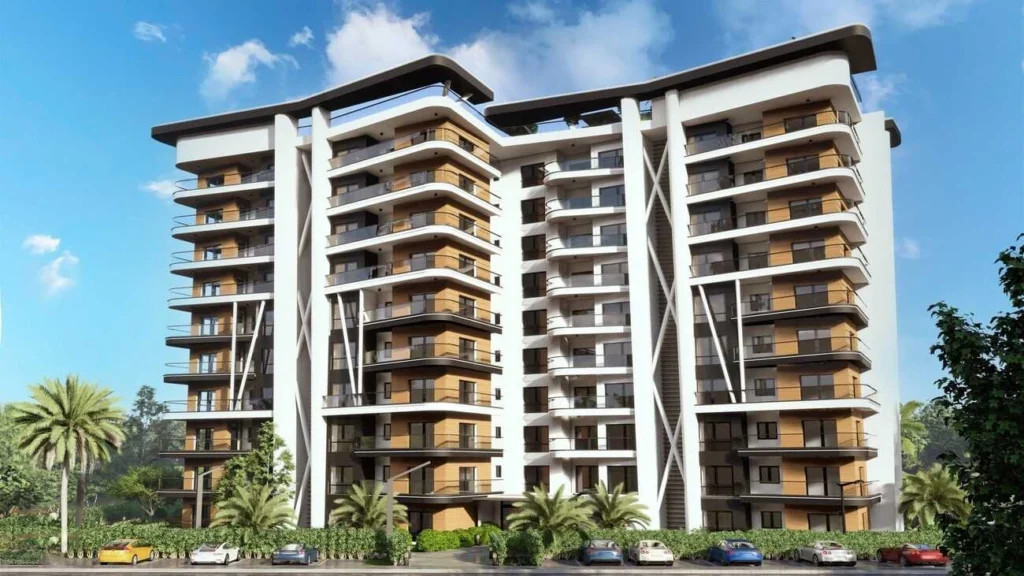

from $214 428
Infinity
 Iskele
 from 64м²
from $178 252
CAESAR BLUE
Bogazfrom 50м²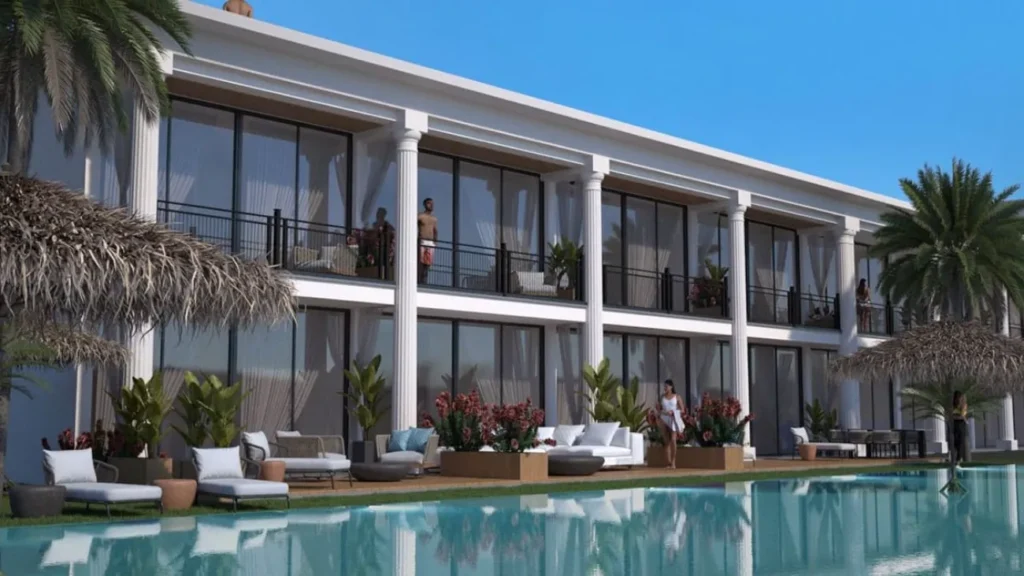
from $306 600
Aloha Beach Resort
Tatlisufrom 35м²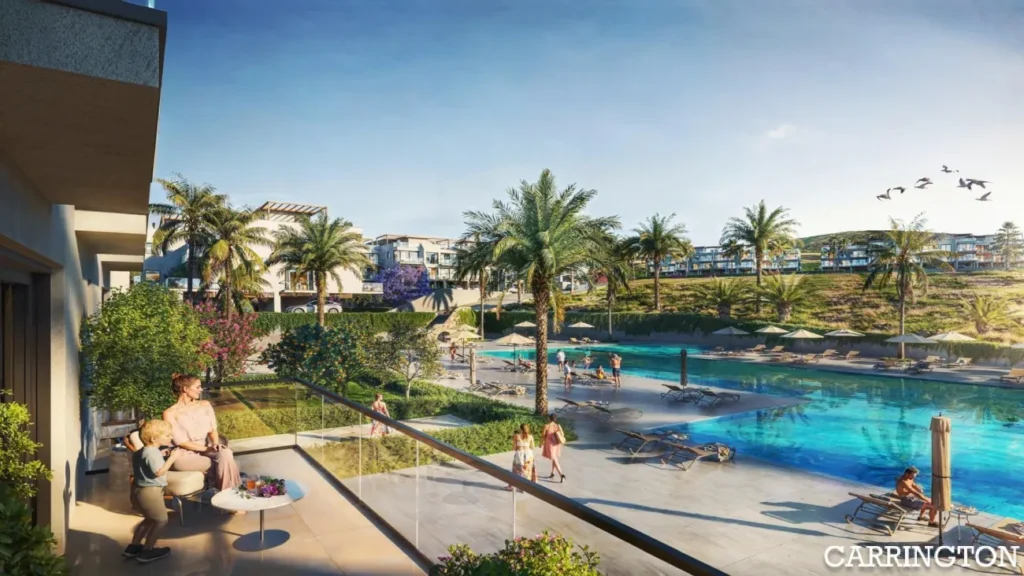
from $248 100
ATLANTIS PEARL
Esentepefrom 40м²For travelers researching Karpaz Peninsula attractions or things to do in Karpasia, as well as those considering a peaceful location for living or property investment, this Karpasia travel guide offers a helpful starting point.
Important: The Karpaz Peninsula in Northern Cyprus is a rare example of a region where the “best places to live by the sea” and the best places to visit in Karpasia appear on the same map: internationally recognized beaches, protected nature reserves, Byzantine monasteries, and the unhurried rhythm of Mediterranean life.
Location and How to Get There
Where it is located:
The Karpaz Peninsula (Karpasia) forms the northeastern tip of Cyprus—a narrow “arrow” of land pointing toward the Middle East. Administratively it belongs to the northern part of the island and is logistically connected to Famagusta (Gazimağusa), Kyrenia (Girne), and Nicosia (Lefkoşa).
Routes and Transportation
- By car: the most convenient and practical option.
- From Kyrenia — about 2–2.5 hours (≈120–130 km)
- From Famagusta — about 1.5–2 hours (≈95–120 km)
- From Nicosia — about 2–2.5 hours
The route runs through İskele toward Dipkarpaz. The final stretch is especially scenic but includes speed limits and occasional wildlife crossings. - Car rental: typically €25–45 per day for an economy or compact vehicle. A security deposit is usually required depending on the rental company. Full insurance coverage is strongly recommended.
- Taxi or private transfer:
A ride from Kyrenia to Dipkarpaz generally costs €110–150 per car one way, with night fares approximately 10–15% higher. - Public transport:
Local dolmuş minibuses run to Dipkarpaz once or twice daily. Schedules are seasonal and best confirmed locally. - Crossing the “Green Line” (if traveling from the south):
The main checkpoints are Agios Dometios/Metehan (Nicosia) and Deryneia (near Famagusta). You will need a passport and, if entering by car, “third-party” insurance purchased at the checkpoint (approximately €25–35 for three days). Always verify requirements with your rental provider in advance.
Tip: Plan to arrive before sunset. The final 30–40 km pass through poorly lit areas where wild donkeys—and occasionally sea turtles during nesting season—may cross the road.
1. Golden Beach (Altınkum Beach)
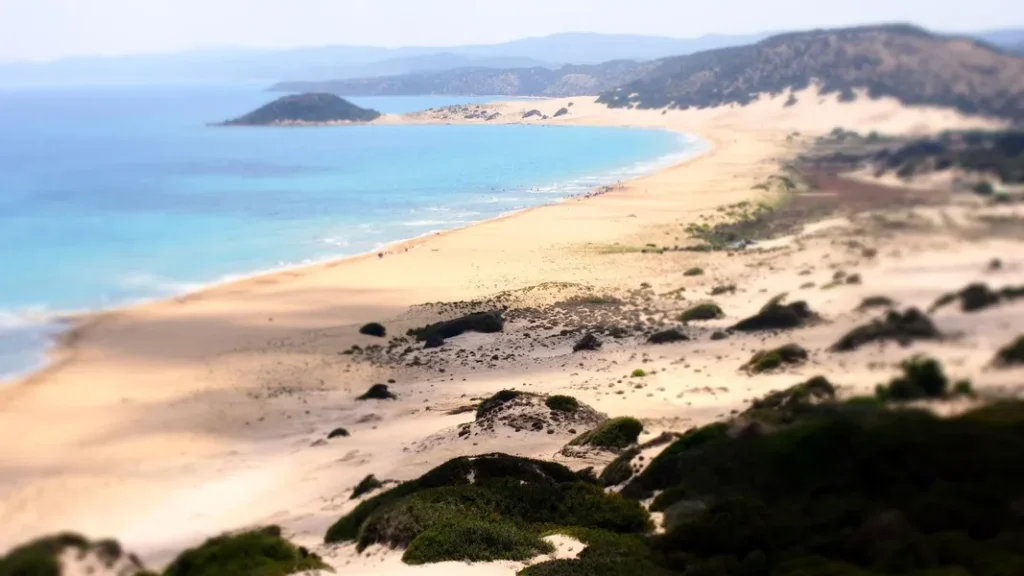
The longest and most photogenic stretch of sand on the Karpaz Peninsula, Golden Beach (Altınkum Beach) regularly appears on lists of the best beaches in the Karpaz Peninsula and is widely regarded as a benchmark for an unspoiled Eastern Mediterranean coastline. Here, visitors encounter soft golden sand, expansive natural dunes free from large-scale development, crystal-clear waters, and a level of tranquility that is increasingly rare along modern resort coasts.
According to the official Cyprus tourism portal Visit Cyprus and environmental authorities—including the Department of Fisheries and Marine Research—the beaches of the Karpaz Peninsula are among the Mediterranean’s most important nesting grounds for sea turtles, while the surrounding dunes form part of a fragile coastal ecosystem. As such, Golden Beach stands out as a key landmark among Karpaz Peninsula attractions and is consistently featured in guides to things to do in Karpasia.
Key point: Golden Beach represents a truly “wild” shoreline with minimal infrastructure, where the priorities are silence, pristine waters, and the preservation of natural dunes. The beach and its surrounding habitats are part of protected natural areas, particularly during the sea turtle nesting season.
Location and How to Get There
- Location: the eastern sector of the Karpaz Peninsula in Northern Cyprus, approximately 12–15 km east of the village of Dipkarpaz (Rizokarpaso).
- Access: an asphalt road leads to the Altınkum/Golden Beach turnoff; the final stretch consists of a graded dirt road that may develop potholes depending on the season.
- Landmarks: signs for Altınkum / Golden Beach appear after Dipkarpaz along the road toward Cape Apostolos Andreas.
Routes:
- By car: from Kyrenia (Girne) — about 2–2.5 hours (≈120–130 km); from Famagusta (Gazimağusa) — 1.5–2 hours (≈95–120 km); from Nicosia (Lefkoşa) — around 2–2.5 hours.
- Transfer or taxi: Kyrenia → Golden Beach typically costs around 120–160 € per vehicle one way; nighttime rates are higher.
- Dolmuş (minibus): available to Dipkarpaz; from there visitors continue by taxi or on foot. Schedules are seasonal.
- Best arrival time: early morning or late afternoon, when winds are lighter, the sun less intense, and parking easier.
Important: The final 3–5 km of the road pass through a sparsely populated area where **wild donkeys may wander onto the road**. Driving after dark is not recommended due to limited lighting and possible sand drifts.
What to See
- The beach and dunes: a wide stretch of pale sand extending for more than 2 km, with natural dunes rising several meters high and no dense coastal development. The shoreline slopes gently, making entry into the sea easy and comfortable.
- Water and swimming: the sea here is exceptionally clear, with calm waters typically found in the morning hours. Winds can pick up later in the day during peak season. Rocky edges of the lagoon provide occasional opportunities for snorkeling.
- Wildlife: Golden Beach is one of the most important turtle beaches in Northern Cyprus, where both Caretta caretta (loggerhead turtles) and Chelonia mydas (green sea turtles) nest. Conservation and monitoring programs are coordinated by the Department of Fisheries and Marine Research.
- Scenic viewpoints: natural elevations along the dune ridges provide panoramic views of the slender “arrow” of the Karpaz Peninsula stretching into the Mediterranean—some of the region’s most notable scenic viewpoints.
- Nearby landmarks:
- Cape Apostolos Andreas, located 8–10 km further along the coast
- Apostolos Andreas Monastery, an important historical and cultural landmark of the peninsula.
Responsible visiting practices:
- Do not place umbrellas or loungers on dunes or in areas marked with stakes or signs (these indicate turtle nests).
- Avoid using artificial lighting on the beach during nesting season (June–September).
- Do not drive ATVs or off-road vehicles across the dunes, as this damages fragile vegetation and root systems.
Note: Infrastructure at Golden Beach is intentionally minimal. A few seasonal cafés and rental points operate during the warmer months, but services are limited. Bring sufficient water, sun protection (SPF 50), hats, and cash, as mobile reception and card payments can be unreliable.
Costs and Opening Hours
Golden Beach is a public natural area with no centralized entrance fee. Costs depend on the season and specific service providers.
| Service / Expense | Approximate Cost | Hours / Notes |
|---|---|---|
| Beach access | Free | Open 24 hours |
| Parking near access points | 2–5 € per vehicle | Available at all times; informal parking areas |
| Sun loungers / umbrellas (seasonal) | 5–8 € per item | May–October; limited availability |
| Showers / restrooms (seasonal) | 1–2 € | Usually located near beach cafés |
| Eco turtle-watching tours | 15–25 € per person | June–September; advance booking required |
- Season: swimming conditions are generally comfortable from late April through early November, with peak visitation between June and September.
- Lifeguards: there are no permanent lifeguard stations; visitors are responsible for their own safety.
- Restrictions: areas containing turtle nests may be partially closed during nesting season. Updated recommendations are usually posted on information boards or issued by environmental authorities. For general travel information, consult the official portal Visit Cyprus.
Safety: Always observe warning signs and temporary barriers. Fines for damaging turtle nests or dune habitats can be substantial, and monitoring increases during the peak nesting season.
In summary, Golden Beach represents one of the defining nature attractions in Northern Cyprus and remains among the most iconic Karpaz Peninsula tourist attractions. It is an ideal destination for travelers seeking wide open coastal landscapes without crowds, water sports, or large resorts—those who value eco-tourism and are willing to respect the principles of responsible visitation.
For up-to-date environmental guidance and regional information, consult official sources such as Visit Cyprus and the materials published by the Department of Fisheries and Marine Research.
2. Apostolos Andreas Monastery
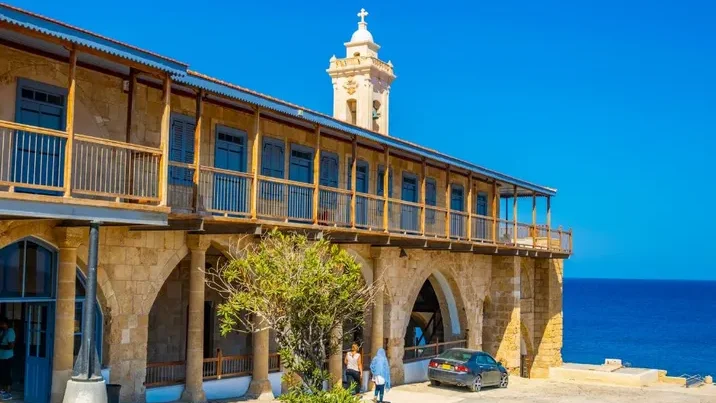
One of the most important sacred sites in Karpasia and a defining landmark of Karpaz Peninsula sightseeing, the Monastery of Apostolos Andreas stands near the very tip of the peninsula, where the Mediterranean Sea meets the narrow “arrow” of land stretching eastward. For Orthodox pilgrims, this site is closely associated with a miraculous spring believed to possess healing properties; for travelers, it offers a compelling combination of history, architecture, and sweeping coastal views.
Foundational information about the region’s sacred and Byzantine heritage can be explored through the resources of the Department of Antiquities of the Republic of Cyprus, while practical travel logistics across the region are best confirmed through the official Cyprus tourism portal. Today, the monastery complex functions both as an active place of worship and as an essential stop among the Karpaz Peninsula attractions.
Important: This is an active religious site. Please observe the dress code (shoulders and knees covered), maintain silence inside the chapels, and avoid using flash when photographing the iconostasis. During services, priority is given to pilgrims and worshippers.
Location and How to Get There
- Address: the easternmost edge of Karpasia (nearest village: Dipkarpaz / Rizokarpaso), only a few hundred meters from Cape Apostolos Andreas.
- Road access: from Dipkarpaz, follow the single coastal road heading east; the route is asphalt for most of the distance, with a graded section near the end. Signs for “Apostolos Andreas” mark the way.
- Distances:
• Dipkarpaz → Monastery: ≈10–12 km (15–20 minutes)
• Famagusta (Gazimağusa): ≈110–130 km (2–2.5 hours)
• Kyrenia (Girne): ≈120–140 km (2–2.5 hours)
• Nicosia (Lefkoşa): ≈120–150 km (2–3 hours) - Transport:
• Car: the most convenient option; the final 2–3 km may occasionally accumulate sand after strong coastal winds.
• Taxi or transfer: from Dipkarpaz — approximately €15–25 one way; from Kyrenia — roughly €120–160.
• Public transport: irregular dolmuş minibuses run to Dipkarpaz; from there continue by taxi or on foot. - Parking: informal parking areas are located near the entrance; during the high season a small fee may be collected.
- Accessibility: access to the main church involves steps; the small chapel near the spring is reached via a path that can become slippery after rain.
Tip: Arrive early in the morning, ideally before 10:00. The light is softer for panoramic views and visitor numbers are lower. Avoid traveling after dark—wild donkeys frequently wander onto the road near the cape.
What to See
- The main church (19th–20th centuries): a traditional ecclesiastical structure with galleries and a bell tower. Inside are an ornate iconostasis, icon stands, and candle areas. The interior atmosphere is dim and contemplative, with the quiet acoustics typical of coastal monasteries.
- The chapel of the spring: according to tradition, the Apostle Andrew struck the ground with his staff, causing a healing spring to emerge. Pilgrims often collect the water in small containers, and notes of gratitude are frequently left near the source.
- The courtyard and terraces: these offer uninterrupted views of the open sea and the narrow tip of the peninsula—one of the most striking vantage points along the Eastern Mediterranean coastline.
- Pilgrimage traditions: on the monastery’s feast day (30 November), believers from across the island gather here. Additional services are held in spring and during the Easter season.
- Heritage and restoration: the complex has undergone several phases of restoration and structural reinforcement over the years. The broader significance of Cyprus’s Christian heritage and its preservation is documented in the materials of the Department of Antiquities.
Visitor etiquette:
- Dress: shoulders and knees should be covered; beachwear is appropriate only outside the monastery grounds.
- Photography: no flash photography and no drones without special permission from relevant authorities.
- Conduct: avoid loud conversation and do not enter the altar area; candles should be placed only in designated locations.
| Visitor Quick Guide | Recommendation |
|---|---|
| Wind and weather | The cape can be windy year-round — bring a light jacket even in summer |
| Candles / oil | Available for purchase on site and may be lit inside the church |
| Holy water | Collect from the spring in small containers; please protect the path and surrounding area |
| Nearby attractions | Golden Beach (≈20–25 minutes), Cape Apostolos Andreas — just a short walk away |
Key point:Apostolos Andreas Monastery is not a museum but a living place of worship. Plan your visit with awareness of services and major pilgrimage days.
Costs and Opening Hours
- Admission: generally free of charge; voluntary donations for the parish are welcomed.
- Candles: typically around €1–2 each.
- Parking: approximately €2–3 per vehicle during the busy season when attendants are present.
- Guides: private half-day tours of the Karpaz Peninsula that include the monastery usually cost about €80–150 for groups of 1–4 people (arranged with licensed guides; check with tour operators or via Visit Cyprus).
Opening hours:
- Daily, approximately 08:00–17:00; in summer often extended until 18:00–19:00.
- Religious services and pilgrimage days may restrict access to certain areas. For updated information, consult local administrators or official heritage resources such as the Department of Antiquities.
Note: Opening hours and rules regarding photography or filming may be determined on site. Please respect staff instructions and any temporary restrictions during services.
The Monastery of Apostolos Andreas represents a rare point where spiritual tradition, dramatic maritime scenery, and the history of Byzantine Cyprus converge in a single location. Within the framework of Karpaz Peninsula attractions, it serves as a symbolic anchor—often marking the culmination of a journey to the cape, ideally combined with a coastal walk and a stop at Golden Beach.
When planning your visit, confirm travel logistics and general tourism guidelines on the official tourism portal, and consult heritage resources from the Department of Antiquities. Doing so ensures respect for the rhythm of this sacred place while allowing you to experience it fully and meaningfully.
3. Karpaz National Park
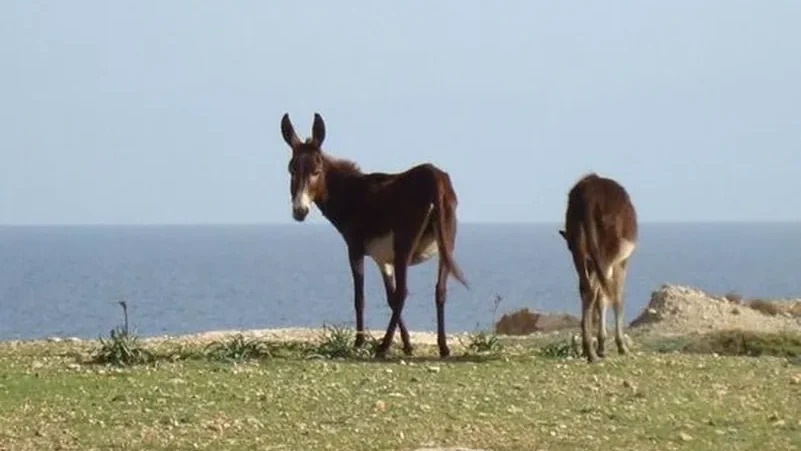
The ecological heart of the Karpaz Peninsula is a remarkable mosaic of sandy dunes, coastal groves, steppe plateaus, and rocky coves—an environment where protected habitats, rare bird species, and the iconic wild donkeys of Karpasia coexist. The park’s coastal zones form part of one of the Mediterranean’s most important nesting areas for sea turtles, with monitoring and conservation programs overseen by the Department of Fisheries and Marine Research of the Republic of Cyprus.
For general trip planning and seasonal travel advice, consult the resources of the official Cyprus tourism portal as well as environmental guidelines published by the Department of Forests, which provide information on wildfire risk levels and responsible movement through natural areas.
Key point: Karpaz National Park is a zone of low-impact visitation. Stay on marked trails, do not drive onto dunes or beaches, avoid disturbing wildlife, and leave no litter. During sea turtle nesting season (approximately June–September), access to certain areas may be restricted.
Location and How to Get There
- Geography: the eastern sector of the Karpaz Peninsula in Northern Cyprus, stretching from the surroundings of Dipkarpaz (Rizokarpaso) to Cape Apostolos Andreas and nearby beaches, including Golden Beach.
- Access roads: the main asphalt route runs through İskele → Dipkarpaz; final access to beaches and dune fields is typically via graded dirt or compacted gravel roads.
Distances:
- Dipkarpaz → central areas of the park: 5–15 km (10–30 minutes depending on location)
- Famagusta (Gazimağusa) → park: ≈100–120 km (1.5–2 hours)
- Kyrenia (Girne) → park: ≈120–140 km (2–2.5 hours)
Transport options:
- Car (2WD): the most practical option; after heavy rainfall, higher ground clearance can be useful.
- Taxi or transfer from Dipkarpaz: approximately €15–25 to key park locations (one way).
- Public transport: seasonal dolmuş minibuses reach Dipkarpaz; from there continue on foot or by taxi.
Parking: informal pull-off areas exist near trailheads; at some locations during summer a small parking fee may apply.
Safety tip: Reduced speed limits apply on internal park roads due to wildlife crossings—especially wild donkeys—and pedestrian trails. Evening and nighttime driving is discouraged because of minimal lighting and occasional sand drifts.
What to See
Natural dunes and beaches
Long arcs of pale sand—especially around Golden Beach—feature gentle entries into the sea and almost no built infrastructure. The dune vegetation here is a crucial part of the coastal ecosystem and highly sensitive to trampling.
Flora and landscapes
The terrain includes coastal juniper groves, wild poppies, salt flats, and open steppe plateaus. Spring (March–April) marks the peak flowering season, when the landscape bursts with color and attracts numerous pollinating insects.
Birdlife and migration
Raptors and migratory birds are frequently observed above the cape and coastline. Early morning and sunset hours offer the best conditions for birdwatching.
Sea turtles
The beaches of Karpasia are among the primary turtle nesting beaches of Northern Cyprus, hosting both Caretta caretta (loggerhead turtles) and Chelonia mydas (green sea turtles). Guidelines for visitors, volunteer programs, and conservation updates are published by the Department of Fisheries and Marine Research.
The wild donkeys of Karpasia
A symbol of the peninsula, these semi-wild herds roam freely and often wander onto the road. Feeding or approaching them closely is strictly prohibited, as it alters their natural behavior and increases the risk of accidents.
Scenic viewpoints
Natural elevations and rocky outcrops provide panoramic vistas across both the northern and southern coasts of the peninsula—some of the most striking scenic viewpoints for photography and quiet observation of the sea.
| Route / Trail | Distance / Time | Terrain | Highlights |
|---|---|---|---|
| Golden Beach Dune Loop | 2.5–3.5 km / 1–1.5 h | Sandy terrain with gentle rises | Dunes, sea panoramas, turtle nesting zones (seasonal restrictions) |
| Cape Apostolos Andreas Trail | 3–5 km / 1.5–2 h | Rocky coastal path | Lookout points, strong winds, sparse coastal shrubs |
| Dipkarpaz Coastal Trail to the Bays | 4–7 km / 2–3 h | Coastal paths and dirt tracks | Small lagoons, birdwatching, quiet beaches |
Responsible visiting guidelines:
- Travel only along designated roads and trails; do not drive cars or ATVs onto dunes or beaches.
- During turtle nesting season, avoid bright lights or flash photography on the beach at night and keep away from areas marked with stakes.
- Strictly follow the fire prevention rules. Guidance and seasonal wildfire risk levels are published by the Department of Forests.
- Carry sufficient water, sun protection, and footwear with good grip; mobile reception can be unreliable in some areas.
Important: Do not feed the wild donkeys and keep car windows and trunks closed—animals are attracted to plastic bags and may damage vehicles. Violations of conservation rules can result in fines.
Costs and Opening Hours
- Entry: free of charge (the park is an open natural area without central ticket points).
- Parking: usually free; at popular sites in summer a fee of €2–3 per vehicle may apply.
Eco-activities:
- Turtle-watching tours (group programs with guides or volunteers): €15–25 per person
(June–September, booking required; conditions and restrictions follow the guidelines of the Department of Fisheries and Marine Research). - Private nature guide: €80–150 for a 3–4 hour excursion for groups of up to four people (availability depends on season; check operators listed on Visit Cyprus).
- Bicycle rental in Dipkarpaz: approximately €12–20 per day, subject to availability.
Infrastructure:
There are no permanent lifeguard stations or water supply points inside the park. Restrooms and showers are available only at selected beach cafés on popular coastal sections (typically €1–2).
Visiting hours:
- The park is open 24 hours a day.
- The best months for hiking are March–May and September–October. July and August bring peak heat, so plan outings at sunrise or sunset.
- Certain beaches and dune areas may close during evening hours or periods of active turtle nesting. Updated access information is typically posted on the official tourism portal and in notices issued by environmental authorities.
Karpaz National Park is a rare corner of the Mediterranean where wild coastlines, historic vistas, and protected natural ecosystems coexist within a single landscape. It remains one of the most significant Karpaz Peninsula attractions for travelers who value quiet exploration, wildlife observation, and unhurried walks along the sea.
Plan your route carefully, check seasonal restrictions in advance, and treat the fragile ecosystems with respect—doing so ensures that your visit is both enriching and environmentally responsible.
4. Kantara Castle
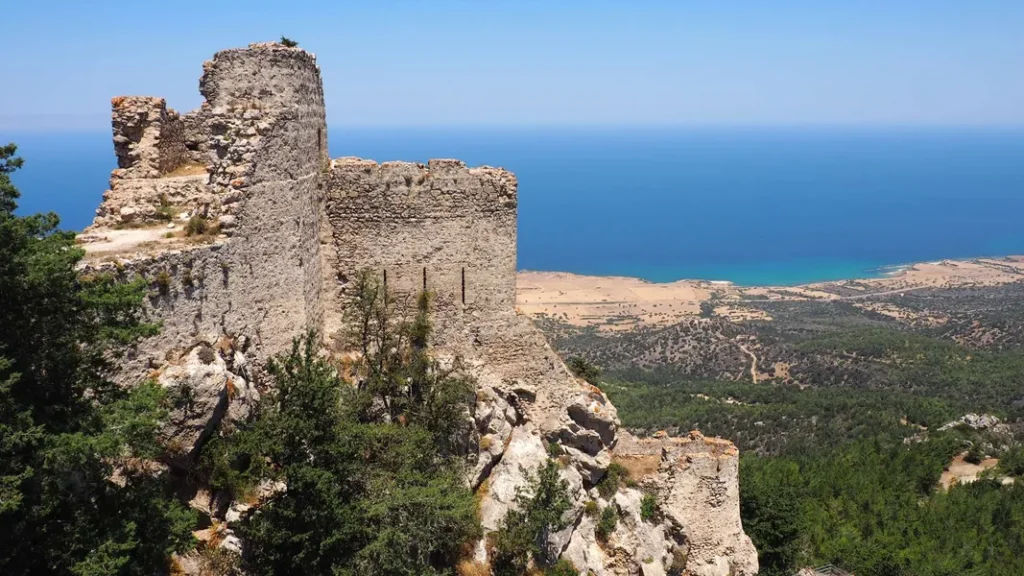
One of the most impressive medieval strongholds of the Kyrenia mountain range and a landmark among Karpaz Peninsula attractions, Kantara Castle originated as a Byzantine fortress in the 10th century. It was later reinforced by the Lusignans and subsequently used by the Venetians as a watchtower citadel controlling the Mesaoria plain, both the northern and southern coasts of Cyprus, and the routes leading toward the Karpaz Peninsula.
Essential background on the history and preservation of Cyprus’s castles can be found on the portal Visit Cyprus and in the materials published by the Department of Antiquities of the Republic of Cyprus. Today, Kantara Castle is regarded as one of the most remarkable scenic viewpoints in Northern Cyprus and a must-visit destination for anyone planning Karpaz Peninsula sightseeing.
Key point: Together with the castles of St. Hilarion and Buffavento, Kantara forms the celebrated “trio” of mountain fortresses along the Kyrenia range. From the summit of Kantara, it is possible—on a clear day—to see both the northern and southern coasts of Cyprus, a panoramic perspective that is rare even by Mediterranean standards.
Location and How to Get There
- Location: the eastern section of the Kyrenia mountain range, often described as the “gateway” to the Karpaz Peninsula (administrative district of İskele). The castle stands at an elevation of approximately 630 meters above sea level.
- Access roads: a winding mountain road climbs from the northern coast near Kaplıca/Davlos, or alternatively from the southern side via Geçitkale.
Distances / travel time:
- Iskele (Trikomo) → Kantara: ≈35–40 km, 45–60 minutes
- Famagusta (Gazimağusa): ≈55–65 km, 1–1.5 hours
- Kyrenia (Girne): ≈60–70 km, 1.2–1.5 hours
- Dipkarpaz (Rizokarpaso): ≈70–80 km, 1.5–2 hours
Transport options:
- Car: the most practical choice; the route includes serpentine curves, narrow sections, and occasional steep gradients.
- Taxi or transfer: from Kyrenia approximately €60–100 one way; from Famagusta around €50–80.
- Dolmuş (minibus): there are no regular services to the castle itself; visitors typically travel to nearby villages and continue by taxi.
Parking: available near the lower gate and trail entrance; space can be limited during peak season.
Access: from the parking area, reaching the upper terraces requires climbing stone steps and walking along uneven paths. The ascent involves moderate physical effort, and sturdy footwear is recommended.
Important: The road to the fortress is steep and winding. Avoid driving up in heavy fog, strong winds, or after intense rain. At the summit, strong crosswinds are common throughout the year, so bringing a light windbreaker—even in summer—is advisable.
What to See
Outer walls and bastions
Remains of defensive curtain walls, arrow slits, and lookout balconies perched above steep cliffs reveal the fortress’s original defensive layout dating from the 10th–13th centuries.
The upper citadel
The ruins of towers and observation platforms offer a sweeping 360-degree panorama—northward toward the Mediterranean coast and southward across the vast Mesaoria plain.
Cisterns and utility chambers
These rainwater storage systems demonstrate the practical engineering typical of mountain fortifications and highlight how isolated garrisons sustained themselves.
The chapel and interior structures
Fragments of later medieval buildings survive within the fortress walls. General information about Byzantine and post-Byzantine monuments of Cyprus can be explored through the Department of Antiquities.
Scenic viewpoints and photography
Sunrise and late afternoon offer the most dramatic lighting conditions; midday light tends to flatten the landscape. Photographers often find a tripod useful in sheltered areas protected from the wind.
| Site / Area | Features | Recommendation |
|---|---|---|
| Lower Gate | Starting point of the ascent, with an informational sign | Take a photo of the castle map for orientation |
| Cisterns | Deep, uncovered wells | Keep children close and avoid leaning over the edge |
| Southern Terrace | Views across the Mesaoria plain and, on clear days, the Troodos Mountains | Best vantage point at sunset |
| Northern Wall | Strong winds and narrow passages | Wear sturdy footwear and keep a safe distance from the edge during gusts |
Rules and safety:
- Stone steps are uneven; wear closed shoes with good traction.
- Drone flights require permission from the appropriate authorities; regulations can be checked on the official tourism portal.
- Open fires are strictly prohibited; wildfire safety guidelines are published by the Department of Forests.
- Bring water and sun protection, as there is little shade and no natural water sources at the summit.
Tip: Combine a visit to Kantara with stops along the coast near Kaplıca/Davlos or continue onward toward the Karpaz Peninsula. This approach integrates the fortress naturally into a broader **Karpaz Peninsula sightseeing itinerary.
Costs and Opening Hours
- Admission: approximately €2–3 per person when ticket staff are present; children often receive discounts or free entry.
- Parking: usually free near the base of the site.
- Guided tours: private excursions lasting 3–4 hours for groups of up to four people typically cost €80–150, including the castle’s history and scenic photo stops. Booking can be arranged through tour operators listed on Visit Cyprus.
- Additional expenses: water or snacks at roadside cafés along the approach road typically range from €2–6.
Visiting hours:
- Generally open daily from 09:00 to 17:00, with extended hours until 18:00–19:00 during the summer season.
- Last entry is usually 30 minutes before closing. Temporary closures may occur during periods of strong wind or severe weather.
- Before visiting, check current opening hours and any restrictions on the official tourism portal and in the heritage reference materials of the Department of Antiquities.
Kantara Castle is one of those Northern Cyprus attractions where history and landscape merge seamlessly: Byzantine stone walls, mountain air, and sweeping views across two seas make the visit memorable even during a short stop. For routes across the Karpaz Peninsula, the fortress serves as a strategic link between the mountains and the coast—while for photographers and history enthusiasts it remains an enduring must-see among the best places to visit in Karpasia.
5. Dipkarpaz Village (Rizokarpaso)
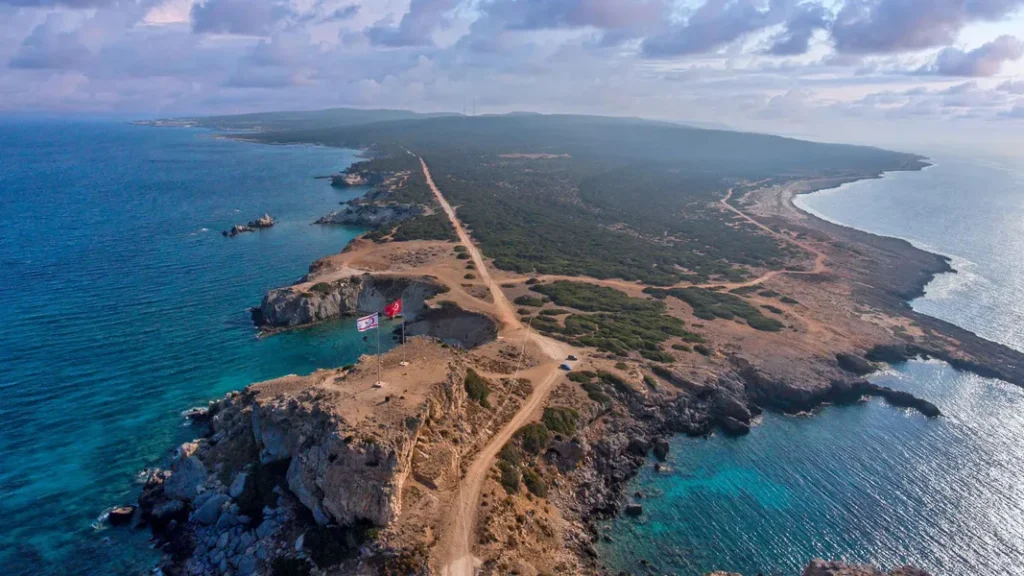
Dipkarpaz (Rizokarpaso) is the most authentic “frontier” settlement of the Karpaz Peninsula—a place where rural architecture, the shared cultural history of Greek Cypriots and Turkish Cypriots, an unhurried pace of life, and close proximity to the wild landscapes of the peninsula all converge. The village serves as a convenient base for exploring Karpaz Peninsula attractions, providing easy access to Golden Beach, Karpaz National Park, Cape Apostolos Andreas, and several important archaeological and religious sites.
Brief information about nearby early Christian monuments—such as Ayios Philon and Panagia Kanakaria—can be found in the resources of the Department of Antiquities of the Republic of Cyprus, while the broader tourism framework of the region is outlined on the official Visit Cyprus portal.
Important: Dipkarpaz is an active rural community. Please respect residents’ privacy, avoid photographing people without permission, and observe modest dress when visiting religious sites.
Location and How to Get There
- Geography: located at the central “neck” of the Karpaz Peninsula, at the crossroads of the roads leading to Golden Beach and Cape Apostolos Andreas.
Distances and travel times:
- Famagusta (Gazimağusa) → Dipkarpaz: ≈95–120 km, 1.5–2 hours
- Kyrenia (Girne): ≈120–130 km, 2–2.5 hours
- Nicosia (Lefkoşa): ≈120–140 km, 2–2.5 hours
Transport options:
- Car: the most practical option according to most Karpaz Peninsula travel tips; the final roads leading to beaches are often unpaved.
- Taxi or private transfer: Kyrenia → Dipkarpaz costs approximately €110–150 one way; short local rides within the area typically cost €5–15.
- Public transport: seasonal dolmuş minibuses reach the village once or twice daily; confirm schedules locally.
Parking: free spaces are available along the main street and near churches or cafés, though parking can become limited during peak season.
Tip: Bring cash. Card payment facilities and ATMs are limited. It is also wise to fill your fuel tank before continuing east, as petrol stations become increasingly scarce further along the peninsula.
What to See
Traditional architecture
The village features one- and two-story stone houses with inner courtyards, wooden shutters, and grapevine pergolas shading the streets—an archetypal image of Eastern Mediterranean coastal villages.
Church of Saint Synesios (Ayios Synesios)
An active Orthodox church that anchors the historic quarter of the village. To understand the broader context of early Christian and Byzantine monuments in the region, consult the reference materials of the Department of Antiquities.
The Rizokarpaso Mosque
A modest rural mosque with a slender minaret. Visitors are welcome outside prayer times, provided that modest dress is observed.
Village squares and cafés
Local restaurants and cafés serve homemade cuisine: meze with fresh herbs, grilled fish, barbecue dishes, halloumi/hellim cheese, carob syrup, and artisanal olive oil.
Market life
Morning stalls offer fresh produce from local farmers, as well as regional honey, herbs, and cheeses. The best selection is usually available during the first half of the day.
Nearby ruins and sacred sites
- Ayios Philon Archaeological Site — well-preserved remains of an early Christian basilica and an ancient coastal settlement (10–15 minutes by car; described in more detail in the relevant section).
- Panagia Kanakaria Church — one of the most important Byzantine churches of the Karpaz Peninsula (≈30–40 minutes by car; additional information can be found in the relevant section and on the portal of the Department of Antiquities).
Surrounding nature
From Dipkarpaz, visitors can easily venture into Karpaz National Park, observe the peninsula’s famous wild donkeys (without feeding them), or enjoy quiet sunset walks along coastal trails—a perfect introduction to the region’s soft eco-tourism.
Responsible visiting practices:
- Cover shoulders and knees when visiting churches or the mosque; avoid flash photography indoors.
- Do not leave food for wild animals—this disrupts their natural behavior and increases the risk of road accidents.
- Whenever possible, buy local crafts and produce directly from village vendors. This supports the community and reduces the environmental footprint of long-distance supply chains.
Key point: Dipkarpaz serves as the gateway to the nature reserve landscapes of Karpasia and represents a rare cultural bridge between traditions. Staying overnight here allows travelers to reach beaches and archaeological sites at sunrise—before the crowds arrive.
Costs and Opening Hours
Below are approximate costs and operating hours for common services and attractions in the village (prices may vary by season):
| Service / Attraction | Approximate Cost | Hours / Notes |
|---|---|---|
| Guesthouses / boutique apartments | €35–70 per night (double room) | Private accommodation; advance booking recommended June–September |
| Lunch or dinner in a local restaurant | €12–20 per person (meze / grilled dishes / fish) | Typically 12:00–22:00; shorter hours off-season |
| Coffee or pastries | €2–4 | Cafés usually open from 08:00–09:00 |
| Taxi within the area | €5–15 (within the village or nearby beaches) | Golden Beach — €15–25 one way |
| Bicycle rental | €10–20 per day | Subject to availability; deposit may apply |
| Church visits (Ayios Synesios) | Free; donations appreciated | Usually 08:00–17:00; access may be limited during services |
| Mini-market / farmers’ stalls | Vegetables & fruits €1–3 per kg; cheese €6–10 | Best selection in the morning, 08:00–13:00 |
- ATMs and payment: cash is preferable, as card payments are not accepted everywhere.
- Sundays and holidays: some shops may close; restaurants often operate with reduced hours.
- Tourism guidance: general travel information for Karpaz Peninsula sightseeing can be found on Visit Cyprus, while historical background for nearby monuments is available through the Department of Antiquities.
Safety: Village streets are poorly lit in the evening, and wild donkeys sometimes appear on nearby roads. Plan longer drives during daylight hours and keep your speed lower than usual.
Dipkarpaz village is a living highlight of any Karpaz Peninsula travel guide. Here visitors can experience the quiet rhythm of Mediterranean village life, taste local products, explore places of worship from two traditions, and calmly plan excursions to Golden Beach, Ayios Philon, and Cape Apostolos Andreas.
For orientation across the region and deeper insight into its cultural heritage, consult the official tourism portal and the research materials of the Department of Antiquities—a reliable way to ensure that your journey is both meaningful and respectful of the local environment.
6. Ayios Philon Archaeological Site
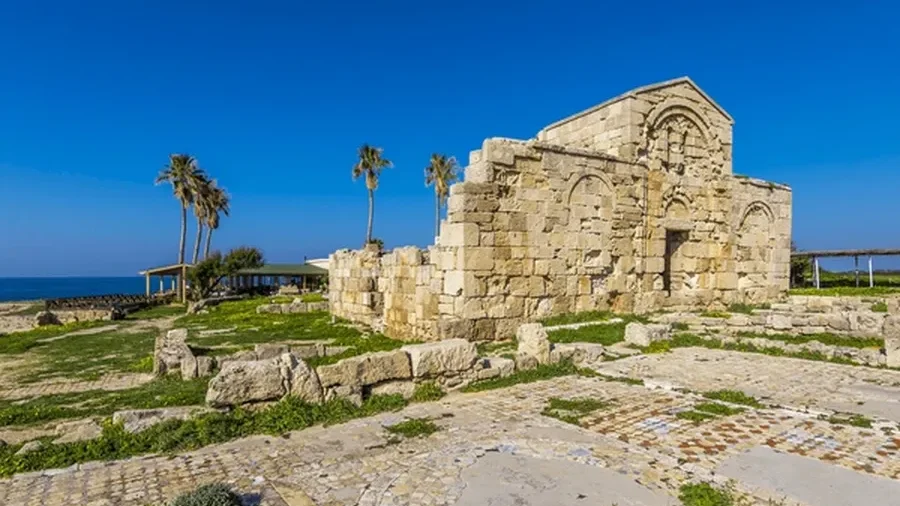
Ayios Philon is a coastal archaeological complex located near the village of Dipkarpaz (Rizokarpaso), where the layers of an ancient city—Carpasia, an early Christian basilica from the 5th–6th centuries, and a later Byzantine church dating to the 12th century—can all be observed within a single site. The location is considered one of the most significant historic sites in Karpasia and ranks among the most visually compelling stops on any Karpaz Peninsula sightseeing itinerary. Here, the sea, ancient mosaics, the apse of an early church, and traces of a classical harbor lie literally within walking distance of one another.
For a broader understanding of Cyprus’s early Christian heritage, consult the resources of the Department of Antiquities of the Republic of Cyprus, while the regional tourism framework can be explored through the official Visit Cyprus portal.
Key point: Ayios Philon is a rare “multi-layered” historical site where ancient urban structures, an early Christian basilica, and a medieval Byzantine church coexist within the same landscape, framed by sweeping views of the Mediterranean coast.
Location and How to Get There
- Geography: located on the northern coast of the Karpaz Peninsula in Northern Cyprus, approximately 5–7 km north of the center of Dipkarpaz (Rizokarpaso). Road signs typically indicate the site as Ayios/Agios Philon or St. Philon.
- Access: from Dipkarpaz, follow the northern road toward the sea using signs for Ayios Philon. The final 500–800 meters lead along a narrow coastal road or dirt track.
Distances and travel time:
- Dipkarpaz → Ayios Philon: 10–15 minutes by car
- Famagusta (Gazimağusa): ≈100–120 km, 1.5–2 hours
- Kyrenia (Girne): ≈120–140 km, 2–2.5 hours
Transport options:
- Car: the most convenient way to reach the site; informal parking is available near the entrance.
- Taxi or transfer: from Dipkarpaz approximately €8–15 one way, from Kyrenia around €120–160.
- Public transport: seasonal dolmuş minibuses run to Dipkarpaz; from there visitors continue by taxi or on foot.
Accessibility: the terrain is uneven; paths lead down to the mosaics, and some sections include stone steps.
Important: The shoreline features slippery rocks and strong coastal winds. Footwear with good traction is essential. Families with children or visitors with limited mobility may prefer to view the site from the main observation areas.
What to See
Early Christian basilica (5th–6th centuries)
A three-aisled basilica whose apse, fragments of columns, and stone slabs remain visible. Portions of the original mosaic flooring with geometric patterns survive; some sections are protected and closed to foot traffic.
The 12th-century Byzantine church
A compact church built atop the ruins of the earlier basilica, partially reusing its architectural elements. The exterior masonry reflects typical characteristics of the late Byzantine period.
Mosaic floors
The best viewpoints are located along the perimeter walkways. From these vantage points, the outlines of the basilica’s original aisles and corridors become clearly visible between the preserved mosaic fragments.
The ancient port of Carpasia
Along the shore, traces of harbor structures and breakwaters can still be seen—some partially submerged. These remnants provide tangible evidence of the maritime trade that once flourished here in antiquity.
Interpretive panels
On-site informational boards outline the site’s historical phases and architectural layout. A more detailed scholarly overview is available through the Department of Antiquities.
Coastal panoramas
Natural terraces near the ruins overlook the Mediterranean Sea and surrounding rocky coves, making the site one of the most atmospheric Karpaz Peninsula attractions for landscape photography.
Quick reference to the site’s historical layers:
| Historical Layer | Period | What Can Be Seen Today | Notes |
|---|---|---|---|
| Ancient city of Carpasia | 4th century BC – 4th century AD | Fragments of masonry and outlines of the harbor | Wave action sometimes reveals breakwater structures |
| Basilica of Ayios Philon | 5th–6th centuries | Apse, columns, mosaic floors | Typical three-aisled early Christian layout |
| Byzantine church | 12th century | A small church built atop the basilica’s foundations | Reuse of earlier stone materials |
Guidelines for respectful exploration:
- Do not step on the mosaics or cross protective barriers.
- Do not remove fragments of stone or pottery; the site is part of protected cultural heritage.
- Drone flights require official permission. Check current tourism regulations on the Visit Cyprus portal.
For photographers: The best light occurs in the morning before 10:00 or about 1–1.5 hours before sunset. A polarizing filter can enhance the visibility of mosaic textures and stone structures.
Costs and Opening Hours
- Admission: generally free of charge; there is no permanent ticket booth.
- Parking: usually free; in peak season a small fee of €1–2 may occasionally be collected by local administrators.
- Guided tours: private guides offering tours of the Karpaz Peninsula with a stop at Ayios Philon typically charge €50–90 for a 1.5–2 hour visit (for groups of 1–4 people).
Combined tours such as “Dipkarpaz + Ayios Philon + Golden Beach” generally cost €90–150 for a half-day group excursion, depending on the operator. Listings can be found on the official tourism portal. - Additional expenses: water or coffee at nearby cafés costs around €2–5. Souvenirs are rarely available on site, so bringing cash is advisable.
Visiting hours:
- The site is an open archaeological area best visited during daylight hours.
Approximate visiting window: 08:00–18:00 in winter, until 19:00–20:00 in summer. - During storms or heavy rain, access may be limited due to slippery surfaces. Maintain a safe distance from the waterline when waves are strong.
- Updated information about Cyprus’s cultural heritage monuments is available through the Department of Antiquities.
The Ayios Philon Archaeological Site is an essential stop in any Karpaz Peninsula travel guide for visitors seeking a vivid encounter with early Christianity and the remains of an ancient coastal city. Its location pairs naturally with a visit to Dipkarpaz and Golden Beach—arrive in the morning to explore the mosaics at leisure, capture panoramic views, and still reach the beaches before the midday heat sets in.
When planning your trip, consult the materials of the Department of Antiquities and the travel recommendations on Visit Cyprus. Doing so will help ensure both a respectful approach to heritage protection and a richer experience at one of the most important historical landscapes of the Karpaz Peninsula.
7. Karpaz Gate Marina
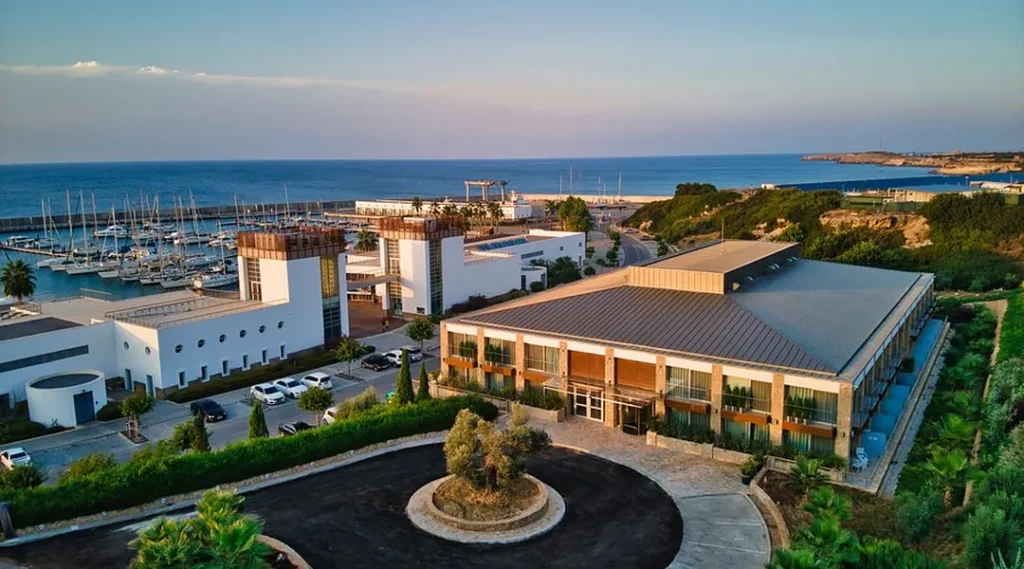
A modern, internationally recognized marina on the northeastern coast of Cyprus, Karpaz Gate Marina represents a rare example of full-service maritime infrastructure set within the wild natural surroundings of the Karpaz Peninsula. The complex combines berths for yachts—including large motor vessels—a shipyard and dry dock, a fuel pontoon, and a waterfront promenade lined with restaurants, all within close reach of the peninsula’s unspoiled bays.
For general planning of coastal travel and marine activities, consult the official Cyprus tourism portal. Environmental guidelines for coastal waters and protected marine species are available through the Department of Fisheries and Marine Research. Basic principles of maritime safety and responsible vessel operation are outlined by the Deputy Ministry of Shipping of the Republic of Cyprus, covering navigation standards, provisioning, and environmental protection.
Important: Karpaz Gate Marina operates as a quiet harbor within a protected natural area. Discharging wastewater, dumping garbage overboard, or exceeding speed limits in the marina basin is strictly prohibited under general maritime regulations and environmental protection guidelines.
Location and How to Get There
- Address and geography: located on the northern coast of the Karpaz Peninsula, near the town of Yeni Erenköy, within the coastal zone of Northern Cyprus.
Access by land:
- From Iskele (Trikomo): ≈40–45 km, 45–60 minutes
- From Famagusta (Gazimağusa): ≈70–80 km, 1–1.3 hours
- From Kyrenia (Girne): ≈85–95 km, 1.5–2 hours
The road is paved, and directional signs lead directly to the marina’s main entrance.
Approach by sea:
The marina basin is protected by breakwaters. Mooring assistance is available upon entry with prior communication via VHF radio or the marina office. For the latest information regarding approach channels, depths, and entry procedures, contact the marina administration in advance.
Parking and accessibility:
A secure parking area is located near the main gate. Access to the docks is controlled via passes. Parts of the marina are barrier-free, with ramps providing access to the office and restaurants.
Tip: If planning a nighttime arrival by sea, request detailed entry instructions from the marina control in advance. Be mindful of coastal winds and possible local surge or swell conditions.
What to See
Promenade and restaurants
The marina’s waterfront promenade offers panoramic views of the Mediterranean Sea and the moored yachts. In the evening, subtle lighting and a relaxed atmosphere create a refined setting without the bustle of larger ports.
Beach club and leisure area
A dedicated swimming area with pools operates during the high season, featuring loungers, shaded seating, and showers. Restaurants typically follow a smart casual dress code.
Shipyard and service area
Facilities include a travel lift capable of handling large yachts, dry dock areas, and comprehensive hull and deck repair services—valuable for vessels navigating the sailing and motor yacht routes of the Eastern Mediterranean.
Events and entertainment
Seasonal programming may include small concerts, film evenings, and yachting gatherings. The current schedule is available from the marina administration.
Nearby routes and excursions
Short outings lead to the natural bays and sandy stretches that define the Karpaz Peninsula attractions, while day trips can easily reach Dipkarpaz, Ayios Philon, and Cape Apostolos Andreas.
Responsible yachting practices:
- Zero tolerance for dumping garbage or bilge water in the marina basin—use designated shore facilities.
- Maintain minimal speed inside the harbor (wake-free conditions) and follow instructions from marina staff when entering or leaving.
- During sea turtle nesting season (June–September), avoid bright lighting near beaches and anchorage areas. Environmental guidelines are available through the Department of Fisheries and Marine Research.
Key point: Karpaz Gate Marina offers a unique combination: direct access to the untouched landscapes of Karpasia while providing full-service facilities for yachts and visitors within walking distance.
Costs and Opening Hours
Below are approximate costs to help plan a visit. Actual prices vary depending on season, vessel length, and service requirements; confirm details with the marina administration.
| Service | Approximate Cost | Notes |
|---|---|---|
| Short-term berth (per day) | ≈ €0.8–2.5 per meter LOA / day | Depends on vessel length and season |
| Long-term berth (monthly+) | 15–35% discount from daily rate | Additional terms may apply with advance payment |
| Haul-out / launch (travel lift) | ≈ €9–15 per meter LOA | Weight limits accommodate large yachts (confirm with marina) |
| Dry dock storage | ≈ €0.30–0.60 per m² / day | Seasonal packages and perimeter security available |
| Electricity | ≈ €0.25–0.45 per kWh | Connections from 16–63 A upon request |
| Water supply | ≈ €2–4 per m³ | Metered or package pricing |
| Fuel (diesel/petrol) at pontoon | ≈ €1.2–1.8 per liter | Market-dependent pricing; fueling by schedule |
| Day access to beach club | ≈ €15–30 per adult | Includes loungers, pool access, and towel service |
| Boutique hotel at the marina | ≈ €90–160 per night | Higher rates during peak season; marina + hotel packages available |
| Dinner at waterfront restaurants | ≈ €18–35 per person | Mediterranean cuisine, seafood, and local wines |
Operating hours:
- Marina and security services: 24/7; dock access via passes.
- Office and administration: typically 09:00–18:00 (Mon–Sat); extended hours during the high season.
- Fuel pontoon: operates on schedule or upon request via marina control.
- Shipyard services: generally 09:00–17:00 on weekdays; activities involving noise or painting follow marina regulations.
Documentation and regulations:
- Keep vessel registration and insurance documents ready when mooring. General maritime procedures and safety guidance are available from the Deputy Ministry of Shipping.
- Environmental restrictions related to turtle nesting beaches, fishing, and protected marine species are outlined by the Department of Fisheries and Marine Research.
- Tourism information about the region and coastal infrastructure is available through Visit Cyprus.
Safety: Follow marina regulations, maintain minimal speed within the harbor basin, and use shore facilities for waste disposal. Non-slip footwear is recommended on the docks, and children should wear life jackets when near the piers.
Karpaz Gate Marina is one of the key Karpaz Peninsula attractions for yacht owners and travelers who value the combination of untouched coastline and comprehensive marina services. It provides a convenient starting point for sailing along the Mediterranean shores of Karpasia, as well as a comfortable base for exploring the peninsula’s natural landscapes, beaches, and cultural landmarks.
8. Cape Apostolos Andreas (The Eastern Tip of Cyprus)

Cape Apostolos Andreas, the easternmost point of Cyprus, forms the symbolic “prow” of the Karpaz Peninsula—a narrow strip of land thrust dramatically into the Mediterranean. This is a place of rugged cliffs, wind-swept panoramas stretching across both the northern and southern coastlines, and natural landscapes largely untouched by dense development. Just nearby stands the Monastery of Apostolos Andreas, an important cultural landmark briefly documented by the Department of Antiquities of the Republic of Cyprus, while the broader travel framework for the region and route-planning advice can be found on the official Visit Cyprus portal. The surrounding beaches also fall within the scope of environmental protection programs for sea turtles coordinated by the Department of Fisheries and Marine Research. Key point: The cape is a natural site with very limited infrastructure. Strong winds, a lack of shade, and rocky footpaths make proper equipment and a cautious approach essential.
Location and How to Get There
- Geography: the easternmost edge of the Karpaz Peninsula in Northern Cyprus, just a few minutes east of Dipkarpaz (Rizokarpaso) and the Apostolos Andreas Monastery complex.
- Access by land:
• Dipkarpaz → the cape: ≈10–12 km, 15–20 minutes
• Famagusta (Gazimağusa) → the cape: ≈110–130 km, 2–2.5 hours
• Kyrenia (Girne) → the cape: ≈120–140 km, 2–2.5 hours
• Nicosia (Lefkoşa) → the cape: ≈120–150 km, 2–3 hours - Road conditions: paved access for most of the route, followed by narrower sections and, in places, compacted dirt tracks leading to informal parking areas; signs typically read “Apostolos Andreas / Cape.”
- Transport options:
• Car: the most practical option; high clearance is not essential, though it can be useful after bad weather.
• Taxi or private transfer: from Dipkarpaz — approximately €10–20 one way; from Kyrenia — around €120–160.
• Public transport: irregular dolmuş minibuses reach Dipkarpaz; from there, continue on foot or by taxi. - Parking: informal roadside pull-ins near the trails; during high season, a small fee may occasionally be charged.
Important: The final 3–5 km are poorly lit, and wild donkeys may wander onto the road. It is strongly advisable to arrive in daylight and drive at a reduced speed.
What to See
- Rocky coastline: wave-cut terraces and natural stone “balconies” overlook the sea. On clear days, the coastline is visible on both sides of the peninsula’s narrow “arrow,” creating the striking impression of “two seas” on either side.
- Panoramas and photography: open horizons spanning 180–270 degrees, bright marine light, and the exceptional atmospheric clarity that comes with constant wind. The interplay of rock formations and turquoise water makes the cape ideal for both wide-angle landscape photography and telephoto detail shots.
- Natural environment: low coastal scrub, migratory birds passing overhead, and nearby coves that serve as seasonal turtle nesting areas. During the nesting season, access restrictions may apply; consult the guidelines issued by the Department of Fisheries and Marine Research.
- Nearby landmark: Apostolos Andreas Monastery, just a few minutes away by car or on foot—a major site of cultural and religious significance, with brief reference material available from the Department of Antiquities.
- Walking routes: short trails run along the cliff edge and lead to natural lookout points. Shoes with good grip and an adequate supply of water are essential.
Top viewpoints and photo spots:
| Location | Distance from Parking | Features | Best Time |
|---|---|---|---|
| Northern Ledge | 150–300 m along the trail | Views over the northern shoreline and wave-carved terraces | Morning (soft frontal light) |
| Southern Edge | 200–400 m, partly over rocks | Deep perspective toward the southern coastline | Late afternoon (warm tones, sculpted cliff outlines) |
| The Isthmus near the Monastery | 5–10 minutes on foot | Broad views of the cape with the monastery architecture in frame | Golden hour, especially on calmer days |
Guidelines for responsible visiting:
- Do not approach the cliff edge during strong gusts, and never climb onto overhanging rock ledges.
- Avoid using bright lights near beaches at night during turtle nesting season (June–September); refer to the guidance issued by the relevant environmental authority.
- Drone use is permitted only in accordance with local restrictions and general tourism rules; broader guidance is available on Visit Cyprus.
Tip: It is almost always windy at the cape. Bring a windbreaker, a cap with a secure strap, and protective covers for cameras or other equipment against dust and salt spray. In summer, the best time to visit is early morning or sunset.
Costs and Opening Hours
- Access: free of charge; there are no ticket booths.
- Parking: usually free, though in peak season a small fee of €2–3 per car may occasionally be collected by local administrators.
- Guided tours: private tours of the Karpaz Peninsula that include both the cape and the monastery typically cost €80–150 for 3–4 hours for groups of 1–4 people. Check current offers through the official portal and local operators.
- Taxi: Dipkarpaz → the cape costs approximately €10–20 one way; waiting time usually runs €10–15 per hour.
- Drinking water and snacks: seasonal cafés near the monastery typically charge €2–6. Card payments may be unreliable, so bring cash.
Visiting hours:
- The area is open 24 hours a day.
- The most comfortable months to visit are March–May and September–October, when temperatures are moderate and visibility is excellent; in summer, aim for early morning or sunset.
- In bad weather—storms, fog, or strong winds—some trails may be unsafe. Build flexibility into your plans and check general tourism guidance on Visit Cyprus.
Safety and environmental note: Drive slowly on the approach roads because of wild donkeys, never leave litter behind, and do not drive onto dune areas. Penalties for violating environmental protection rules can be substantial, and enforcement becomes stricter during the high season.
Cape Apostolos Andreas is the defining image of Karpasia’s wild coastal panorama: vast open horizons, the soundscape of the wind, and its close proximity to a revered monastery together create a complete and memorable portrait of Cyprus’s eastern edge. Within the wider map of Karpaz Peninsula attractions, it makes a natural final stop for the day—best visited during the golden hour, with respect for conservation rules and travel logistics planned through Dipkarpaz for convenience and safety.
9. Turtle Nesting Beaches of Karpasia
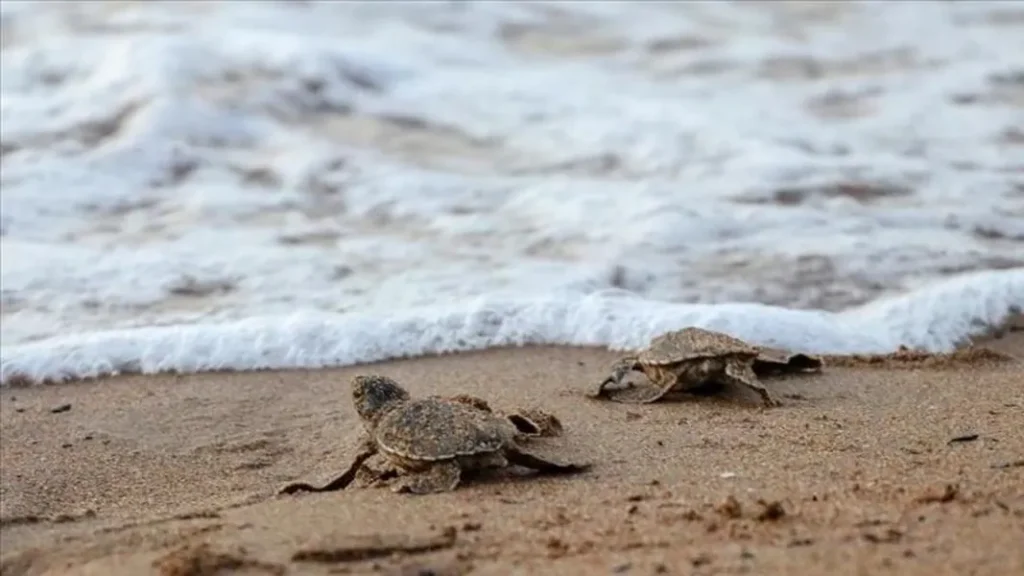
The coastline of Karpasia is one of the most important sea turtle nesting regions in the Eastern Mediterranean. Each year, two protected species lay their eggs along the sandy arcs of the Karpaz Peninsula: Caretta caretta (loggerhead turtle) and Chelonia mydas (green sea turtle). Detailed information about the biology and conservation of these species, along with guidelines for responsible visitor behavior, is available on the portal of the Department of Fisheries and Marine Research of the Republic of Cyprus.
For travel planning and practical Karpaz Peninsula travel tips, visitors can also consult the official Visit Cyprus tourism portal.
Key point: The beaches of Karpasia form a protected natural habitat. Disturbing nests, driving vehicles on the sand, using bright lights at night, or creating noise near the water during nesting season is strictly prohibited and may result in fines.
Location and How to Get There
- Geography: the northeastern coast of the Karpaz Peninsula in Northern Cyprus, stretching from the surroundings of Dipkarpaz (Rizokarpaso) to Cape Apostolos Andreas. Major nesting areas include Golden Beach (Altınkum), the sandy stretches east of the village, the coves near Cape Apostolos Andreas, and the northern beaches around Ayios Philon.
- Access routes: the main approach follows the Iskele–Dipkarpaz road; from there, signs direct visitors toward Golden Beach and Cape Apostolos Andreas. Final access to the beaches usually involves dirt tracks or compacted rural roads.
Travel times:
- Dipkarpaz → Golden Beach: 15–25 minutes (≈10–15 km)
- Dipkarpaz → Cape Apostolos Andreas: 15–20 minutes (≈10–12 km)
- Famagusta → Dipkarpaz: 1.5–2 hours
- Kyrenia → Dipkarpaz: 2–2.5 hours
Transport:
A standard 2WD vehicle is sufficient for most of the year, although higher ground clearance can be helpful after heavy rain. Taxi rides from the village to nearby beaches typically cost €10–25 one way.
Parking: informal roadside pull-in areas are located near beach access points; during peak season a small parking fee of €2–3 may occasionally apply.
Important: The final access points to the main beach arcs lie within protected park zones. Do not drive onto the sand or dunes with cars or ATVs, and avoid blocking access routes used by environmental teams and volunteers.
What to See
Nesting activity (May–July)
During the nesting period, female turtles come ashore at night. Their flipper tracks and the distinctive depressions of nesting sites can sometimes be observed in the sand. Observation is permitted only from a distance, in silence, without flash photography or bright lights.
Hatching season (July–September)
Early in the morning, visitors may spot tiny tracks leading from nests to the sea. Some nesting areas are protected with small cages or marked stakes as part of conservation monitoring programs.
Information boards and volunteer stations
Popular beaches often feature educational signs and temporary protective fencing. Scientific information about turtle conservation can be found through the Department of Fisheries and Marine Research.
Natural landscapes
Long stretches of golden sand, dune vegetation, and calm coastal lagoons make these beaches classic nature attractions in Northern Cyprus, ideal for quiet walks, birdwatching, and photography in a setting free from heavy infrastructure.
Key locations overview:
| Beach | Access | Sensitive Areas | Notes |
|---|---|---|---|
| Golden Beach (Altınkum) | Paved road followed by a short dirt track | Extensive dune fields and nesting corridors | The longest beach arc; seasonal restrictions are most common here |
| Coves near Cape Apostolos Andreas | Short rural roads branching from the main route | Localized nesting zones | Often windy; rocky sections along the edges |
| Beaches near Ayios Philon | Access from Dipkarpaz toward the northern coastline | Marked nesting areas with stakes | Convenient to combine with a visit to the archaeological site |
Guidelines for responsible observation:
- Distance: stay at least 5–10 meters away from nesting turtles and marked nests.
- Lighting: avoid flash photography or white lights; if necessary, use red-filtered light directed downward.
- Beach setup: do not place loungers or umbrellas on dunes or outside designated corridors; never level sand in marked nesting areas.
- Noise and crowding: avoid gathering large groups near the shoreline at night; keep noise levels low.
- Litter: remove all trash you bring—plastic debris and bags are especially harmful to turtles.
- Drones: may only be used when they do not disturb wildlife and in accordance with local regulations; general guidance can be found on Visit Cyprus.
Seasonal note: June through September marks the peak nesting and hatching period. Access to certain beach sections may be partially restricted from sunset to sunrise based on decisions by conservation authorities and volunteer projects.
Costs and Visiting Information
- Access: free of charge; these are natural beaches without centralized ticket points.
- Parking: usually free, though during peak months a symbolic fee of €2–3 per vehicle may be introduced by local administrators.
- Eco-tours and guided observation: evening or nighttime tours with guides typically cost €15–25 per person (June–September, advance booking recommended). Information and contacts are usually provided by the Department of Fisheries and Marine Research and on the Visit Cyprus portal.
- Additional expenses: water and snacks at seasonal beach cafés typically cost €2–6; sun loungers and umbrellas (where permitted) range from €5–8, outside protected zones.
Visiting hours:
- The beaches remain open 24 hours, although nighttime restrictions may apply in certain areas during nesting season.
- The best times for observation without disturbing wildlife are early morning—when tracks leading to the sea are visible—or organized evening tours.
- High season runs from June to September, when sea temperatures are warm and turtle activity peaks. In the off-season, walks along the beaches are quieter but sightings become less likely.
Safety and environmental protection: Never remove protective markers or cages placed over nests, do not dig sand in marked areas, and never drive vehicles onto dunes. Violating conservation rules may result in substantial fines. Detailed guidelines and explanations are available from the Department of Fisheries and Marine Research.
The turtle nesting beaches of Karpasia are among the most distinctive turtle beaches in Northern Cyprus and represent a vital part of the peninsula’s wildlife and natural heritage. Visitors can combine tranquil beach walks with respectful wildlife observation—provided that conservation rules are carefully followed. Plan your visit at sunrise or through guided eco-tours, and check seasonal restrictions through Visit Cyprus and official conservation resources to ensure both a meaningful experience and the preservation of this unique ecosystem.
10. Panagia Kanakaria Church
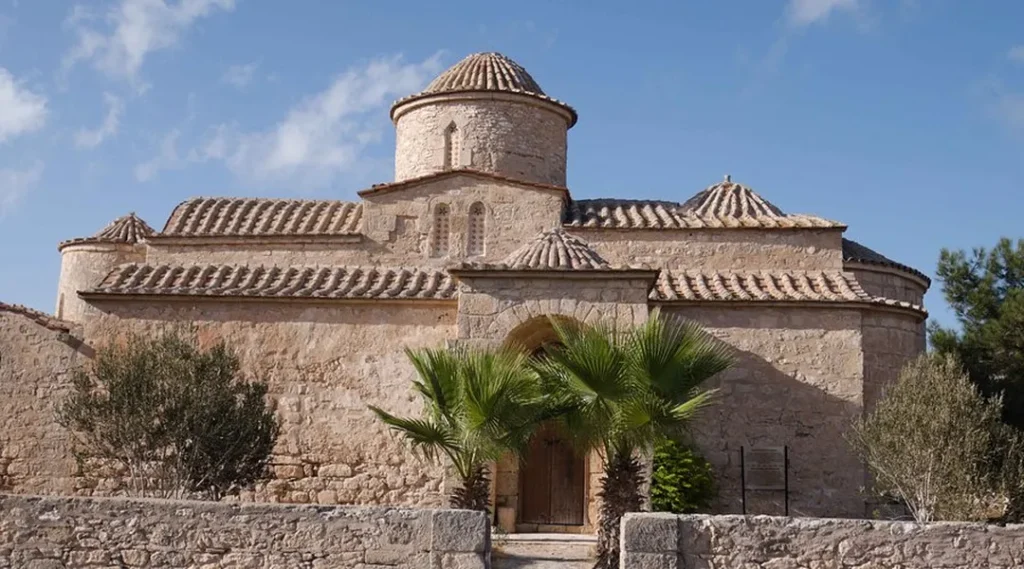
One of the most significant Byzantine sanctuaries of the Karpaz Peninsula, Panagia Kanakaria Church is renowned for its early Christian apse mosaics dating back to the 6th century—among the finest surviving examples of their kind in the Eastern Mediterranean. Following the dramatic events of the 20th century, some of these mosaics were lost, while several fragments were later recovered and returned to museums of the Republic of Cyprus. Scholarly information on early Christian and Byzantine heritage monuments is published by the Department of Antiquities of the Republic of Cyprus.
For practical travel planning and logistics within the region, consult the official Visit Cyprus tourism portal, which offers a convenient starting point for exploring the broader network of Karpaz Peninsula attractions.
Key point: Panagia Kanakaria is a site of exceptional cultural and historical significance, combining early Christian tradition, layered architectural history, and unique mosaics renowned far beyond Cyprus.
Location and How to Get There
- Geography: located in the central-eastern part of the Karpaz Peninsula, in the village of Lythrangomi (Turkish: Boltaşlı), along the main road connecting Iskele and Dipkarpaz.
Distances and travel time:
- Iskele (Trikomo) → Panagia Kanakaria: ≈40–50 km, 50–60 minutes
- Famagusta (Gazimağusa) → Panagia Kanakaria: ≈65–80 km, 1–1.5 hours
- Kyrenia (Girne) → Panagia Kanakaria: ≈75–95 km, 1.5–2 hours
- Dipkarpaz (Rizokarpaso) → Panagia Kanakaria: ≈35–45 km, 45–60 minutes
Access:
The church is located within the village itself; the final few hundred meters lead through narrow rural streets. Parking is typically available along the roadside near the church.
Transport options:
- Car: the most convenient option according to most Karpaz Peninsula travel tips.
- Taxi or private transfer: from Dipkarpaz approximately €25–40 one way; from Famagusta about €60–90.
- Public transport: seasonal dolmuş minibuses run along the Iskele–Dipkarpaz route; visitors can disembark near Lythrangomi and walk a short distance to the church.
Tip: Streets within the village are narrow and two-way. Park carefully without blocking access to the church or nearby homes.
What to See
- Architecture: a compact church structure with later additions built upon the remains of an early Christian complex dating to the 5th–6th centuries. The apse, fragments of original masonry, and traces of later medieval modifications remain visible.
- Historical significance: the apse mosaics depicting the Virgin Mary enthroned with angels are considered among the most important early Christian artworks on the island. Some original fragments are now preserved in museum collections of the Republic of Cyprus; further scholarly context is available through the Department of Antiquities.
- Interior details: remnants of historic plaster layers, stone portal elements, and architectural fragments reused from earlier classical and medieval structures.
- Church courtyard and surroundings: a shaded area near the western façade offers a good vantage point for understanding the building’s layout; from outside, the distinctive shape of the apse—typical of Byzantine ecclesiastical architecture—can be clearly seen.
- Information panels: brief explanations about the site’s dating and restoration work are displayed on location. For deeper preparation, consult the resources of the Department of Antiquities as well as general cultural route recommendations on Visit Cyprus.
Historical overview:
| Period | Historical Layer | What Can Be Seen Today |
|---|---|---|
| 5th–6th centuries | Early Christian basilica and apse mosaics | Apse and fragments of the basilica layout; mosaics themselves are no longer on site |
| 12th–14th centuries | Byzantine and post-Byzantine reconstructions | Sections of wall masonry and architectural details |
| Modern period | Restoration and conservation work | Visible repair joints and localized structural reinforcement |
Visiting etiquette:
- Dress code: shoulders and knees should be covered; head coverings are optional.
- Photography: no flash; tripods or drones require permission and should not be used during religious services.
- Conduct: maintain quiet respect; a donation box is often placed near the entrance to support the upkeep of the church and surrounding grounds.
Important: This is not a museum with permanent staff but an active village church. Interior access may depend on the presence of a caretaker or key holder and on the schedule of services.
Costs and Visiting Hours
- Admission: generally free of charge, though voluntary donations are welcomed (typically €2–5).
- Parking: free along the roadside near the church.
- Guided tours: private guides offering tours of the “historic Karpasia” route, including Panagia Kanakaria, typically charge €60–120 for a 2–3 hour visit for groups of 1–4 people.
Extended half-day itineraries focusing on “Churches and Archaeology of Karpasia” usually range from €120–180, depending on the operator. Listings can often be found on Visit Cyprus. - Additional expenses: water or snacks in nearby villages cost about €2–6; souvenir options are limited, so bringing cash is advisable.
Visiting hours:
- Best visited during daylight hours (approximately 09:00–17:00, extending to 18:00–19:00 in summer).
- During religious services or feast days, priority is given to parishioners and certain areas may be temporarily closed.
- Updated information about Cyprus’s cultural heritage monuments and early Christian sites is available through the Department of Antiquities.
Panagia Kanakaria Church is an essential stop on any Karpaz Peninsula sightseeing itinerary for those interested in early Christianity and Byzantine art. The architectural layers visible within the structure, the quiet atmosphere of the rural parish, and the powerful story behind its famous mosaics create a remarkable concentration of meaning in a modest setting.
Including the church in a route together with Ayios Philon and Dipkarpaz allows visitors to understand how the cultural core of Karpasia developed—and to appreciate the fragile heritage that Cyprus continues to preserve and study with care.
Conclusion
The Karpaz Peninsula brings together two qualities rarely found in combination across the Mediterranean: the raw, untouched character of nature and a remarkable density of cultural heritage. Protected turtle-nesting beaches, historic monasteries, and archaeological landmarks coexist here with the calm rhythm of coastal village life. It is no surprise that the region consistently features in itineraries highlighting Karpaz Peninsula attractions and is widely regarded as one of the best places to visit in Karpasia—from Golden Beach and Karpaz National Park to Cape Apostolos Andreas.
When planning your trip or exploring the region in greater depth, it is helpful to rely on official sources. Travel recommendations and logistical guidance are published by Visit Cyprus; information about cultural heritage sites can be found in the materials of the Department of Antiquities of the Republic of Cyprus; and environmental regulations, including those concerning the turtle beaches of Northern Cyprus, are outlined in the guidelines issued by the Department of Fisheries and Marine Research.
Residential complexes in Northern Cyprus
from $214 428
Infinity
Iskelefrom 64м²
from $178 252
CAESAR BLUE
Bogazfrom 50м²
from $306 600
Aloha Beach Resort
Tatlisufrom 35м²
from $248 100
ATLANTIS PEARL
Esentepefrom 40м²The conclusion is simple: if you are searching for a quieter side of the Mediterranean—one that remains largely untouched by excessive urbanization—Karpasia offers not only extraordinary landscapes, but also deep historical context and a rare sense of open space.
Planning a relocation or considering purchasing a home by the sea in Northern Cyprus? Leave a request, and our team will contact you to prepare a personalized Karpasia travel guide to the area and help you identify properties that match your goals—whether seaside apartments, residences near the beach, suburban villas, or first-line coastal homes.
To ensure a transparent process, we organize property viewings and video tours, conduct preliminary due diligence (including verification of land and development legal status), and coordinate the work of legal advisors and translators throughout the transaction.
 Real estate in Georgia
 Real estate in Montenegro
 Real estate in the UAE
 Real estate in Bali
 Real estate in Thailand
 Real estate in Spain
 Real estate in Saudi Arabia
 Real estate in Turkey
 Real estate in Zanzibar
 +90 533 888 29 50
 hello@cypria.homes
 Karsıyaka Sokak 8, Girne



 Get catalogue of TOP-7 objects