
 +90 533 888 29 50



There is no single best place to buy property in Northern Cyprus. The right location depends on your reasons for buying, your daily travel needs, the total cost of ownership, and the results of due diligence on the individual property.
For an urban lifestyle, compare suitable neighbourhoods in Kyrenia, Famagusta and North Nicosia. For a quieter coastal setting, investigate individual locations in Esentepe, Tatlısu or Lapta, while distinguishing İskele town from Long Beach and Boğaz. Güzelyurt, Lefke and Karpaz offer further alternatives, but should not automatically be treated as lower-budget options. Compare the full cost of specific properties, including renovation, maintenance and transport.
These suggestions are a starting point for narrowing down your options, not a definitive ranking. Before making any payment, independent legal due diligence is essential. In this market, a property’s land ownership history and legal documentation matter just as much as the view from its windows.
Northern Cyprus Locations: A Quick Comparison
In this guide, “Northern Cyprus” refers to the northern part of the island. It is a commonly used geographical term and does not imply any particular position on the territory’s legal or political status.
The ten areas compared below are grouped for the convenience of prospective buyers rather than according to official administrative boundaries. They also vary considerably in scale: Kyrenia encompasses a city and its surrounding suburbs, while Karpaz is a large, sparsely populated peninsula.
There are important differences within each area, too. Life in central Kyrenia is quite different from life in its outlying neighbourhoods. İskele and Boğaz are not interchangeable, just as urban Famagusta has relatively little in common with nearby Yeniboğaziçi. Similarly, towns in the west of the island cannot be compared directly with purpose-built coastal residential complexes.
Northern Cyprus Property Locations at a Glance
| Location | Character and Setting | Best-Suited Buying Scenario | Transport and Car Dependency | Main Trade-Off |
|---|---|---|---|---|
| Kyrenia and its eastern suburbs | Harbour city with residential suburbs extending into the hills | Permanent residence, family living, a combination of long- and short-term rentals | Some everyday errands can be done on foot in the centre; a car is generally needed in the suburbs | Building density and traffic congestion; conditions vary significantly between neighbourhoods |
| Alsancak and Lapta | Western suburbs and hillside villages | Peaceful residential living within reach of the city | A car is generally needed for everyday activities | Hillside properties may offer excellent views, but walking to the sea is not always practical |
| Esentepe and Bahçeli | Coastal villages and residential developments along the northern shoreline | Seasonal stays and a quieter residential lifestyle | A car is almost essential | Everyday services may be limited during winter |
| Tatlısu | Small coastal settlements | Peaceful holidays and living away from busy urban areas | A car may be needed for routine journeys; verify the routes for the property | Limited local amenities and longer journeys to major towns and service centres |
| İskele: Long Beach and Boğaz | Resort-style residential complexes and a harbour settlement | Holiday homes, rental properties, and new-build developments | Depends on the particular development and its distance from the town | Facilities within a residential complex are not the same as amenities available in the surrounding community |
| Famagusta and Yeniboğaziçi | University city and a separate nearby settlement and municipality | Long-term rental investments and urban living | Getting around is easier in the city; a car is generally needed in the suburbs | Rental prospects depend heavily on the target tenant segment and the property’s condition |
| Bafra | Flat coastal landscape with large hotel and resort developments | Seasonal property ownership near sandy beaches | A car is essential | Limited everyday activity and amenities outside the resort complexes |
| North Nicosia | Capital city and administrative centre | Employment, education, and year-round urban living | Urban transport routes are available, although a car remains useful | No direct access to the sea, heavy traffic, and substantial differences between neighbourhoods |
| Güzelyurt, Gaziveren, and Lefke | Towns and villages in the western part of the island | Town and coastal options to assess against a total ownership budget | A car is generally necessary | Check access to beaches and essential services, and obtain evidence for the intended rental or resale strategy |
| Karpaz Peninsula | Sparsely populated peninsula with extensive natural landscapes | Seclusion and nature-focused living | A car is essential | Long distances to healthcare, shops, and the airport |
Use this table as an initial screening tool. Start by eliminating locations whose main drawbacks would be difficult for you to accept. Then explore the remaining options in greater detail using the area profiles below.
Each profile follows the same set of criteria, making it easier to compare locations directly and assess which ones best match your lifestyle, budget, and property-buying goals.
What to Check Before Choosing an Area


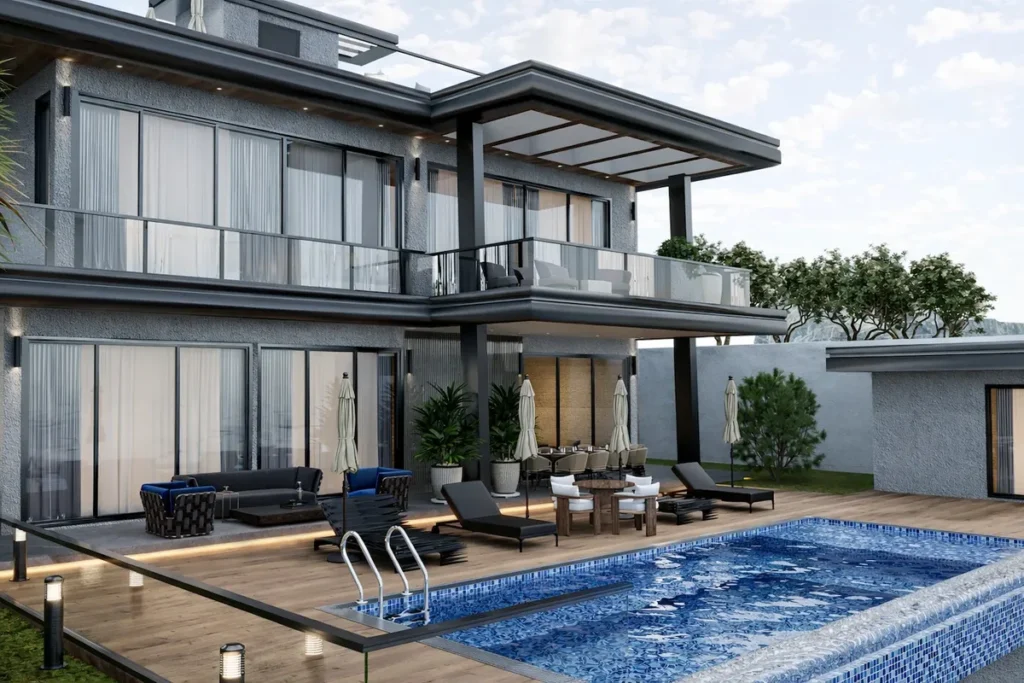
 Karsiyaka, Kyrenia West, North Cyprus
 from 304м²



Before comparing locations, investigate the property’s ownership history. UK government guidance on buying property in Cyprus warns that disputed ownership in the north can have serious legal and financial consequences. These risks can include civil claims and, where the legal conditions are met, criminal proceedings under Republic of Cyprus law. Article 303A of its Criminal Code addresses fraudulent dealings in another person’s immovable property, including certain purchases, rentals and promotional activities without the necessary owner’s consent. An independent lawyer should assess the particular plot and proposed transaction before any payment or commitment.
This guidance is primarily intended for British nationals and was updated in November 2019, so it should not be relied upon as a source of current property taxes or purchasing regulations. Nevertheless, its warnings about ownership disputes remain an important consideration.
Another relevant distinction concerns the island’s status within the European Union. According to the European Commission, the entire island of Cyprus is part of the EU, but the application of EU law is suspended in the northern part, where the government of the Republic of Cyprus does not exercise effective control.
Buyers should not assume that a transaction in the north benefits from the same legal framework as a purchase in areas controlled by the Republic of Cyprus. Property ownership and immigration permission are separate matters. A purchase does not itself provide a Republic of Cyprus residence permit or EU free-movement rights; any application to reside in the north must be assessed separately. The Republic of Cyprus does not recognise residence permits issued in the north.
A neighbourhood’s popularity is no guarantee that its properties have a clear legal history. Approval from local authorities does not necessarily eliminate risks associated with previous owners, and no category of title deed should be regarded as an unconditional guarantee of secure ownership.
Rules governing foreign property purchases, taxes, and administrative procedures can change. Always confirm the current requirements with an independent lawyer rather than relying on information provided by a seller or developer.
What to request and investigate before choosing a property:
- The history of the land and the full chain of ownership, rather than simply the current title document.
- The type of title deed and evidence that the seller has the legal authority to sell the specific property.
- Any encumbrances, mortgages, liens, or ongoing legal disputes involving the land or building.
- Building permits and confirmation that the completed house or apartment complies with the approved plans.
- Whether the buyer and the particular property qualify under the rules currently applicable to foreign purchasers; what purchase permission, contract registration and title-transfer steps are required; and which deadlines, conditions and transitional provisions apply to this transaction.
- The independence of your legal representation. Instruct a suitably qualified lawyer who acts for you, obtain written engagement terms, and ask for confirmation that the lawyer does not also represent the seller or developer in this transaction and has no relevant conflict of interest.
Kyrenia and Its Eastern Suburbs
Kyrenia (Girne) illustrates how strongly daily life can differ between a town centre and its surrounding residential areas.
The town centre and harbour district have closely spaced buildings and narrow streets. Bellapais, Ozanköy and Çatalköy offer different combinations of village housing, villas and newer developments, with both lower-lying and hillside locations. Check the elevation, gradients and access route of the individual property rather than assuming that every suburb has the same terrain.
Buyers are therefore not simply choosing “Kyrenia” as a destination. They are choosing a specific location within a geographically varied area, where both property values and the experience of daily life can differ considerably from one neighbourhood to another.
Buyers considering Kyrenia can compare older houses, apartments in residential complexes, hillside villas and properties under construction. Assess these categories separately: differences in condition, completion stage, legal documentation and ongoing costs can make apparently similar asking prices misleading.
Ongoing ownership costs depend on factors such as lifts, swimming pools, security services, heating systems, and road access. Properties on steep slopes can also present practical difficulties during winter or for older residents.
Kyrenia has shops, private medical clinics, and schools that operate throughout the year, including institutions offering English-language education. However, their presence does not eliminate the need for individual checks.
If schooling is a priority, investigate the specific school, its actual curriculum, and the journey from the property rather than relying on the distance shown on a map. Similarly, the presence of universities in Kyrenia does not guarantee strong rental demand for any particular apartment.
Living near the harbour or in the town centre makes it possible to reach the waterfront and many everyday amenities on foot. In the suburbs, however, getting to the sea often means travelling downhill and crossing or following a busy main road.
For residents without a car, the town centre is generally the more practical choice, as some daily errands can be completed on foot. In the surrounding suburbs, owning a vehicle is much more important.
Always test the journey during peak traffic periods. Congestion on the roads entering Kyrenia can significantly change what initially appears to be a conveniently short commute.
When assessing a Kyrenia property for letting or resale, identify the intended tenant or buyer and compare genuinely similar units. Check current competing listings, evidence of achieved rents or completed sales, building condition, management arrangements and total operating costs. Neither the address nor the quality of management alone establishes likely occupancy, rental income or resale speed.
Before buying, investigate three practical questions: How long does it actually take to reach the sea, a school, and a medical clinic? Could future construction obstruct the property’s views? And what development is planned on neighbouring plots?
Kyrenia is particularly suitable for buyers who want access to urban amenities throughout the year. Those who place greater importance on peace, privacy, and a quieter setting may prefer to explore Esentepe, Tatlısu, or the areas west of the town.
Alsancak and Lapta

Alsancak and Lapta lie west of Kyrenia along the coastal road. Although they are often considered together, they offer noticeably different living environments.
Alsancak is closer to Kyrenia and has the character of an extended suburban residential area. Lapta, by contrast, retains more of the atmosphere of an older hillside settlement, with gardens and houses built over several generations.
These differences make it difficult to assess both locations using a single set of assumptions.
The property market includes villas, houses in established residential neighbourhoods, and smaller developments. Prices depend on elevation, sea views, building condition, and whether road access has been properly established.
A hillside house may initially look like an attractive bargain, but the picture can change once the costs of retaining walls, drainage systems, and garden maintenance are taken into account.
Both areas have shops, pharmacies and cafés, and educational provision is not limited to central Kyrenia: Necat British College lists its Kyrenia campus in Alsancak. Compare the actual school, admissions requirements and daily journey from the property. Trips to Kyrenia or another centre may still be necessary for particular shops or specialist services.
Include routine journeys in your assessment of everyday life. Check the winter opening hours of the shops, cafés and services you intend to use; summer trading hours do not establish what will be available throughout the year.
A sea view does not necessarily mean the beach is within easy walking distance. A main road, significant changes in elevation, or privately owned plots may separate a property from the shoreline.
If beach access matters, walk the entire route yourself rather than judging it from a map. A car is generally necessary for most activities beyond visiting the nearest shop.
For rental purposes, Alsancak and Lapta can appeal to people who want to live close to Kyrenia without being in the town centre. Demand varies according to the season and the condition of the property.
For an individually designed house, check whether recent comparable sales exist and which features could affect a future buyer’s decision. Layout, access, maintenance requirements, documentation and asking price all need assessment. Do not assume that a house will sell more slowly or quickly than an apartment without evidence from comparable transactions.
What should you check? Examine traffic conditions during rush hour, establish who is responsible for water supply, drainage, and heating, and verify that there are no disputes concerning the boundaries of the plot.
These areas are a good fit for people willing to rely on a car in exchange for quieter surroundings, gardens, and a more residential atmosphere.
If your priority is having shops, services, and everyday amenities within walking distance, locations closer to central Kyrenia are likely to be more convenient.
Esentepe and Bahçeli
Esentepe and Bahçeli are located on the northern coast, east of Kyrenia. Residential developments and purpose-built complexes are interspersed with stretches of countryside, creating a landscape that feels noticeably less urban than Kyrenia and its immediate suburbs.
Bahçeli generally offers a quieter setting, with properties extending towards the hillsides. Esentepe has a broader range of development, encompassing both an established village centre and newer coastal projects.
It is important to distinguish between properties within the village itself and those in separate resort-style developments some distance away.
The local property market includes apartments in managed complexes, townhouses, and villas.
When assessing affordability, buyers should look beyond the purchase price. Maintenance of communal areas, swimming pools, and landscaped gardens can add substantially to ongoing costs.
For off-plan or unfinished properties, do not rely solely on architectural renderings or marketing materials. Compare the construction schedule with what has actually been completed on site.
Shops and cafés are available, but the year-round selection is more limited than in a town. Residents generally look to Kyrenia for more specialised medical care and a wider choice of schools.
Amenities within a residential complex, such as a swimming pool or restaurant, should not be confused with the infrastructure of the surrounding community. Some development facilities may operate only seasonally or close during the winter.
Access to the sea varies considerably between properties. Some complexes are close to the shoreline, while others require residents to travel down a slope or cross a road.
The actual route should always be checked in person.
A car is practically essential for journeys outside the development, including trips into town and to the airport.
For a property in Esentepe or Bahçeli, assess holiday letting and longer stays separately. Request evidence of achieved rents, occupied periods and operating expenses for comparable units. Distance from workplaces and educational institutions may affect the tenant pool, but it does not establish how a particular property will perform.
When reselling, an apartment may compete directly with similar properties in nearby developments. Sea views, building condition, and management quality therefore become particularly important distinguishing factors.
Before committing to a purchase, ask three questions: Which services and facilities remain open in February? Who manages the development, and what are the ongoing communal charges? And what is the actual route from the property to the sea?
Esentepe and Bahçeli are well suited to buyers seeking tranquillity and a seasonal coastal lifestyle. They are less suitable for anyone hoping to live without a car or commute regularly to work in town.
Tatlısu

Tatlısu encompasses a collection of small coastal settlements in the northeastern part of Northern Cyprus, between Esentepe and İskele.
The atmosphere is generally quiet and rural, with relatively sparse development and a number of newer residential projects.
However, there are considerable differences within the area. Some properties are close to established settlements, while others occupy isolated coastal plots or hillside locations.
When comparing properties in Tatlısu, separate completed homes from projects under construction and compare apartments and villas within their respective categories. Check how the advertised floor area is calculated, what the price includes and whether comparable properties have similar documentation and access arrangements. If suitable comparables are unavailable, acknowledge that limitation rather than treating a small sample as representative of the area.
Connecting a property to utilities and providing suitable road access can also create additional expenses, particularly where infrastructure has not yet been completed.
Tatlısu has local services, including a primary school listed in the education ministry’s directory and a health centre whose opening was announced by the health ministry in January 2026. This should not be confused with having every level of education or specialist hospital care nearby. Verify the centre’s current services, hours and eligibility arrangements, the school’s curriculum and admissions, and the journey to any additional facilities your household needs. Check the winter opening hours of other essential businesses individually.
The coastline is one of Tatlısu’s main attractions, but easy access to the sea should never be assumed.
Some sections of the shore are rocky, access routes can involve steep descents, and privately owned land may lie between a residential property and the waterfront.
A car is essential for practical everyday living.
Journeys to larger towns, hospitals, or the airport may take considerably longer than distances on a map suggest. Actual travel times depend on the property’s precise location, road conditions, and traffic.
Do not infer rental demand or resale speed from Tatlısu’s quieter setting. Ask for recent evidence from comparable properties, including achieved rents, vacant periods, asking-price changes and completed sales. If reliable local evidence is unavailable, allow for uncertainty and avoid a purchase plan that depends on a quick resale.
Before purchasing, establish who is responsible for maintaining local infrastructure, how water and electricity supplies are organised, and which neighbouring developments have actually been completed rather than merely promised.
Tatlısu is a good choice for people who value peace and quiet and are comfortable depending on a car.
Those who want a more urban lifestyle, convenient access to essential services, and a wider range of everyday amenities would be better served by considering Kyrenia or Famagusta.
Iskele, Long Beach and Boğaz
Iskele is one of the most diverse areas of Northern Cyprus, with particularly striking differences between its individual locations. Long Beach is an extensive stretch of resort-style residential developments along a long sandy coastline. Boğaz is a separate coastal village with a harbour and restaurants, retaining more of a traditional seaside community atmosphere. Iskele town itself lies further inland and has a very different rhythm of life from the resort developments along the coast. Treating all three locations as simply “Iskele” means overlooking fundamentally different lifestyles and property markets.
In Long Beach, the property market is dominated by apartments in residential complexes at various stages of development, ranging from completed buildings to off-plan projects. Boğaz offers a more varied mix of housing. Prices and floor areas can only be compared meaningfully once you establish exactly what is included in the stated property size, what fixtures and furnishings are provided, and which additional payments are required.
The practicality of year-round living depends heavily on the specific location. Boğaz and Iskele town have more established permanent communities, while some businesses along Long Beach operate seasonally. Facilities within a residential complex, such as swimming pools, gyms and cafés, cannot replace essential everyday services such as supermarkets, medical facilities and schools. Check what actually operates during the winter rather than relying on promotional brochures.
A sea view does not necessarily mean convenient beach access. Walk from the property’s entrance to the water yourself, paying attention to road crossings, fences, changes in elevation and any other obstacles.
In beachfront developments, the sea may be just a few minutes away on foot. However, properties in rows further inland can involve a considerably different journey. A car is generally necessary for shopping, reaching the town centre and travelling to the airport, unless you live within easy walking distance of an established settlement.
For a property in Iskele, compare the number and asking prices of genuinely similar units available in the same development and nearby. Assess holiday and long-term letting separately using evidence of actual occupancy and rents. An Iskele address alone does not establish rental performance or resale speed; condition, management, costs and the amount of competing supply all need checking.
What to check: The construction schedule and actual progress of any unfinished development; who manages the residential complex and how; and which facilities and services remain operational outside the tourist season.
Iskele may suit buyers looking for a holiday property with seasonal rental potential who are comfortable competing with similar properties. If your priority is year-round living with easy access to urban services, Kyrenia or Famagusta may be more appropriate.
Famagusta and Yeniboğaziçi

Famagusta (Gazimağusa) is a university city with a historic walled centre, a port and established residential neighbourhoods. Yeniboğaziçi is a separate municipality and settlement north of the city, with a different mix of established housing and newer developments. In both locations, distance to the beach and dependence on a car vary by address. Varosha and properties within restricted areas are outside the scope of this comparison.
The property market includes city apartments, houses built in different periods and residential developments along the coast. Prices and ongoing expenses depend on the building’s age, condition, lift availability and precise location. Older properties may require renovation, and the likely cost should be assessed before purchase.
Shops, healthcare facilities and educational institutions operate throughout the year in Famagusta. Families should investigate individual schools, their curricula and the practical journey to and from them, rather than focusing solely on proximity. Likewise, the presence of a university does not automatically guarantee rental occupancy for a particular apartment.
In both Famagusta and Yeniboğaziçi, check the route from the individual property to a publicly accessible beach. A coastal address does not establish that the nearest waterfront is suitable or open for swimming. For car-free living, test the actual walking and transport routes to shops, healthcare and other daily destinations before choosing a neighbourhood.
Famagusta’s universities and workplaces are relevant when identifying potential tenants, but their presence alone does not establish occupancy or rental stability. Check whether comparable apartments actually attract students, staff or other residents, and compare achieved rents, vacancy periods, academic-calendar effects and operating costs.
What to check: Actual rental demand for your specific property type; the condition of the building and its utility systems; and the types of tenants occupying neighbouring properties.
Famagusta is worth considering if you want an urban environment and intend to investigate long-term letting. Compare the full cost of specific properties before treating it as a lower-budget option. Buyers seeking a resort-style setting can also compare suitable developments in Iskele or Esentepe.
Bafra
For buying purposes, distinguish Bafra’s hotel and resort zone from the surrounding settlement and residential areas. A home inside a managed coastal complex can offer a different daily routine from a property in an established village setting. Check the specific address and nearby services rather than assuming that all of Bafra functions as a resort.
Available properties include apartments and villas within residential complexes and nearby developments. Maintenance expenses can be substantial because they may cover shared facilities, landscaped grounds and various services. Compare not only the purchase price but also annual service charges, what those charges include and how they may change over time.
Identify the shops, cafés and healthcare facilities that can actually serve the property throughout the year, and confirm their hours, access conditions and range of services. A facility shown in a development presentation should be checked directly with its operator before it is included in your living plan.
Several developments offer convenient access to the beach, and the flat terrain generally makes walking easier. However, certain stretches of coastline and access routes may be controlled by residential complexes or hotels, so residents’ access rights and conditions should be clarified. A car is essential for most activities beyond the development itself.
If you plan to let a property in Bafra, request evidence for that development and unit type rather than relying on the performance of nearby hotels. Check occupied nights, achieved rents, management costs, competing listings and any restrictions on letting or resale. Allow for the possibility that an exit takes longer than your preferred timetable.
What to check: The rules governing beach access and communal facilities; which services operate during winter; and exactly what is included in maintenance and service charges.
Bafra may appeal to buyers seeking seasonal holidays beside a relatively flat coastline who are comfortable with limited everyday amenities. If you are considering living here permanently, spend several weeks in the area during winter before making a decision.
North Nicosia

North Nicosia (Lefkoşa) is the capital of the northern part of the island. Nicosia is a divided city, and this comparison covers only its northern section. It combines a historic old town with narrow streets, newer residential neighbourhoods and commercial districts. The setting is urban, with no immediate access to the sea. Differences between neighbourhoods are significant: the historic centre, student districts and predominantly residential areas each have their own character and daily routines.
The property market includes apartments in new developments, older housing stock and suburban houses. Prices and running costs vary according to the neighbourhood, building age and overall condition. Older properties may require substantial investment, while the legal history of every property should be examined particularly carefully.
Shops, healthcare facilities, government offices and educational institutions operate year-round, giving North Nicosia a practical advantage over many resort locations. However, proximity to universities does not guarantee rental occupancy for a specific apartment, and families must assess whether individual schools meet their children’s needs.
The sea is some distance away, so coastal trips generally require a car or careful transport planning. Some everyday errands can be completed on foot or using public transport, but the transport network is not particularly convenient, and many residents rely on private vehicles. Ercan Airport is relatively close, although actual journey times should be checked against the route and prevailing conditions.
Tenants typically include employees, students and people whose work or studies are based in the city. Rental demand is less dependent on the tourist season, but it varies considerably by neighbourhood and property condition. These local differences also matter when selling: an apartment in a sought-after district may perform very differently from one in a less accessible area.
What to check: The precise neighbourhood and its reputation among local residents; noise levels and traffic; and the condition of the building and its legal documentation.
North Nicosia suits people who work or study in the city and do not need the sea nearby. Buyers primarily interested in holidays should focus on coastal locations instead.
Güzelyurt, Gaziveren and Lefke
These three locations share a western position on the island and relatively limited tourist activity, but their environments are quite different. Güzelyurt (Morphou) is a town known for its citrus groves. Lefke is a small university town with a peaceful atmosphere. Gaziveren is a coastal settlement in the west. Urban and coastal locations should not be treated as interchangeable, nor should they be directly compared with heavily developed resort destinations.
Compare Güzelyurt, Gaziveren and Lefke separately. A coastal development in Gaziveren and a town apartment or older house are different products, so location alone does not establish the cheaper option. Match property type, area, condition, title documentation and completion stage, then compare the full purchase and ownership budget.
Shops, pharmacies and essential services are available in the towns, but specialist healthcare and a wider choice of schools may require travelling further, including to Kyrenia or Nicosia. Coastal settlements become quieter during winter. The presence of a university in Lefke does not guarantee that any particular apartment will attract tenants.
Access to the sea varies significantly. From Güzelyurt town, reaching the coast requires a journey, whereas Gaziveren is much closer to the water. Coastal conditions also differ, making an on-site inspection important. A car is necessary for everyday life in most locations.
Identify the tenant and buyer pool for the particular property rather than assuming a single market across the west. In a town, student or local residential demand may be relevant; a coastal development may target a different audience. Request actual rental and sales evidence for comparable units, and treat resale timing as uncertain if that evidence is unavailable.
What to check: Distances to doctors, schools and major shops; who rents properties in the surrounding area; and how reliably local public services operate.
These locations are worth investigating if you prefer a quieter setting and can verify that the property fits your budget and daily travel needs. Do not select or reject the area for rental purposes without evidence for the intended letting strategy.
Karpaz

Karpaz is a long peninsula extending into the northeastern part of Cyprus. It is sparsely populated, with villages, largely undeveloped beaches and rural landscapes. The environment is predominantly natural and village-based. Differences between individual locations depend largely on their distance from the few established settlements, such as Dipkarpaz, and from the coast.
When considering a village house, plot or development in Karpaz, check ownership history, lawful access, utilities and the planning status of the specific parcel. Coastal and rural land may also be affected by environmental or heritage restrictions. Ask the relevant authorities and an independent adviser to establish the rules for the parcel and any nearby protected beach; do not assume that owning land gives permission to build or alter it.
Services vary widely across Karpaz. Local health centres are listed in Dipkarpaz and Yeni Erenköy, but their presence does not establish access to the specialist or emergency care a particular household may need. Check current services and opening hours, travel to the appropriate hospital, and access to essential shops from the individual property. Remoteness can be a deciding factor for families and older residents.
The beaches are the area’s greatest attraction, and some remain remarkably uncrowded. However, reaching the water may involve unpaved roads, and the distance from larger towns affects almost every aspect of daily life. A car is essential, and journey times to hospitals, the airport and Kyrenia should be checked using the actual routes.
If rental income or a future sale is central to your plan, ask for evidence from comparable properties in the particular Karpaz settlement. Do not assume that appeal to nature-focused visitors guarantees bookings or a ready resale market. Without reliable transaction data, avoid relying on a quick sale or predictable rental income.
What to check: The legal status and documentation of the land; water and electricity connections; and the distance to essential services.
Karpaz may appeal to those who value seclusion and are willing to sacrifice everyday conveniences. If accessible infrastructure or predictable rental demand is important, another location would be a more practical choice.
How to Compare the Total Property Budget
The advertised purchase price represents only part of the overall cost. Compare genuinely similar properties rather than apartments in general, and first establish how the advertised floor area has been calculated. Balconies, terraces and communal areas may be included differently from one development to another. Price-per-square-metre comparisons are meaningless until the measurement methodology is clear.
| Factor | What Should Be Comparable | What to Request | How Differences Affect Costs |
|---|---|---|---|
| Layout and floor area | Which spaces are included in the stated area | Floor plans and a detailed area breakdown | Different measurement methods can conceal price differences |
| Construction stage | Completed property versus property under construction | Construction schedule, site photographs and delay provisions | Unfinished construction introduces additional time and risk |
| Actual specifications | Finishes, appliances and furniture | A detailed written inventory | Missing items will require additional expenditure |
| Legal documentation | Title type and permits | Document copies, title history and an independent legal opinion | Documentation problems may affect both price and completion times |
| Property maintenance | Scope of shared facilities and services | Amount and breakdown of service charges | Annual fees reduce net rental income |
| Utility connections | Water, electricity and internet | Confirmation of connections and installed meters | Connecting utilities may involve additional charges |
| Transportation | Routes to town centres and the airport | Actual journeys at different times of day | Car ownership adds another category of ongoing expenses |
| Rental management | Services included in the management arrangement | Management agreement and commission rates | Management fees reduce the final return |
| Resale conditions | Restrictions and transaction charges | Contract provisions and transfer procedures | Exiting the investment may cost more than expected |
Expenses you should obtain in writing:
- Purchase-related taxes, charges and registration fees, based on current official information.
- Independent legal due diligence fees and document translation costs.
- Annual residential complex maintenance charges and utility expenses.
- Water, electricity and internet connection costs.
- Rental management terms and the management company’s commission.
- Vehicle-related expenses if everyday life in the location is impractical without a car.
Rental income should always be assessed after expenses. Revenue figures quoted in advertisements are not the same as actual investment returns.
Before relying on rental income, have an independent adviser check whether the proposed letting arrangement is lawful for the particular property. Confirm any applicable registration, licensing and tax requirements, together with restrictions in the sale contract, management agreement and development rules. A rental calculation is not confirmation that a property may legally be let.
The following calculation is purely illustrative. All figures are hypothetical assumptions, not market data, applicable tax rates, forecasts or an offer from the publisher or any seller. The assumed £150,000 is a total acquisition and preparation budget, not an apartment price with a standard percentage added.
| Indicator | Scenario 1 | Scenario 2 |
|---|---|---|
| Total acquisition and preparation costs (hypothetical) | £150,000 | £150,000 |
| Annual rental receipts (hypothetical) | £9,000 | £12,000 |
| Management fee: 15% of receipts | £1,350 | £1,800 |
| Other annual expenses and contingency reserve | £3,000 | £3,000 |
| Balance after the stated expenses and reserve allowance, before taxes and financing | £4,650 | £7,200 |
| Illustrative balance as a percentage of total acquisition and preparation costs, before taxes and financing | 3.1% | 4.8% |
The acquisition budget and the £3,000 allowance for other expenses and reserves are held constant. The management fee rises with receipts: 15% of £9,000 is £1,350, while 15% of £12,000 is £1,800. The remaining amounts are £4,650 and £7,200, equivalent to 3.1% and 4.8% of the assumed £150,000 budget. These are illustrative balances after the stated reserve allowance, before taxes and financing, not guaranteed net returns. If receipts already allow for vacant periods, do not deduct the same vacancy loss again.
Which Area Best Suits Your Goals?
The same location may be ideal for one buyer and unsuitable for another. The suggestions below are therefore starting points for further investigation rather than a ranking with one overall winner.
| Buyer Profile | Areas Worth Shortlisting | Main Trade-Off | What to Check First |
|---|---|---|---|
| Families with children | Kyrenia and its suburbs, Famagusta, Nicosia | School suitability and commuting times matter more than views | Specific school, curriculum and daily journey |
| Living without a car | Central Kyrenia, central Famagusta, Nicosia | Urban convenience instead of having the sea on your doorstep | Actual daily routes and transport options |
| Seasonal holidays | Esentepe, Bahçeli, Iskele, Bafra | Services may be limited during winter | Which businesses and facilities remain open outside the tourist season |
| Peaceful lifestyle | Lapta, Alsancak, Tatlısu, Karpaz | Car dependence and distance from essential services | Access to doctors and shops |
| Long-term rentals | Famagusta, Kyrenia, Nicosia | Competition and dependence on local tenant profiles | Demonstrable demand for your particular property type |
| Holiday rentals | Iskele, Esentepe, Bafra, Kyrenia | Seasonality and competition from similar properties | Management terms, actual occupancy and income after expenses |
To compare suitable options, start with your reason for buying, your total budget and your everyday travel needs. Complete the property selection questionnaire and specify your priorities to help identify properties that match your requirements.
If you have more than one objective—for example, using the property yourself for part of the year and renting it out for the remainder—shortlist at least one location from each relevant category and assess them using the same criteria.
Do not choose a location from photographs alone. Establish how everyday life would work there and which property rights the proposed transaction would actually provide before committing to a purchase.
How to Assess an Area Before Buying
To avoid disappointment after completing a purchase, investigate the location in person through several separate checks. Ideally, at least one visit should take place outside the peak tourist season.

Step-by-step on-site inspection checklist:
- Test essential journeys. Drive from the property to the nearest supermarket, pharmacy, doctor, school and airport during normal working hours and peak traffic periods.
- Walk to the beach. Follow the actual route from the property to the shoreline, noting road crossings, slopes and any physical barriers.
- Check local businesses. Visit nearby shops and cafés and ask which remain open throughout winter.
- Speak to residents and neighbours. Ask about service charges, water and electricity reliability, and noise levels.
- Inspect neighbouring plots. Find out what is currently being built nearby and whether further development is planned.
- Arrange independent legal due diligence. Have a qualified independent lawyer review the documentation before paying any money.
Infrastructure shown on a development plan is not the same as services that are already available. Base your decision on what is open and functioning today, not what developers or agents promise will exist in the future.
Warning signs that should prompt you to suspend the purchase process:
- The seller refuses to provide documentation or pressures you to make an immediate payment.
- The ownership history of the land or property is unclear.
- The property’s actual condition does not match the approved plans, specifications or permits.
- Promised facilities and infrastructure exist only in marketing presentations.
- Service charges and maintenance terms have not been disclosed in writing.
- You are advised to use only the seller’s lawyer.
Any one of these warning signs is a reason to put the transaction on hold until the relevant facts have been established—not a reason to rely on further verbal assurances.
 Real estate in Georgia
 Real estate in Montenegro
 Real estate in the UAE
 Real estate in Bali
 Real estate in Thailand
 Real estate in Spain
 Real estate in Saudi Arabia
 Real estate in Turkey
 Real estate in Zanzibar
 +90 533 888 29 50
 hello@cypria.homes
 Karsıyaka Sokak 8, Girne



 Get catalogue of TOP-7 objects