
 +90 533 888 29 50


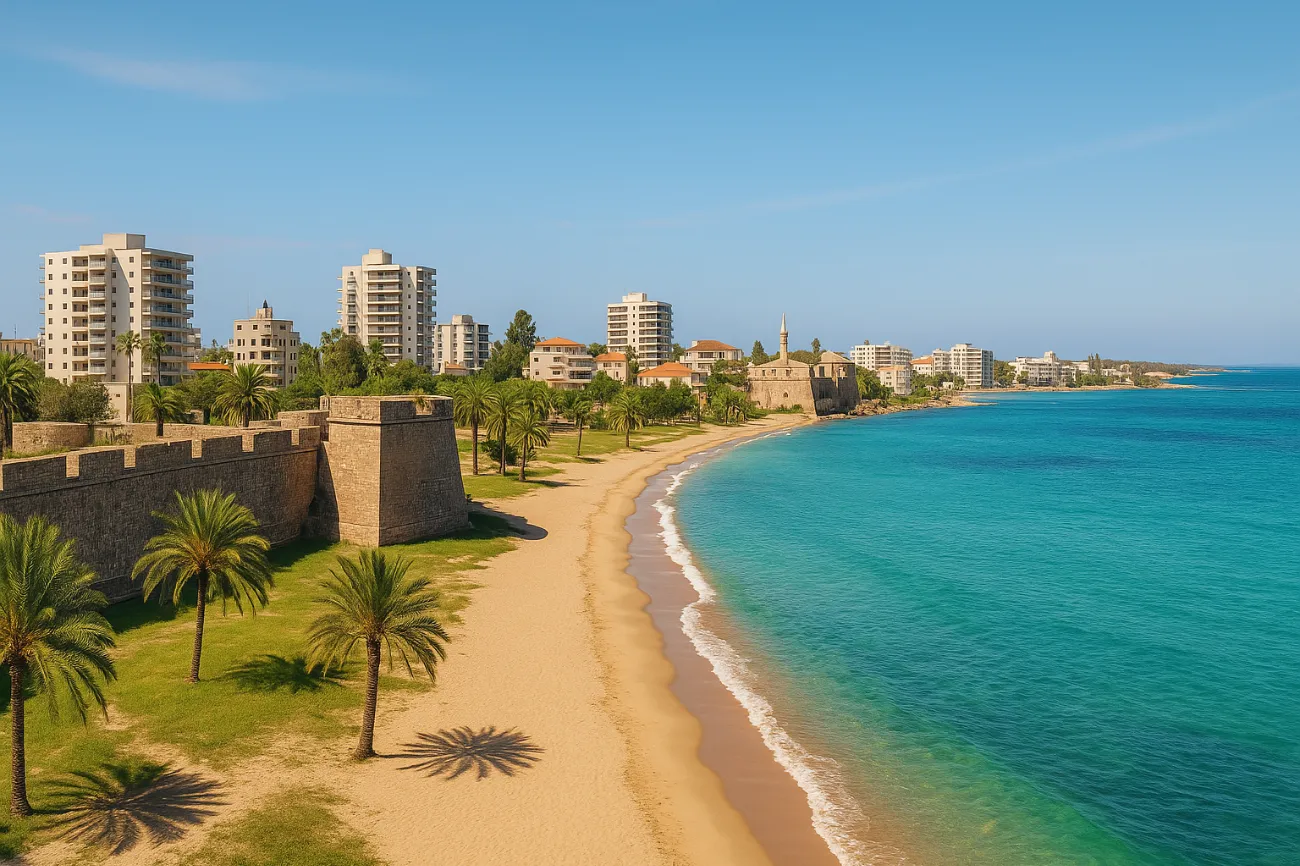


Buy-to-let near EMU for stable cash flow, off-plan coastal investments with potential capital growth of 10–20% by completion, and hybrid models that combine personal use in the off-season with short-term summer rentals under professional management.
Famagusta: A City and Property Guide — for Living, Leisure, and Investment
Famagusta (Gazimağusa) is one of the most distinctive cities in Northern Cyprus — a place where medieval fortress walls meet long stretches of sandy beaches, vibrant university life, and a rapidly growing new-build property market. It is equally suitable for relocation by the sea, holiday living, and investment — whether you’re considering rental prospects for students or purchasing resort-style apartments.
Below is a structured overview of the city: its lifestyle and infrastructure, key districts, property prices, and legal aspects of purchasing real estate here.
The City and Its Lifestyle — for Living, Leisure, and Investment
Famagusta (Gazimağusa) is a well-balanced Mediterranean city with a historic core, expansive sandy beaches, and a lively university scene. It offers a comfortable year-round lifestyle by the sea, while at the same time providing strong rental potential thanks to EMU students and the constant flow of tourists.
Key takeaway: Famagusta blends a relaxed resort atmosphere with full urban infrastructure — a rare “live and invest” combination for the Mediterranean region.
City rhythm and everyday life
- The historic old town with its medieval walls is perfect for walking, cafés, and intimate local restaurants.
- The coastline and promenades invite for morning runs, paddle boarding, beach days, and family weekends.
- Eastern Mediterranean University (EMU) keeps business and cultural activity alive throughout the year — conferences, student events, demand for services and housing.
- Housing options range from modern resort-style residential compounds with pools to homes in quiet residential neighborhoods.
Fact: The island enjoys a high number of sunny days and a long beach season. For climate and tourism statistics, refer to the Deputy Ministry of Tourism Cyprus website: deputyministrytourism.gov.cy.
Accessibility and transport
- Ercan Airport (ECN) is approximately 45–60 minutes away by car depending on traffic.
- Larnaca Airport (LCA) takes around 60–75 minutes, including crossing checkpoints; entry and stay regulations fall under the jurisdiction of the Republic of Cyprus. See general guidelines on the Ministry of Interior of the Republic of Cyprus website: moi.gov.cy.
- Weekday traffic is generally moderate, while beach access roads and shopping areas become busier during peak season.
Infrastructure: Everything You Need for Everyday Living, Leisure, and Investment
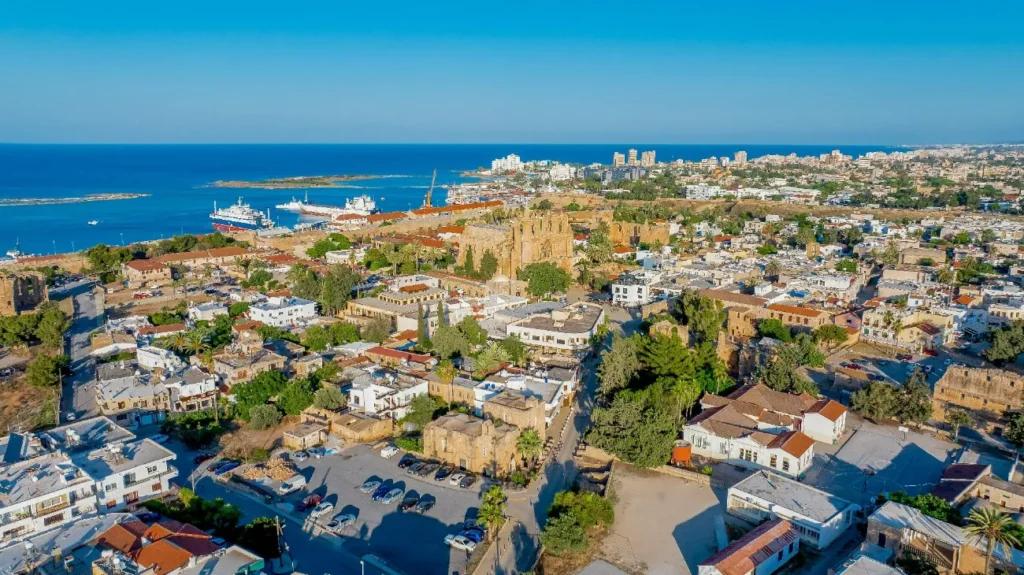
Famagusta (Gazimağusa) is a full-fledged urban hub with well-developed social, educational, and service infrastructure. The city offers year-round living comfort, supports a quality holiday lifestyle, and forms a solid foundation for a buy-to-let investment model thanks to the presence of EMU, accessible healthcare, retail, and transport.
Key point: Famagusta provides a self-contained lifestyle loop for both residents and investors — education → healthcare → daily services → transport → recreation. This reduces seasonality risks and strengthens the liquidity of real estate assets.
Education
- Kindergartens — both public and private, including groups with English- and Russian-speaking teachers.
- Schools — state and private, with international programs such as Cambridge/IGCSE and language academies in the private sector.
- University — Eastern Mediterranean University (EMU), the largest educational institution in the region, serving as the center of academic and business activity and generating year-round rental demand for studios and 1+1 apartments.
Typical costs:
- private kindergarten — €150–300/month
- private school — €2,500–6,500/year
- preparatory language courses for university admission — €800–1,500 per semester
Investor insight: Proximity to EMU significantly increases rental occupancy and shortens resale exposure time.
Healthcare
- Private hospitals, diagnostic centers, dental care, physiotherapy.
- Emergency and urgent care services available within the urban area.
- Local and international health insurance options.
Typical costs:
- general practitioner consultation — €20–40
- dental cleaning — €25–60
- annual basic/accident insurance — €250–600 per person
Daily services and retail
- Supermarkets, farmers’ shops, weekend markets.
- Shopping malls, dry cleaners, tailor shops, repair workshops.
- Banks and payment providers, international transfers.
- Postal and courier services, marketplace pick-up points.
Average expenses:
- monthly grocery budget — €180–280 per person
- lunch in a café — €10–20 per person
- coffee/cappuccino — €2–3
For macroeconomic price trends and inflation indicators, refer to CYSTAT — Cyprus Statistical Service: cystat.gov.cy.
Transport and logistics
- City buses and shared minibuses; taxi apps available.
- Car rentals operate year-round, with beach and shopping mall parking zones.
- Airports: Ercan (ECN) — ~45–60 min by car; Larnaca (LCA) — ~60–75 min, including checkpoint crossings.
Typical costs:
- car rental — €25–40/day (higher in peak season)
- taxi within the city — €6–12
- airport transfer — €50–75
Note: Crossing rules and permitted length of stay fall under the jurisdiction of the Republic of Cyprus — check official guidelines on moi.gov.cy.
Connectivity and internet
- Home internet — wired and wireless plans, 30–100+ Mbps.
- Mobile services — prepaid and contract packages, eSIM available.
- Stable 4G coverage within the city; 5G available in select areas.
Typical costs:
- home internet — €20–35/month
- mobile plan — €10–20/month for basic packages
- TV/streaming subscriptions — €5–15/month
Residential infrastructure & utilities
- New developments often feature resort-style amenities: pools, gyms, spas, kids’ rooms, co-working lounges.
- Property management companies handle reception, concierge services, short-term rentals, maintenance.
- Utilities include electricity (metered), water, waste management; modern complexes also charge for common-area upkeep.
Typical costs:
- utilities for a 1+1 apartment — €60–140/month (higher in summer due to AC)
- HOA/maintenance fees — €40–120/month depending on amenities
- annual home insurance — €60–120+
Important: When purchasing in a new development, clarify HOA fees, reserve fund terms, and pool/fitness maintenance costs in advance — they directly impact net yield.
Recreation, sports, and culture
- Beaches range from family-friendly and urban to quiet coves; water sports available (SUP, kayaking, diving).
- Sports infrastructure includes gyms, yoga studios, tennis courts; promenades suitable for running and cycling.
- Cultural facilities — the medieval Old Town, museums, seasonal festivals, food events.
Typical costs:
- gym membership — €25–45/month
- court/field rental — €10–25/hour
- day pass at private beach area (sunbed + umbrella) — €5–12
Business environment and remote work
- Coworking spaces, flexible offices, meeting rooms by reservation.
- Legal, accounting, and immigration services for newcomers.
- Banking products for non-residents depend on compliance and proof of funds.
Typical costs:
- coworking fixed desk — €120–200/month
- day pass — €10–15
- basic accounting for sole proprietors/micro-LLC — from €60–120/month
Infrastructure for property owners
- Rental management: check-in/out, cleaning, reporting, dynamic pricing.
- Maintenance: minor repairs, AC servicing, seasonal preparation.
- Legal framework: tenancy agreements, taxation, title registration.
Recommendation: When purchasing real estate, conduct an independent legal check, get a consultation on ownership/rental models, and arrange property registration support in advance. For ownership procedures in the Republic-controlled south, refer to the Department of Lands & Surveys (DLS) at dls.gov.cy.
Summary Table: Core Infrastructure & Price Benchmarks
| Category | Services | Typical Costs | Notes |
|---|---|---|---|
| Education | Kindergartens, schools, EMU | €150–300/month (kindergarten), €2,500–6,500/year (school) | EMU drives rental demand |
| Healthcare | Clinics, dentistry | €20–40 (doctor), €25–60 (dentist) | Insurance €250–600/year |
| Transport | Buses, taxis, car rental | €25–40/day (rental), €6–12 (taxi) | Airport transfer €50–75 |
| Internet/Mobile | Home internet, mobile plans | €20–35/month, €10–20/month | 4G stable, 5G limited |
| Utilities/HOA | Communal services, complex management | €60–140/month, €40–120/month (HOA) | Pools/gyms in new builds |
| Recreation | Beaches, sports, culture | €25–45/month (gym), €5–12 (beach) | Season April–November |
| Owner Services | Rental & maintenance management | 10–20% commission | Clarify SLA & reporting |
Bottom line: Famagusta’s infrastructure fully supports residents, tourists, and investors. For relocation — review migration requirements via the Ministry of Interior; for cost benchmarks — refer to CYSTAT; for title registration insights in the south — use DLS guidelines. This integrated approach helps build a clear strategy for living, vacationing, and owning property in the city.
Climate & Nature — for Living, Leisure, and Investment
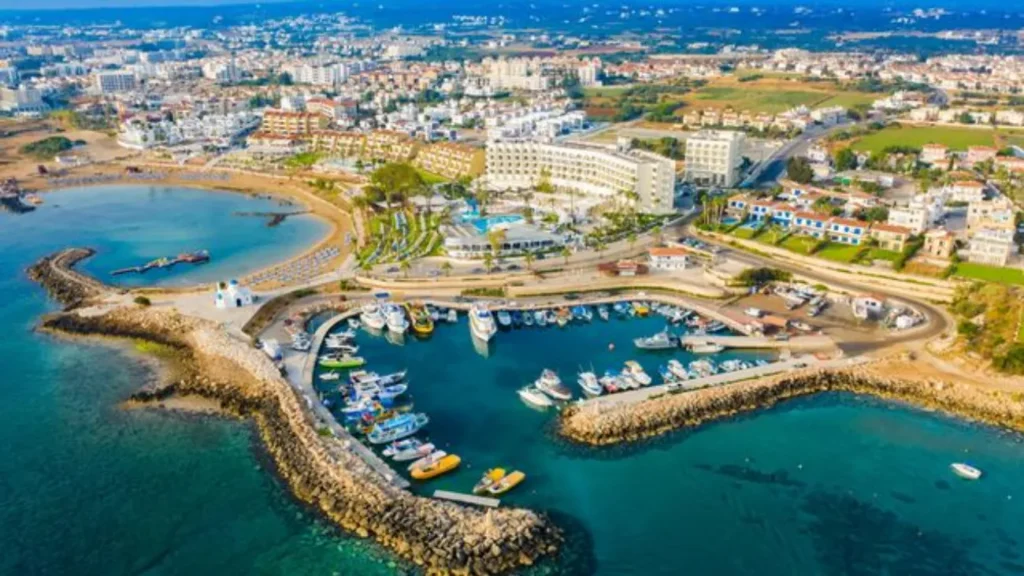
Famagusta lies on the eastern coast of Cyprus and enjoys one of the most stable Mediterranean climates: mild winters, long dry summers, and an impressive number of sunny days. This weather pattern ensures year-round appeal — for full-time living, holiday homes, and rental-focused strategies across the Property in Famagusta and Famagusta real estate segments.
Key point: With an average annual temperature of +19–22°C, a swimming season stretching from April to November, minimal summer rainfall, and warm sea temperatures from May to October, the natural conditions here directly enhance rental occupancy and overall residential comfort.
Climate: main characteristics
- Climate type: Mediterranean — hot, dry summers and mild winters.
- Sunny days: more than 300 per year.
- Winds: May to September — coastal breezes dominate, making the shoreline noticeably cooler than inland areas.
- Rainfall: peak season December–February; summer precipitation is minimal.
- For official climate data, refer to the Cyprus Department of Meteorology.
Weather calendar (reference values for the eastern coast)
| Month | Avg. Air °C | Avg. Sea °C | Rainfall mm | Sun hrs/day |
|---|---|---|---|---|
| Jan | 15–17 | 17–18 | 60–70 | 5 |
| Feb | 16–18 | 17–18 | 40–50 | 6 |
| Mar | 18–20 | 18–19 | 25–35 | 7 |
| Apr | 21–24 | 19–20 | 10–20 | 9 |
| May | 25–28 | 21–22 | 5–10 | 10 |
| Jun | 29–32 | 24–25 | 0–5 | 12 |
| Jul | 32–35 | 27–28 | 0–2 | 12–13 |
| Aug | 33–36 | 28–29 | 0–2 | 11–12 |
| Sep | 30–32 | 27–28 | 5–10 | 10 |
| Oct | 25–28 | 24–25 | 20–30 | 8 |
| Nov | 20–23 | 21–22 | 30–40 | 6 |
| Dec | 16–18 | 18–19 | 55–70 | 5 |
Conclusion: Swimming is most comfortable from May to October, while April and November are ideal for hiking, cycling, and sightseeing without the summer heat.
Sea & beaches
- Famagusta’s coast features long sandy stretches (Long Beach, Glapsides, Palm Beach near Varosha) with gentle entry into the water.
- Amenities include sunbed and umbrella rentals, showers, cafés, and parking areas.
- Beach safety and seasonal service availability are coordinated by tourism authorities; general resources can be found via the Deputy Ministry of Tourism Cyprus.
Approximate prices:
- sunbed + umbrella set: €5–12/day
- parking near popular beaches: usually free or €2–3
- intro diving session: €45–70 per person
- boat trip (2–3 hours, group): €20–35 per person
Outdoor activities & nature
- Watersports: SUP, kayaking, snorkeling — the sea is calmest in the morning during summer.
- Diving: wrecks and rocky reefs along the eastern shore — season May–October.
- Yachting: half-day charters from nearby marinas — €350–550 for 6–8 guests.
- Hiking: the ancient city of Salamis and coastal pine groves — accessible all year, most pleasant in shoulder seasons.
Useful tip: Families will appreciate beaches with shallow entry and promenade access; for rentals, properties on the first/second coastline with seasonal sunbed service tend to perform best.
Ecology & environmental quality
- Sea breezes keep coastal air fresh; occasional spring dust episodes from Sahara winds are short-lived.
- Green areas and coastal vegetation help soften summer heat.
- For seasonal tourism load and macro statistics, CYSTAT data is useful — it helps correlate rental demand with weather windows.
How climate shapes lifestyle
- Living comfort: mild winters reduce heating costs; shading and awnings improve summer habitability.
- Utility impact: increased AC use in July–August may add €30–80/month to electricity for a 1+1 apartment.
- Engineering considerations: cross-ventilation, energy-efficient glazing, and sun-protection screens are valuable features.
Summary for buyers & renters
- Swimming season: April–November; peak June–September.
- Optimal vacation formats: beachfront apartments and resort complexes with pools.
- Expected extra expenses due to climate: summer AC +€30–80/month, terrace/shade upkeep €5–10, seasonal dust-cleaning €20–40 per visit.
- Official resources: climate — Meteorological Department, beach season — Deputy Ministry of Tourism, macro data — CYSTAT.
Bottom line: Famagusta’s climate and natural environment are not just a pleasant bonus — they are a core value driver for Famagusta real estate: high living comfort, a long holiday season, and a predictable rental model for investors.
Economy and Development Prospects
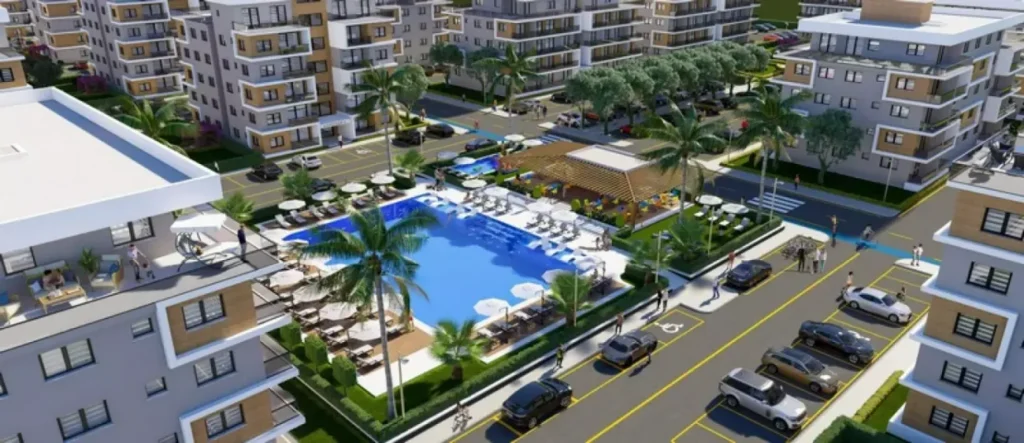
Famagusta is one of the key economic hubs of Cyprus’s eastern coast. Tourism, the presence of EMU, active coastal development, and the commercial–port function together generate stable local demand for services and housing. For investors, this creates clear foundations for strategies such as live-and-rent, buying at early construction stages, and seasonal short-term rentals by the sea within the Famagusta real estate and Real estate in Northern Cyprus markets.
Key takeaway: The combination of university-driven demand, a strong tourism season, and a “new wave” of development (Varosha, Iskele/Long Beach) forms a long-term base for asset growth and liquidity.
Macro factors and local growth drivers
- Tourism: The eastern coast consistently shows high seasonal occupancy from May to October; according to the Deputy Ministry of Tourism Cyprus, the tourist flow has been steadily recovering since 2022.
- Education: Eastern Mediterranean University (EMU) generates year-round rental demand for studios and 1+1 apartments, supporting market liquidity.
- Development: New developments Famagusta, Off-plan property in Famagusta, and major projects in Iskele/Long Beach are raising quality standards and shaping a modern resort showcase for the region.
- Commerce and services: Retail space and the service sector are expanding in parallel with construction and tourism growth.
For overall pricing trends and inflation insights, consult CYSTAT — Cyprus Statistical Service.
Growth drivers: impact on the real estate market
| Driver | What is happening | Effect on Famagusta real estate | Horizon |
|---|---|---|---|
| Tourism | Seasonal occupancy growth, coastal service expansion | High demand for short-term rentals; premium pricing near the sea | 1–3 years |
| EMU (Education) | Stable student intake | Strong occupancy for studios/1+1 year-round | Ongoing |
| Varosha & coastline | Gradual revitalization | Famagusta Varosha investment potential: expected capital appreciation | 5–10 years |
| Iskele / Long Beach | Large-scale resort-class developments | Long Beach Iskele investment: expanding demand base | 3–7 years |
| Infrastructure & services | Growth in retail, leisure, and service sectors | Supports price stability and yields in urban zones | 2–5 years |
Conclusion: The combined tourism + education demand helps smooth seasonality and supports Famagusta housing market trends on a 3–7 year view.
Famagusta real estate market overview — prices and trends
- Famagusta property prices 2025 (market estimates):
• studios near EMU — €55,000–85,000
• 1+1 city apartments — €75,000–120,000
• beachfront apartments — €120,000–250,000
• townhouses/villas — €250,000–600,000+ - Price growth during construction (off-plan → completion): coastal projects see ~10–20% per cycle; city projects ~6–12%, depending on location and complex class.
- Famagusta rental yield (gross):
• student rentals (EMU): 6–9%
• short-term seaside rentals: 7–12%
• long-term family rentals (2–3 bedrooms): 5–7%
Important: Yield varies with proximity to the sea/university, management model, facility set, and seasonality. Monitor the expense structure carefully (HOA, internet, cleaning, 10–20% rental management fee).
Famagusta investment opportunities — actionable strategies
- Buy-to-let near EMU: studios/1+1 with year-round occupancy, low vacancy, high turnover.
- Beachfront / second line: 1–2 bedroom units for short-term rentals in peak season; complexes with pools, gyms, and concierge services are most in demand.
- Off-plan property in Famagusta: early-stage entry with installment plans; potential capital gain 10–20% by completion when the location is right.
- Commercial units in tourist/university corridors: small-format retail, cafés, service points.
Sample calculations (illustrative benchmarks)
- Case 1: EMU studio €70,000 → rent €450/month, management 12%, HOA €50/month → gross ~7.7%/yr, net ~5.8–6.3%.
- Case 2: 1+1 by the sea €160,000 → annual short-term revenue €14,000–18,000, management 18%, HOA €80/month → gross ~8.8–11.3%, net ~6.2–8.1%.
- Case 3: Off-plan unit €135,000 → €155,000 at completion (18–24 months) → capital gain ~15% pre-expenses; rental potential €800–1,000/month long-term or seasonal short-term.
Note: Figures are approximate and not a financial offer. Actual outcomes depend on location, asset class, management, and market conditions.
Legal aspects and compliance
- Due to the region’s political specifics, enhanced legal auditing is essential: title type, building permits, absence of encumbrances.
- Independent legal check, escrow/ staged payment schemes, and planned property registration assistance are recommended.
- For ownership registration rules in the Republic-controlled south (Ayia Napa/Protaras/Paralimni), reference materials from the Department of Lands & Surveys (DLS) at dls.gov.cy.
Warning: Unclear title status or missing permits are primary risks. Title verification before paying a deposit is mandatory.
Risks and mitigation
- Market risk: rental rate volatility off-season. Mitigation: diversify — part near EMU, part near the coast.
- Currency risk: deals may be denominated in different currencies; peg to € where possible and formalize FX terms.
- Construction risk: off-plan delivery delays. Mitigation: developer track record, bank guarantees, staged payments, penalty clauses in SPA.
- Operational risk: wear and tear and higher maintenance near the sea. Mitigation: professional management, annual prevention budget €150–300 per apartment.
3–10 year outlook
- Base scenario (3–5 years): moderate growth in Famagusta property prices in coastal projects, stable occupancy near EMU; off-plan capital gain 6–12% in urban projects and 10–20% on the coastline.
- Optimistic scenario (5–10 years): acceleration driven by Varosha development and expansion of Iskele/Long Beach resort infrastructure; stronger demand for Investment property in Famagusta.
- Conservative scenario: price stability with value differentiation — liquidity remains highest near the sea and university zones.
Bottom line: Famagusta investment is a play on the synergy of tourism + education + development. With the right location and rigorous legal due diligence, assets can deliver competitive yields with long-term capital appreciation potential over a 5–10 year horizon.
Districts of Famagusta: Where to Live and Where to Invest
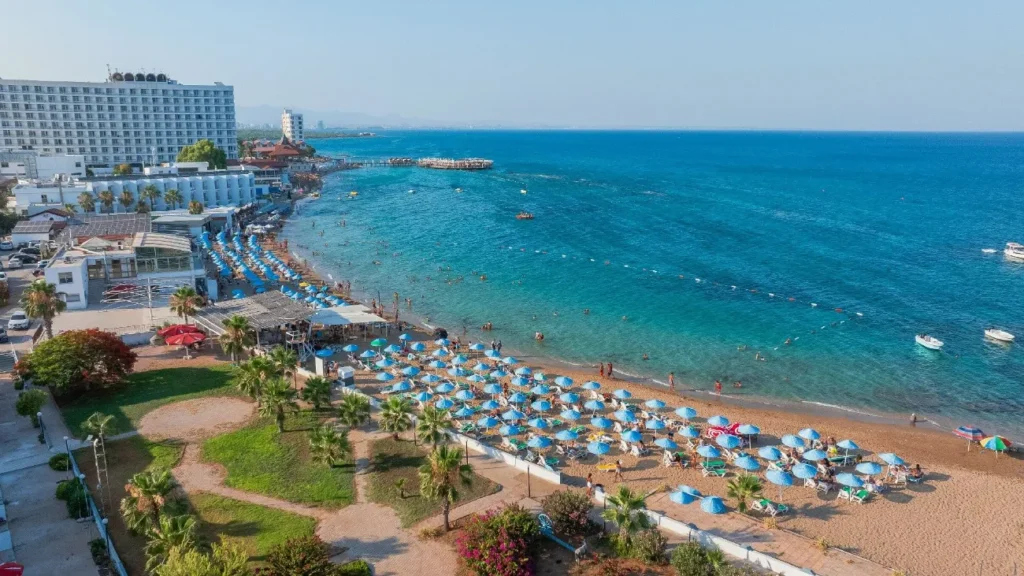
Famagusta (Gazimağusa) and the surrounding resorts are divided into several clearly defined zones, each with its own logic of demand — from historical tourism and student rentals (EMU) to beachfront short-term lettings and long-term capital-growth projects. Below is a structured guide to the key locations, including purchase budgets and indicative rental yields.
Key insight: The district you choose directly affects liquidity and investment strategy. For resort rentals, distance to the sea and on-site infrastructure matter most; for stable cash flow — proximity to EMU; for capital appreciation — coastal projects and developments in Iskele/Long Beach.
Overview Table by District
| District / Area | Profile | Property Types | Price Range | Rental/Yield Benchmark (Gross) |
|---|---|---|---|---|
| Old Town | History, tourist flow, boutique commerce | Rare apartments, boutique hotels, street retail | Apts €110,000–230,000; commercial €140,000–380,000 | Short-term rental 7–10%; commercial case-specific |
| Varosha & Famagusta Coastline | Resort zone, growth potential, new developments | 1–2 bed seafront, townhouses/villas | Apts €120,000–250,000; villas €300,000–700,000+ | Short-term rental 7–12% in season |
| EMU University Zone | Student demand, high turnover | Studios, 1+1, compact apartments | Studios €55,000–85,000; 1+1 €75,000–120,000 | Long-term rental 6–9% |
| Iskele / Long Beach | Large resort-class clusters | Off-plan, 1–2 bed units, townhouses/villas | 1+1 €95,000–190,000; villas €280,000–600,000+ | Mixed strategies 6–10% + 10–20% capital gain/cycle |
| Ayia Napa / Protaras / Paralimni | Premium southern coast | Beachfront apartments, villas | Apts €220,000–450,000; villas €500,000–1.2M+ | Seasonal 6–9%; higher entry threshold |
Note: Pricing and yield references are based on market listings and management practice. Final performance depends on proximity to the sea/EMU, project class, and operational efficiency.
Old Town
- Profile: Medieval walls, museums, cultural venues, atmospheric restaurants — a hub of heritage tourism.
- Property stock: Rare period buildings converted into apartments, boutique hotels, small commercial units.
- Best suited for: Investors seeking unique assets, boutique hospitality, and culturally driven locations.
- Budgets: Apts €110,000–230,000; commercial €140,000–380,000.
- Yield: 7–10% gross short-term with competent management and seasonal pricing.
Important: Historic stock may require approval for renovations and façade works — factor this into timelines.
Varosha & the Famagusta Coast
- Profile: Revitalizing area near Palm Beach, driven by new residential complexes.
- Property types: 1–2 bed seafront units, townhouses, villas with partial resort amenities.
- Best suited for: Investors targeting seasonal short-term rentals and mid- to long-term capital growth (5–10 year horizon).
- Budgets: Apts €120,000–250,000; villas €300,000–700,000+.
- Yield: 7–12% gross in high season; off-season performance depends on onsite services and beach proximity.
Warning: Famagusta Varosha investment potential requires thorough title verification. Independent legal check is mandatory before paying a deposit.
EMU University Zone
- Profile: Consistent demand from students and academic staff, year-round occupancy.
- Property types: Studios and 1+1 units; “ready-to-rent” formats and complexes with management services perform best.
- Best suited for: Buy-to-let investors prioritizing predictable cash flow.
- Budgets: Studios €55,000–85,000; 1+1 €75,000–120,000.
- Yield: 6–9% gross with low vacancy when managed effectively.
Plus: Strong liquidity on resale thanks to constant tenant turnover and EMU workforce demand.
Iskele / Long Beach
- Profile: A high-growth seafront area with large integrated resort communities featuring pools, gyms, spas, restaurants.
- Property types: Off-plan and completed 1–2 bed units, townhouses, villas.
- Best suited for: Investors seeking appreciation potential and dual rental strategies.
- Budgets: 1+1 €95,000–190,000; villas €280,000–600,000+.
- Yield: 6–10% gross, with capital gains of 10–20% from construction to delivery in well-positioned projects.
Tip: Request a full expense breakdown (HOA, service charges, management fees) — it directly impacts net yield and resale value.
Ayia Napa / Protaras / Paralimni (Southern Resorts)
- Profile: Premium beaches, high competition in seasonal rentals, advanced tourism infrastructure.
- Property types: Beachfront apartments and villas with land plots.
- Budgets: Apts €220,000–450,000; villas €500,000–1.2M+.
- Yield: 6–9% seasonal gross; higher entry price but strong brand liquidity.
- Legal specifics: Transactions on the southern side require compliance with DLS land registration standards, while rental seasonality follows patterns monitored by the Deputy Ministry of Tourism. Macro pricing and inflation — via CYSTAT.
Important: Higher entry threshold, but strong resale strength makes it an excellent diversifier to assets in Famagusta.
Practical district selection tips
- For stable rental flow: EMU Zone (studios/1+1, fast occupancy).
- For holiday returns and “second home by the sea”: Varosha & coastline, Iskele/Long Beach — complexes with pools and services are top performers.
- For capital growth focus: off-plan and first/second-line coastal projects in Iskele/Long Beach and greater Famagusta.
- For premium liquidity and established branding: Ayia Napa / Protaras / Paralimni.
- For commercial plays: Old Town and pedestrian corridors — cafés, street retail, boutique hotels.
Bottom line: Best areas in Famagusta are chosen based on the goal:
- for living — residential zones with everyday infrastructure;
- for buy-to-let — EMU;
- for seasonal yield — the coastline;
- for capital appreciation — large seafront clusters.
In every scenario, a legal check, expert consultation, and structured property registration support are essential to minimize risk and accelerate the deal.
Real Estate in Famagusta: What to Buy?
Famagusta (Gazimağusa) offers a wide spectrum of property formats — from compact studios near EMU to beachfront apartments and family villas. The Famagusta real estate market works equally well for those planning to live by the sea, rent seasonally, generate stable student rental income, or gain capital growth at the construction stage. Below is a practical Famagusta property guide with price benchmarks, yields, and purchase procedures.
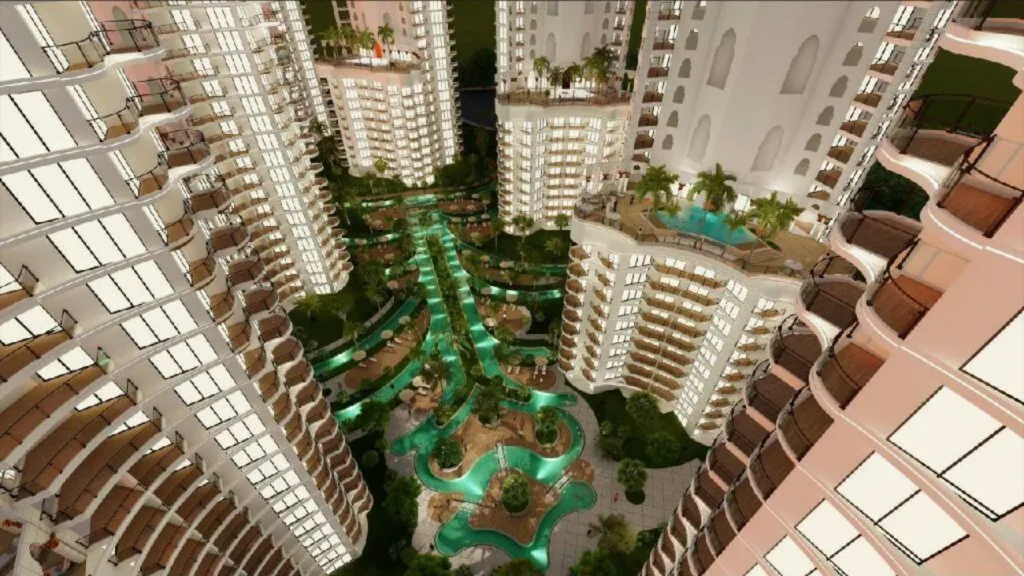

from $194 000
CAESAR PALM JUMEIRAH
 Bogaz
Bogaz from 54м²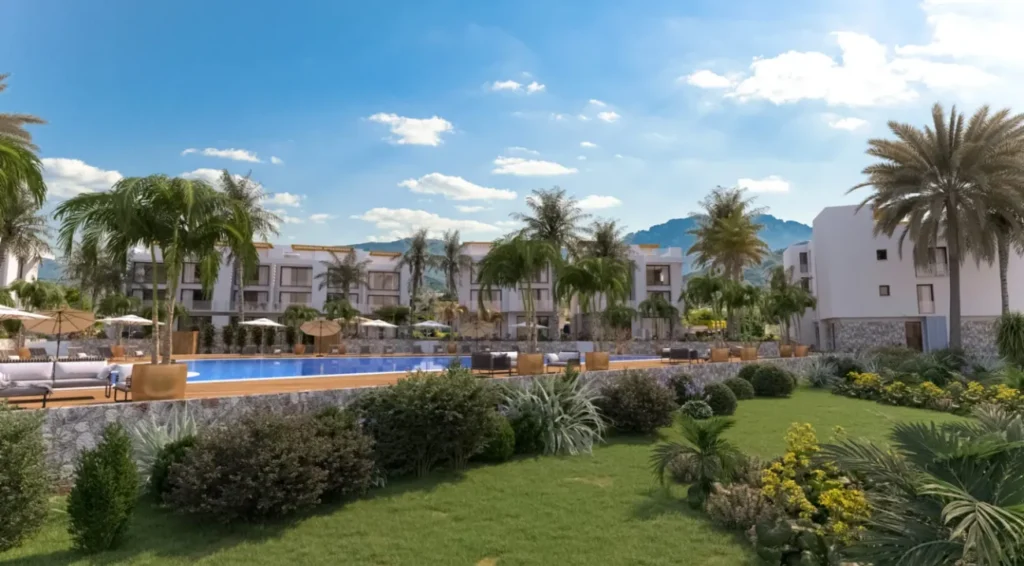
from $220 500
Sumarine
Famagustafrom 65м²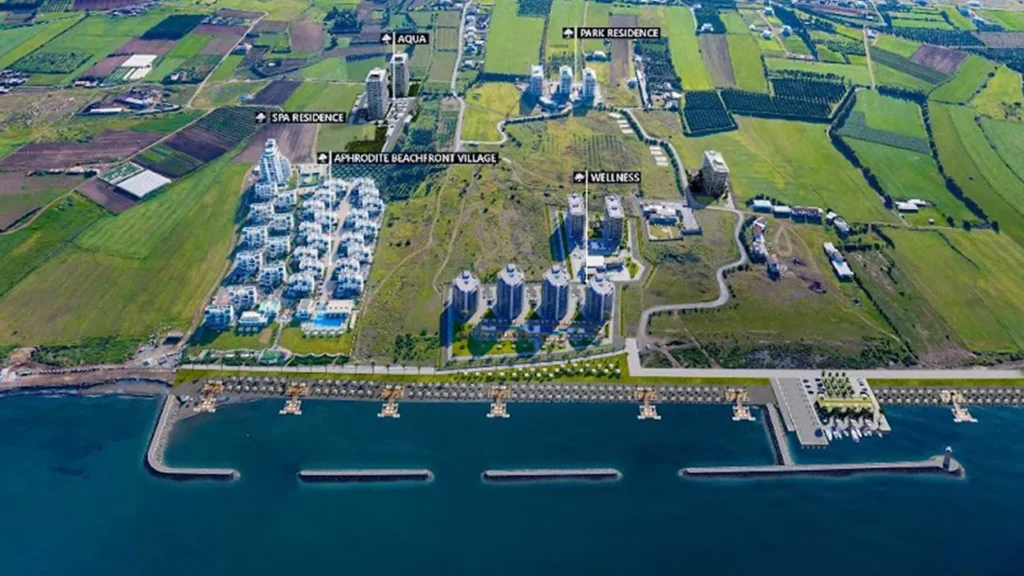
from $129 100
Aphrodite Aqua
Guzelyurtfrom 29м²Key insight: Define your goal first (living, holiday use, rental income, or capital growth) and select a property that matches your strategy. To reduce risks, an independent legal check, expert consultation, and property registration support are essential.
Main segments — who each option suits
- Living/relocation: 1–3 bedrooms in the city or suburbs, close to schools and medical services.
- Short-term holiday rentals: beachfront apartments, resort complexes with pools/reception, walking distance to the sea.
- Buy-to-let (EMU students): studios and 1+1 units within 10–20 minutes’ walk to campus.
- Capital growth: new developments and off-plan in coastal clusters and Iskele/Long Beach.
Prices & yields — summary table
| Property Type | Typical Locations | Purchase Price | Rental/Yield Benchmarks (Gross) | Notes |
|---|---|---|---|---|
| Studio | EMU/City Center | €55,000–85,000 | €400–550/month; 6–9% | High occupancy year-round |
| 1+1 | EMU, Center, 2nd line | €75,000–120,000 | €500–800/month; 6–8% | Versatile for living/rent |
| Seafront Apartments | Famagusta Coast, Varosha | €120,000–260,000 | €70–160/night in season; 7–12% | Distance to beach + services define results |
| Townhouse/Villa | Coast & Suburbs | €280,000–650,000+ | €1,500–3,500/month or daily; 6–9% | Privacy & view add premium |
| Commercial Property | Old Town, tourist zones | €150,000–420,000+ | Depends on tenant/traffic | Visibility and footfall are key |
| Off-plan (new developments) | Coastline, Iskele/Long Beach | €95,000–190,000 (1+1) | 10–20% capital gain per cycle | Delivery timing risk |
Important: Yield depends on distance to the sea/EMU, complex services, management quality, and seasonality.
What to choose — Property types in Famagusta
- Studios & 1+1 near EMU/center — optimal for Famagusta rental yield: fast turnover, low vacancy, balanced budget.
- Beachfront apartments — best for holidays and daily rentals; pools, reception, gym, and terrace views increase demand.
- Villas and townhouses — family lifestyle and premium rental segment; land, parking, and private courtyards are valuable.
- Commercial property — cafés, street retail, offices; highly location-sensitive, tied to tourist flow.
- Off-plan — accessible entry with installment payments and capital growth potential; developer quality and SPA terms are critical.
Locations & strategies (Famagusta property guide)
- EMU + central districts — Buy apartment in Famagusta for stable year-round cash flow.
- Famagusta Coast / Varosha — Beachfront property Famagusta for seasonal yield + appreciation potential.
- Iskele / Long Beach — Long Beach Iskele investment: resort complexes, strong demand for 1–2 beds and townhouses.
- Old Town — niche projects, boutique hospitality, heritage apartments.
- Nearby southern resorts (Ayia Napa / Protaras / Paralimni) — higher entry price, strong liquidity within a Cyprus real estate Famagusta diversification model.
How to buy — steps & documentation
- Selection & reservation: check developer/seller credentials, payment plan/escrow terms.
- Independent legal check: verify title/land, building permits, encumbrances, complex approvals.
- Sales Purchase Agreement (SPA): price, payment schedule, finishing specification, penalties, delivery date.
- Staged payments & handover: snag list, defect fixes, acceptance report.
- Property registration support: title registration, utilities setup, administrative onboarding.
Official guidelines for rights registration in the southern part of Cyprus — via the Department of Lands & Surveys (DLS).
Migration and stay regulations — Ministry of Interior.
Inflation and macro pricing trends — CYSTAT.
Taxes, fees & running costs (estimates)
- One-time purchase costs:
• Stamp duty ~0.5% of SPA value
• Registration/cadastre fees — per title and asset type
• Lawyer services €1,200–2,500+
• VAT on primary sales — depends on asset status and tax regime - Regular ownership costs:
• HOA/complex fees €40–130/month (amenities-dependent)
• Utilities (1+1) €60–150/month (higher in summer due to AC)
• Home insurance €60–150/year
• Rental management 10–20% + cleaning/linen turnover
Benchmarks & scenarios
- Studio near EMU: €70,000 price → €500/month rent → HOA €50 → mgmt 12% → gross ~8.6%/year → net ~6.2–6.9%.
- 1+1 by the sea: €160,000 price → seasonal revenue €14,000–18,000 → HOA €80 → mgmt 18% → gross ~8.8–11.3% → net ~6.3–8.0%.
- Off-plan coastal 1+1: entry €120,000 → €135,000–144,000 at completion (18–24 months) → 12–20% capital growth.
Disclaimer: Figures are indicative, not an offer. Actual results depend on location, services, occupancy, and market conditions.
Risks & quality control
- Legal: title/land status, permits, encumbrances. → Solution: legal check, developer file review, SPA protections.
- Construction: delays, spec changes. → Solution: penalties, staged payments, technical supervision at handover.
- Operational: seasonality, wear-and-tear near sea. → Solution: dynamic pricing, CAPEX reserve, professional management.
Final guidelines — choosing your property
- For stable income — Buy apartment in Famagusta near EMU/central districts (studios/1+1).
- For holiday use + high seasonal rates — Property in Famagusta by the sea (1–2 beds, resort complexes).
- For capital appreciation — Famagusta property for sale at construction stage (off-plan) in coastal clusters and Long Beach Iskele.
- For family living — Buy villa in Famagusta in coastal suburbs.
Recommendation: Combine personal use with an investment model — request a professional consultation, conduct a legal check, and secure property registration support. This strengthens liquidity and protects capital within Investing in Famagusta.
Cost of Living
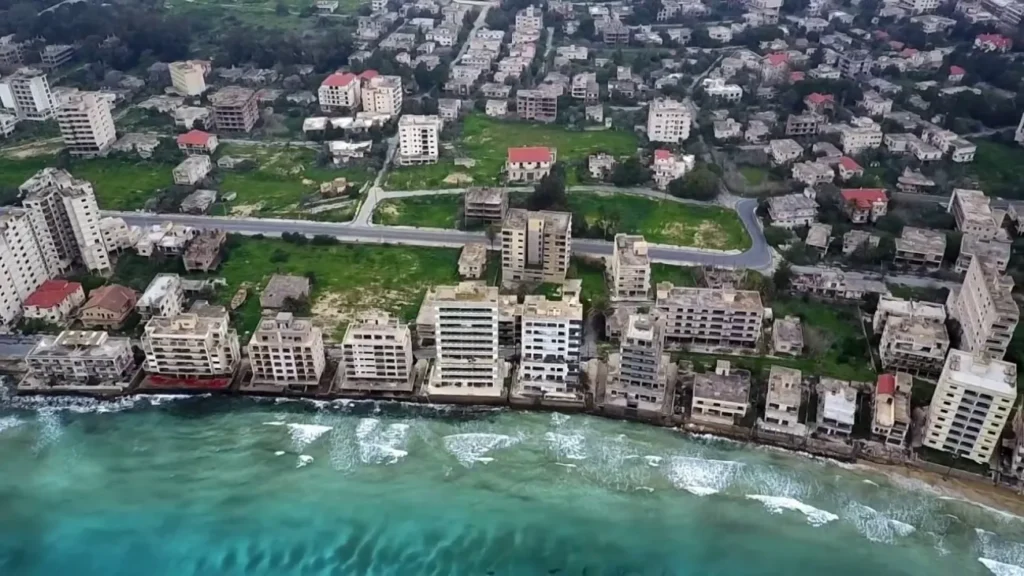
Famagusta (Gazimağusa) remains noticeably more affordable than most Mediterranean resort destinations when it comes to daily expenses and rent. When planning a budget, consider seasonal factors (higher summer electricity use for air conditioning) and the district you choose — coastal areas are generally more expensive than the city center or the EMU zone. For overall inflation levels and price dynamics across the island, refer to CYSTAT — Cyprus Statistical Service.
Key insight: A realistic monthly budget for a single renter in Famagusta is around €1,050–1,350, while a family of three typically spends €1,900–2,600, excluding private school fees. The range varies based on district, property class, and lifestyle.
Housing & recurring bills
- Rent for 1+1 (EMU/central areas): €450–800/month
- Rent for 2-bedroom family housing: €700–1,100/month
- House/townhouse near the coast: €1,500–3,000/month (higher in peak season)
- HOA/complex fees: €40–120/month (depends on facilities — pool, gym, reception)
- Utilities for a 1+1: €60–140/month, + €30–80 extra in summer for AC
- Home internet: €20–35/month, mobile plans: €10–20/month per person
Important: Resort-style complexes often charge separate fees for infrastructure use (pools, gyms, recreation areas). Request a breakdown before signing a rental contract.
Groceries & dining
- Monthly groceries per person: €180–300, depending on imported goods share
- Coffee/cappuccino: €2–3
- Lunch in a café: €10–20/person
- Dinner in a restaurant: €15–30/person (excluding alcohol)
Typical grocery prices:
- Water 1.5L: €0.5–1.2
- Bread: €1–1.5
- Milk 1L: €1.2–1.6
- Eggs (10 pcs): €2.0–3.0
- Chicken breast: €5–7/kg
- Halloumi cheese: €6–9/kg
- Seasonal fruit/vegetables: €1.0–2.5/kg
Transport & mobility
- Car rental: €25–40/day (higher in high season)
- City taxi: €6–12 per short ride
- Airport transfer: €50–75
- Fuel: €1.4–1.7/L (fluctuates with global prices)
- Public transport: buses/minibuses, €2–3 per trip
For seasonal spending and tourism planning, use guides from the Deputy Ministry of Tourism Cyprus, as seasonal demand affects service pricing and resort occupancy.
Healthcare, sport & leisure
- GP visit: €20–40
- Dental cleaning: €25–60
- Basic health insurance: €250–600/year per person
- Gym membership: €25–45/month
- Tennis court/field rental: €10–25/hour
- Beach sunbed + umbrella set: €5–12/day
- Boat trip (2–3 hrs): €20–35/person
- Intro diving session: €45–70/person
Children & education
- Private kindergarten: €150–300/month
- Clubs and extra activities: €20–50/month per class
- Private/international schools: €2,500–6,500/year per student
Note: Education expenses are the most variable part of a family budget. Check programs and school price lists before relocating.
Monthly cost comparison table
| Expense | Single Renter (1+1, center/EMU) | Family of 3 (2 bedrooms) | Notes |
|---|---|---|---|
| Rent | €500–800 | €700–1,100 | Coastline more expensive |
| HOA/maintenance | €40–90 | €60–120 | Depends on facilities |
| Utilities | €60–140 | €90–170 | +€30–80 in summer |
| Internet/Mobile | €25–45 | €40–70 | Based on SIM count and plan |
| Groceries | €180–300 | €350–550 | Imported goods cost more |
| Transport | €60–180 | €120–300 | Car/taxi usage variable |
| Healthcare/Insurance | €25–60 | €50–120 | Basic policies & visits |
| Leisure/Sport | €30–90 | €60–150 | Gyms + occasional outings |
| Total (no school) | €1,050–1,350 | €1,900–2,600 | With seasonal variations |
What impacts the final budget
- District & housing type: Coastal and modern complexes cost more, but amenities can reduce leisure spending.
- Seasonality: Prices for car rentals and services peak June–September; utilities rise in summer.
- Family size: Children add kindergarten/school and activity costs.
- Currency & imports: Some groceries and household items are imported and sensitive to global pricing.
Tip: Add a 10–15% buffer to your budget for seasonal fluctuations and unexpected expenses. Track inflation trends through CYSTAT, and use tourism calendars from the Deputy Ministry of Tourism to understand peak-season pricing.
Comparative perspective
- In rent and grocery costs, Famagusta is typically cheaper than comparable EU resorts, while seaside services (beaches, excursions) align more closely with regional averages.
- For purchase transactions and registration procedures in the southern part of the island (Ayia Napa/Protaras/Paralimni), refer to DLS — Department of Lands & Surveys.
Bottom line: The cost of living in Famagusta supports comfortable budgeting for both year-round living and seasonal stays. Focus on rent, HOA fees, and utilities when choosing a district — these make up 60–70% of monthly spend.
Pros and Cons of the City
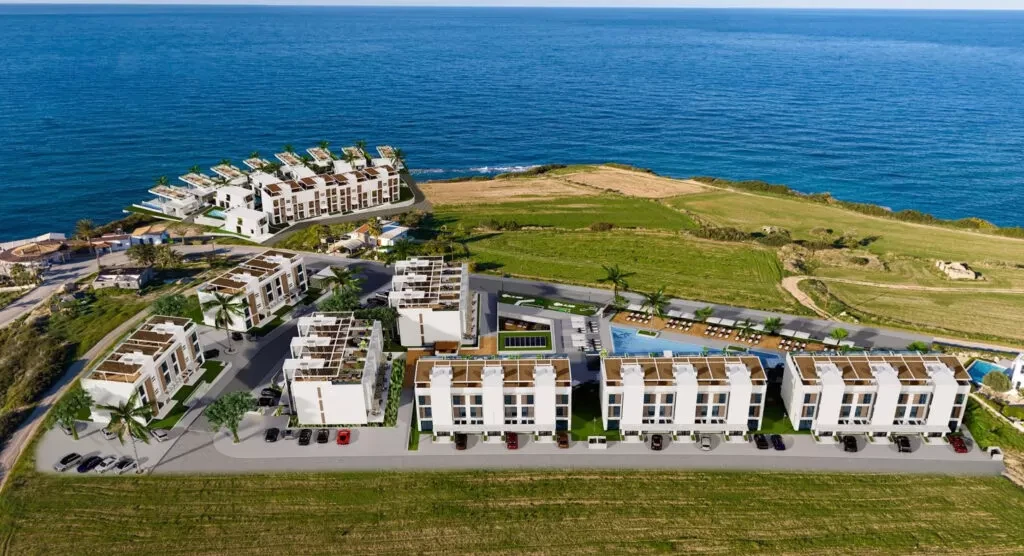
Famagusta (Gazimağusa) blends a historic old town, long sandy beaches, and a thriving university scene — making it attractive for living, leisure, and Investing in Famagusta strategies. Below is a structured breakdown of advantages and drawbacks, along with practical considerations that impact lifestyle and expenses.
Key point: Famagusta’s strengths lie in its climate, coastline, accessibility, and stable rental demand around EMU. The main challenges are legal nuances, seasonal fluctuations in the tourism sector, and higher maintenance costs for coastal properties.
Pros — what residents and investors appreciate
- Climate and long season. Over 300 sunny days per year, with comfortable swimming from April to November. Seasonal dynamics of beach infrastructure and recreation are detailed by the Deputy Ministry of Tourism Cyprus.
- Affordable cost of living. Groceries and rent are typically cheaper than in comparable EU resorts. Inflation and price trends island-wide can be monitored via CYSTAT.
- Consistent rental demand. EMU ensures stable occupancy in the student segment (studios/1+1) with gross yields of around 6–9% annually; seaside short-term rentals achieve 7–12% in season depending on location and management.
- Wide housing variety. From compact studios to family villas; new resort-style complexes offer pools, fitness areas, and concierge services.
- Solid everyday infrastructure. Clinics, supermarkets, gyms, and essential services. Transport relies on buses/taxis, with well-developed car rental options (€25–40/day off-peak).
Cons — what to consider before purchasing
- Legal specifics of the region. Due to political context, title checks and building permits require enhanced due diligence. For purchases on the southern side of the island (Ayia Napa/Protaras/Paralimni), rights registration procedures are outlined by the Department of Lands & Surveys (DLS). Independent legal check (€1,200–2,500+) and pre-arranged property registration assistance are strongly recommended.
- Seasonality in tourism. Peak demand and pricing for short-term stays occur June–September; off-season rates soften. Seasonal calendars are available on the website of the Deputy Ministry of Tourism.
- Coastal maintenance. Salt air accelerates wear on facades and appliances — set aside €150–300/year for preventive care plus AC servicing at €40–80/unit annually. Summer electricity bills for a 1+1 typically rise by €30–80/month.
- Public transport limitations. A car is often necessary for convenience: rentals €25–40/day, city taxi €6–12 per short ride.
- Administrative process and timelines. Utility connections and final handover documents for new builds can take time — consider this when planning move-in or rental launch.
Summary table: pros vs. cons for living and investment
| Factor | Meaning | Impact on life/investment | Financial markers |
|---|---|---|---|
| Climate & season | Long beach season, little summer rainfall | Comfortable living, strong summer demand | Savings on heating; +€30–80/month for AC in summer |
| Cost of living | Moderate prices for goods/services | Lower family budget vs. many EU resorts | Groceries €180–300/person; dinner €15–30/person |
| Rental demand (EMU) | Year-round students & staff | Stable occupancy for studios/1+1 | Yields 6–9% gross |
| Holiday rentals | Peak occupancy June–Sept | High seaside rates, slower off-season | 7–12% gross near the beach |
| Legal risks | Title/permits require checks | Independent document audit essential | Legal €1,200–2,500+; stamp duty ~0.5% SPA |
| Coastal maintenance | Corrosion & upkeep near sea | Higher OPEX for beachfront property | €150–300/year + AC service |
| Transport | Limited public transit | Car often required | Rental €25–40/day; taxi €6–12/ride |
Who the city suits — and who should reassess expectations
- Ideal for: relocating families (mild climate, healthcare, schools), buy-to-let investors at EMU (predictable cash-flow), holiday-home buyers near the coast (seasonal rental income).
- Requires careful evaluation: investors relying solely on peak short-term rental income without diversification; buyers unwilling to engage in legal due diligence or manage coastal maintenance costs.
Tip: Balance seasonality by combining assets — a student-oriented unit near EMU + a seaside apartment. Track inflation and price indices via CYSTAT, and use tourism season calendars from the Deputy Ministry of Tourism.
Conclusion
Famagusta offers a rare balance of coastline, a long holiday season, and steady demand — making the Famagusta real estate market appealing both for living and for investment. Options range from stable cash-flow units near EMU to beachfront holiday apartments and off-plan developments with capital growth potential.
If you are considering Property in Famagusta or looking for Famagusta property for sale aligned with a specific objective, start with a clear investment strategy and full document verification. Conduct an independent legal check, request professional consultation, and rely on property registration help for transfer and paperwork — this saves time and reduces risks.
We are ready to help you select a property that fits your budget and goals — whether for living, holidays, income generation, or resale — and support the transaction from start to finish.
 Real estate in Georgia
 Real estate in Montenegro
 Real estate in the UAE
 Real estate in Bali
 Real estate in Thailand
 Real estate in Spain
 Real estate in Saudi Arabia
 Real estate in Turkey
 Real estate in Zanzibar
 +90 533 888 29 50
 hello@cypria.homes
 Karsıyaka Sokak 8, Girne


 Get catalogue of TOP-7 objects