
 +90 533 888 29 50


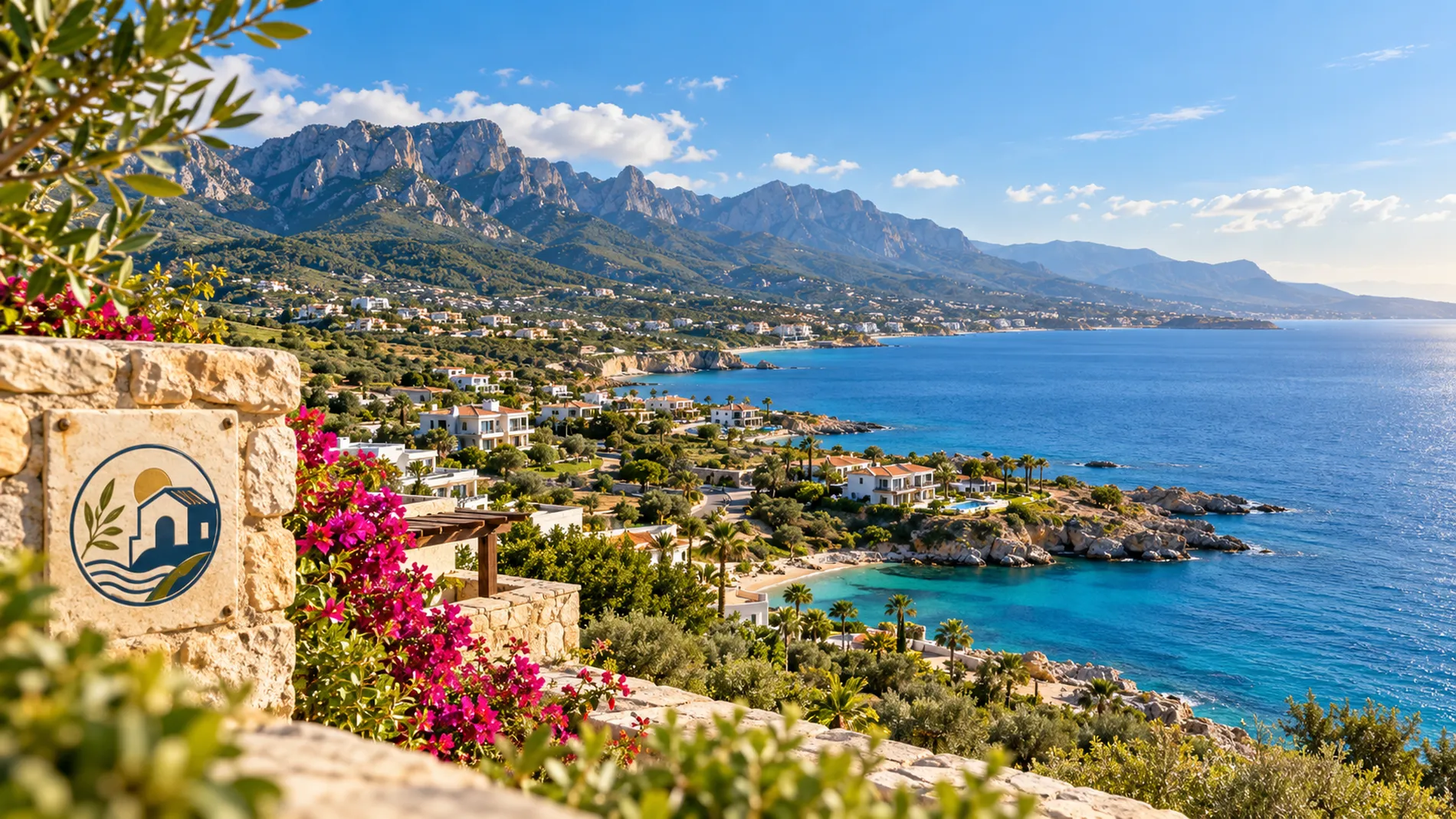

Bahçeli is a small village on the northern coast of Cyprus, in the eastern part of the Kyrenia (Girne) district, between Esentepe and Tatlısu. You won’t find a bustling waterfront lined with bars or large, noisy resort hotels here. Instead, the old village sits on a hillside, with a stretch of low-rise residential developments below it and the rocky Mediterranean coastline beyond. Behind the village rise the Beşparmak Mountains, and it is this striking combination of sea and mountains that gives Bahçeli its distinctive character.
Before exploring the best attractions in Bahçeli, it is worth clarifying one thing: there are not ten major landmarks within the village itself. This guide therefore covers the village, its immediate coastline, neighbouring Esentepe and Tatlısu, and several more distant attractions that can be visited on separate excursions. Some destinations are only a short drive away, while mountain sites such as Buffavento Castle require considerably more time. For each attraction, we explain its location, what makes it worth visiting, and the practical details to consider before setting off.
This article is designed for two types of readers: travellers planning independent day trips around Northern Cyprus and those considering moving to the area who want to get a feel for what an ordinary weekend here might look like.
Where Is Bahçeli Located?
Bahçeli lies within the Kyrenia (Girne) district, along the eastern stretch of Cyprus’s northern coastline, approximately a 30-minute drive from Kyrenia itself. Following the coastal road west from the village takes you towards Esentepe and Alagadi Beach, while heading east leads to Tatlısu and the road towards the Karpaz Peninsula. The Mediterranean Sea lies to the north, while the southern landscape is dominated by the slopes of the Kyrenia mountain range, whose eastern section is known as the Beşparmak Mountains.
It’s important to distinguish between the two main parts of Bahçeli. The original village occupies higher ground, where local families live among traditional village buildings, a mosque, and a handful of small shops. The coastal strip along and below the main road, by contrast, consists largely of modern residential and holiday developments built over the past few decades. When property listings or travel guides refer to “Bahçeli,” they are often talking about this coastal area rather than the historic village itself.
Public transport along the eastern coastline is infrequent, and many of the area’s most interesting places are scattered across hillsides and secluded bays. Exploring the surrounding area without a car can be difficult, so it’s worth arranging a rental vehicle in advance, particularly if you’re arriving at Ercan Airport.
Bahçeli is best viewed as a quiet coastal residential area rather than a fully developed holiday resort. Larger supermarkets, medical clinics, restaurants offering a wider range of dining options, and entertainment facilities are concentrated mainly in Kyrenia, with some also available in Esentepe. For a closer look at everyday life in the area, see our guide to coastal living and buying property in Bahçeli.
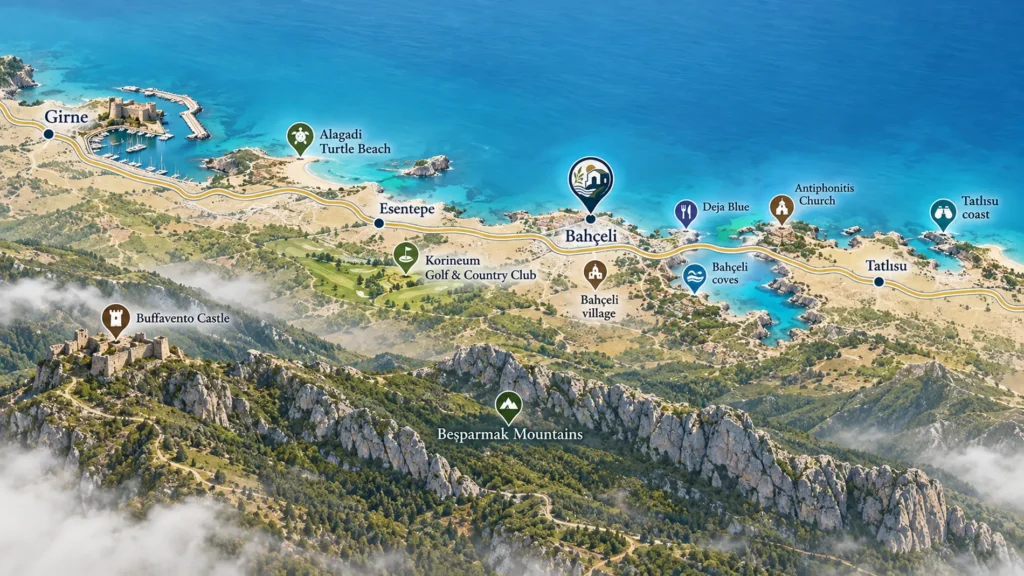
10 Best Places to Visit in Bahçeli and the Surrounding Area
We selected these attractions based on three key criteria: what makes each destination stand out from nearby alternatives, how easy it is to explore independently, and what it offers different types of travellers. The list brings together historical landmarks, natural attractions, and leisure destinations, ranging from a leisurely walk through a traditional village to a full-day mountain adventure.
| Place | Location | What Makes It Special | Best For |
|---|---|---|---|
| Old Bahçeli Village | Within the village | Traditional rural architecture, everyday village life, and views of the surrounding hillsides | Travellers looking to experience Cyprus beyond its tourist resorts |
| Bahçeli’s Coastal Coves | Along the local coastline | Rocky shores, clear waters, and opportunities for snorkelling | Confident swimmers and those seeking peace and quiet |
| Antiphonitis Church | In the mountains above the village | A distinctive Byzantine dome supported by eight columns and frescoes dating from the 12th to 15th centuries | History and architecture enthusiasts |
| Deja Blue | Bahçeli’s coastal area | A seaside resort and wellness complex | Visitors looking for a comfortable, relaxing day by the sea |
| Esentepe Beaches | In the neighbouring area | A choice of developed beaches with facilities and quieter, unspoilt stretches of coastline | Families and travellers who appreciate beach amenities |
| Korineum Golf & Country Club | Esentepe area | An 18-hole golf course with sweeping views of the sea and mountains | Golf enthusiasts and lovers of scenic landscapes |
| Alagadi Beach | A separate trip west along the coast | A protected nesting beach for sea turtles | Families and ecotourism enthusiasts |
| Beşparmak Mountains | The mountain range overlooking the coast | Hiking trails, pine forests, and panoramic views | Active travellers and outdoor enthusiasts |
| Tatlısu Coastline | A separate trip east along the coast | Secluded coves and peaceful rural scenery | Travellers looking for a change of scenery |
| Buffavento Castle | A more remote mountain excursion | A medieval fortress perched at approximately 960 metres above sea level | Fit, adventurous visitors who enjoy spectacular panoramic views |
These attractions naturally fall into three groups, making it easier to plan your itinerary. Bahçeli Village, the local coastal coves, and Deja Blue are ideal for a relaxed half-day outing without lengthy drives.
Esentepe’s beaches, Korineum Golf & Country Club, and Alagadi Beach can be combined into a scenic coastal trip heading west, with opportunities to enjoy different stretches of shoreline along the way.
Antiphonitis Church and the Beşparmak Mountains offer opportunities for a history-and-nature outing, although individual walking routes need to be selected carefully. Buffavento Castle is considerably farther away and is better treated as a separate excursion unless you have a full day, an early start, and enough time for its steep ascent. Mountain roads and access routes can make journeys significantly longer than the distances shown on a map.
1. The Old Village of Bahçeli
A good way to begin exploring Bahçeli is to visit the older residential part of the village, away from the modern coastal developments. Its traditional streets, low-rise houses, courtyard walls, and surrounding agricultural landscape offer a different perspective on the area from the holiday complexes closer to the sea. Bahçeli is primarily a residential community rather than a purpose-built tourist attraction, so visitors should expect an ordinary village setting rather than a concentration of shops, museums, or organised sightseeing facilities. A morning walk or a visit in the cooler late-afternoon hours allows time to appreciate the surroundings without the strongest summer heat.
There are no dedicated museums or established tourist trails in the village, and it is worth knowing this before you visit. The appeal lies elsewhere: a walk through Bahçeli offers a glimpse of Northern Cyprus beyond the polished resort experience. From the village’s elevated streets, you can enjoy views of the Beşparmak Mountains, while on clear days, a strip of blue sea is visible below. The contrast between the closely clustered village houses and the spacious residential developments along the coast offers an immediate sense of how the wider area is laid out.
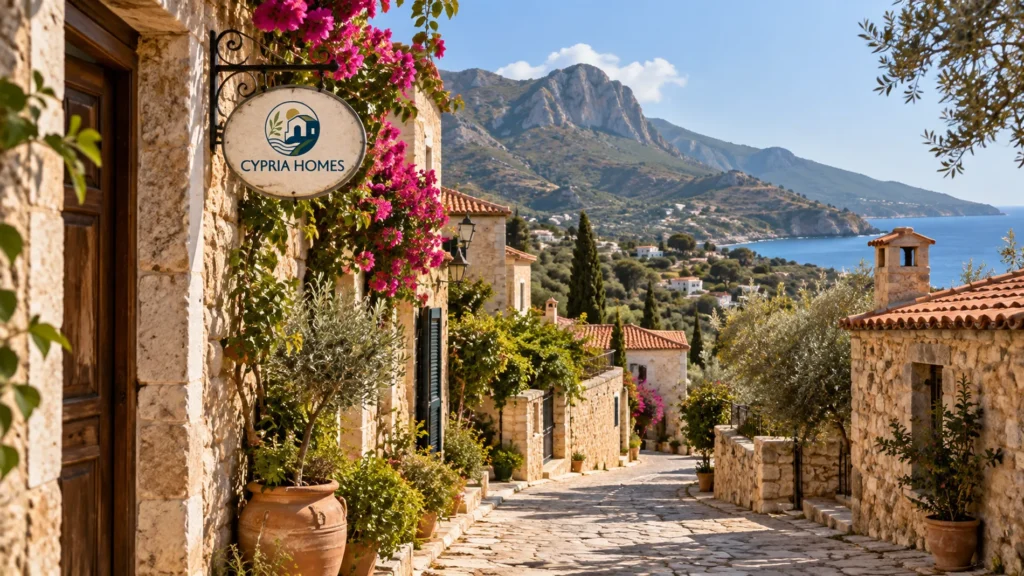
For a leisurely stroll, visit in the morning or shortly before sunset, as there is very little shade along the streets during the summer midday heat. It is best to park on the outskirts of the village, where the narrow lanes give way to more accessible roads. Remember that this is a residential community, not an open-air attraction, so always ask permission before photographing residents or private courtyards.
For anyone considering making Bahçeli their home, exploring the old village provides valuable practical insights. You can see which shops and everyday services are available nearby, assess the condition of roads away from the main tourist routes, and get a better sense of how active the community remains during the quieter winter months.
2. The Coastal Coves of Bahçeli
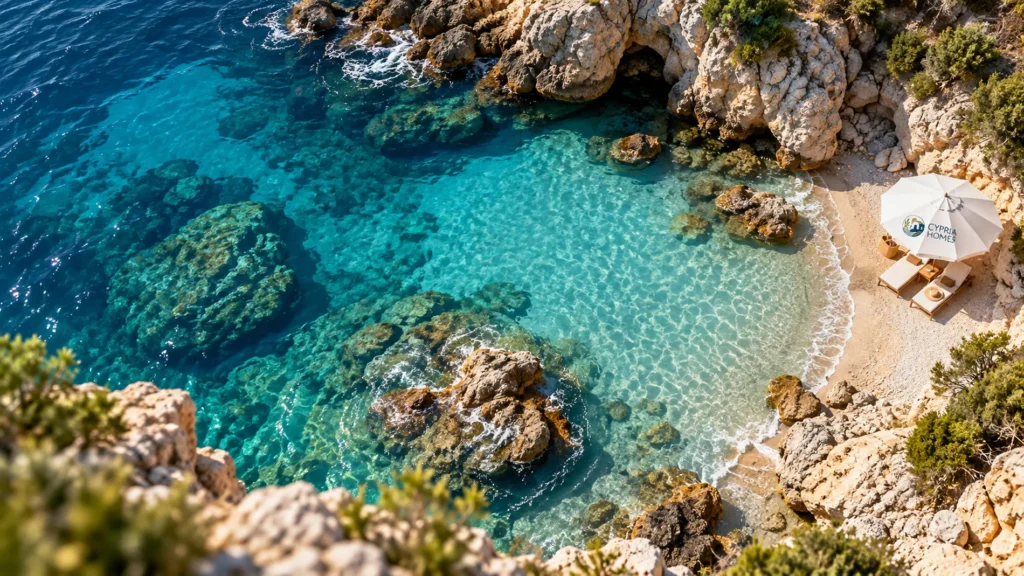
The coastline below Bahçeli consists of small coves, rocky headlands, and occasional stretches of pebbles or sand between the cliffs. Unlike established resort beaches, many of these coastal spots are not clearly identified as separate attractions on tourist maps, making them more difficult to locate without local knowledge. Some sections remain relatively undeveloped, while others lie close to residential complexes or construction areas. Visitor numbers, accessibility, and the atmosphere can vary considerably, particularly during the summer holiday season. If you are looking for a quiet place by the sea, it is worth checking access conditions and considering more than one location rather than expecting every cove to be secluded.
The greatest attraction of these coves is their crystal-clear water. Around the rocks, you can easily spot stones, seaweed, and fish beneath the surface, making the area particularly appealing for snorkelling. However, a picturesque cove is not necessarily a comfortable or accessible beach. Reaching the water often involves following a narrow path or scrambling over rocks, while entry into the sea can be steep and slippery. Most of these spots have no lifeguards, toilets, or cafés. Some sections of the coastline also border private residential developments, meaning access to the water may involve passing through their grounds. Always respect fences, signs, and private property boundaries.
For families with young children, these secluded coves are generally less suitable than the more developed beaches around Esentepe or the western section of Alagadi Beach. For confident swimmers and those seeking peace and seclusion, however, this stretch of coastline offers precisely the kind of experience that draws many visitors to the eastern side of Kyrenia.
What to Bring to a Secluded Cove
- Water shoes or protective beach footwear to navigate rocky and slippery surfaces safely.
- Plenty of drinking water, as there is usually nowhere along the shore to buy refreshments.
- A beach umbrella or portable sunshade, since natural shade near the water is limited.
- A mask and snorkel to explore the clear water and observe marine life around the rocks.
- A rubbish bag to collect your waste and take it away with you.
Editor’s tip: Before entering the water, spend a few minutes observing the sea conditions. If waves are breaking against the rocks near the entry point or you notice a current running parallel to the shore, it is safer to postpone your swim until conditions improve or choose a supervised, properly equipped beach instead.
3. Antiphonitis Church
The Church of Christ Antiphonitis is one of the most significant historical landmarks in the hills above Bahçeli. Situated in a wooded valley on the northern slopes of the Kyrenia mountain range, the church once formed part of a Greek Orthodox monastery near the historic settlement of Kalograia. Its Greek dedication is commonly translated as “Christ Who Responds.” Although local traditions offer different explanations for the name, the church’s principal significance lies in its unusual Byzantine architecture and surviving medieval wall paintings.
The origins of the Antiphonitis monastery are not precisely established, and the dating of the surviving church has been the subject of scholarly discussion. Its principal Byzantine construction is generally associated with the late 12th century, although some accounts suggest earlier religious activity at the site. Architectural alterations during the later medieval period included a vaulted narthex on the western side and a southern portico with Gothic-style pointed arches. The church’s most distinctive feature is its large dome supported by eight pillars arranged in an irregular octagon, an exceptionally rare architectural design in Cyprus. Antiphonitis is regarded as the island’s best-preserved surviving example of this type.
The church preserves fragments of wall paintings from different periods, including Byzantine frescoes associated with the late 12th century and later paintings from the 15th century. Among its best-known compositions are Christ Pantocrator in the dome and the historically documented scenes of the Last Judgement and the Tree of Jesse. The latter two compositions suffered particularly severe damage when sections of the paintings were removed after 1974 and entered the illicit art market. Some stolen fragments were subsequently recovered, but the losses remain an important part of the monument’s history. Today, Antiphonitis is visited primarily as a historic religious and cultural monument rather than as an active parish church.
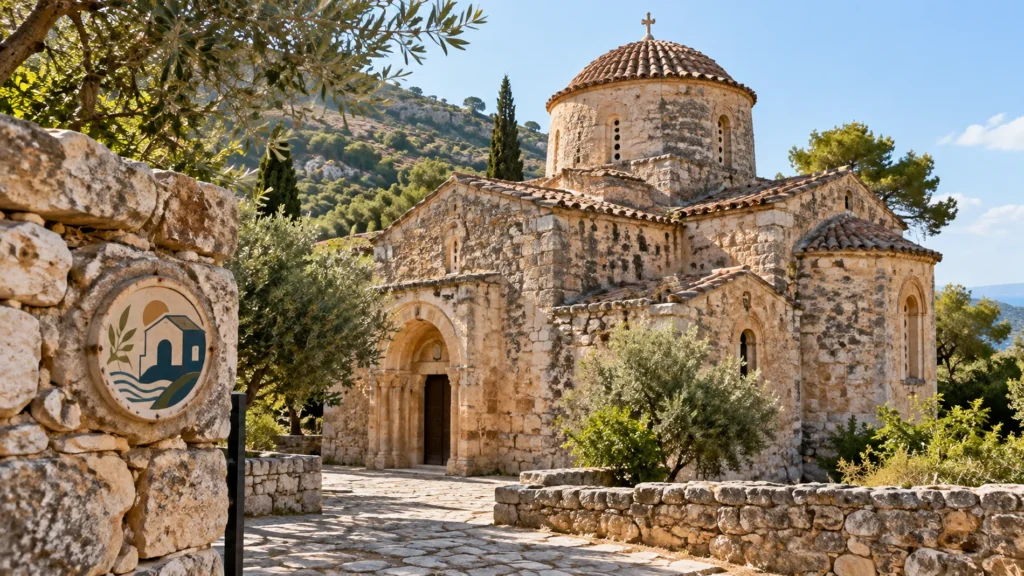
Access to Antiphonitis Church may be limited, and visitors should not assume that the interior will be open on arrival. Published opening arrangements may not always reflect conditions on the day, so it is advisable to verify access locally before setting off. Even viewing the exterior may depend on the current availability of the site and its surrounding grounds. The approach involves narrow, winding mountain roads, and the church is not served by a regular public transport connection. Travelling by car is the most practical option, but drivers should allow extra time for the final approach and avoid relying on an unverified opening schedule.
Plan your visit for the morning, save the location on an offline map, as mobile reception can be unreliable in the mountains, and bring plenty of water. The church interior remains pleasantly cool even in summer, while on clear days, the area around the building offers views towards the coastline near Esentepe.
4. Deja Blue Coastline
Deja Blue is a large residential and wellness resort complex on the Bahçeli coastline. It is neither a historical landmark nor a public beach, but a private development featuring residential buildings, hotel accommodation, swimming pools, spa facilities, and restaurants. It frequently appears in travel guides because it has become a defining feature of the local coastline, offering amenities that the area’s secluded, undeveloped coves often lack: comfortable leisure areas, shade, and places to eat just steps from the sea.
For visitors, the complex may be an appealing place to spend a leisurely day by the water, whether enjoying lunch with a sea view, indulging in wellness treatments, or having dinner in the evening. However, Deja Blue’s facilities are primarily intended for residents and registered guests. Swimming pools, beach areas, and spa facilities should not be assumed to be open to the general public. Access to restaurants and individual services for non-resident visitors may vary depending on the season and the management company’s policies.
Before planning your visit, contact the complex by phone or check its official channels to confirm whether the facilities or services you are interested in are available and whether advance reservations are required. During winter, some coastal establishments operate on reduced schedules.
For those exploring Bahçeli as a potential place to live, Deja Blue provides a clear example of a residential development with its own amenities and services. It illustrates how everyday life in a managed resort-style community can differ from living in the traditional village, as well as the types of facilities and services typically provided as part of such developments.
5. Esentepe Beaches
Neighbouring Esentepe, located west of Bahçeli, offers a wider variety of beaches and coastal spots. Along its shoreline, you’ll find two distinct types of beach. The first consists of developed beaches attached to restaurants, beach clubs, and resort complexes, offering sun loungers, parasols, showers, cafés, and sometimes pontoons for easier access to the water. The second includes natural stretches of sand and pebbles, where visitors come for peace and quiet and where the only facility may be a roadside parking area.
Families with children will generally find the developed beaches more convenient, as they typically offer gentler, clearer access to the sea, along with food, refreshments, and shaded areas nearby. Those who simply want to swim without music or organised beach services may prefer the quieter, undeveloped stretches. However, it’s worth preparing for these beaches just as you would for the coves of Bahçeli: bring your own drinking water and suitable footwear for rocky terrain. If you want to combine a beach day with a restaurant visit, look for establishments that clearly explain their access policies, whether that means free entry with a food or drink purchase, paid sun loungers, or a minimum-spend requirement.
Beach facilities here are largely seasonal. From late spring until mid-autumn, most beach clubs operate at full capacity, while in winter many close altogether or open only at weekends. Prices and access policies for non-resident visitors can change from one season to the next, so it’s best to confirm the arrangements directly before visiting.
Esentepe’s beaches should not be confused with Alagadi. This protected turtle nesting beach lies farther west and operates under its own conservation rules and visitor restrictions. For a more detailed introduction to the surrounding area, see our guide to the top attractions in Esentepe.
6. Korineum Golf & Country Club
Korineum Golf & Country Club is situated in the Esentepe area, on the hills overlooking the coastline at the foot of the mountains. It is home to Northern Cyprus’s first 18-hole golf course, which, according to publicly available information, measures approximately 6.2 kilometres and has a par of 72. The fairways are planted with paspalum grass, a variety known for its ability to withstand high temperatures, helping the course maintain its condition even during the dry summer months. The grounds are surrounded by olive and carob trees, while several holes run along the edge of a deep valley.
Even if you’re not a golfer, Korineum is worth knowing about. The grounds offer sweeping views of both the Mediterranean Sea and the slopes of the Beşparmak Mountains, while the resort itself provides a good example of the leisure and recreational infrastructure available along this part of the northern coast. The facilities include a golf academy with professional instructors, restaurants, and a hotel complex with access to a beach on the opposite side of the road.
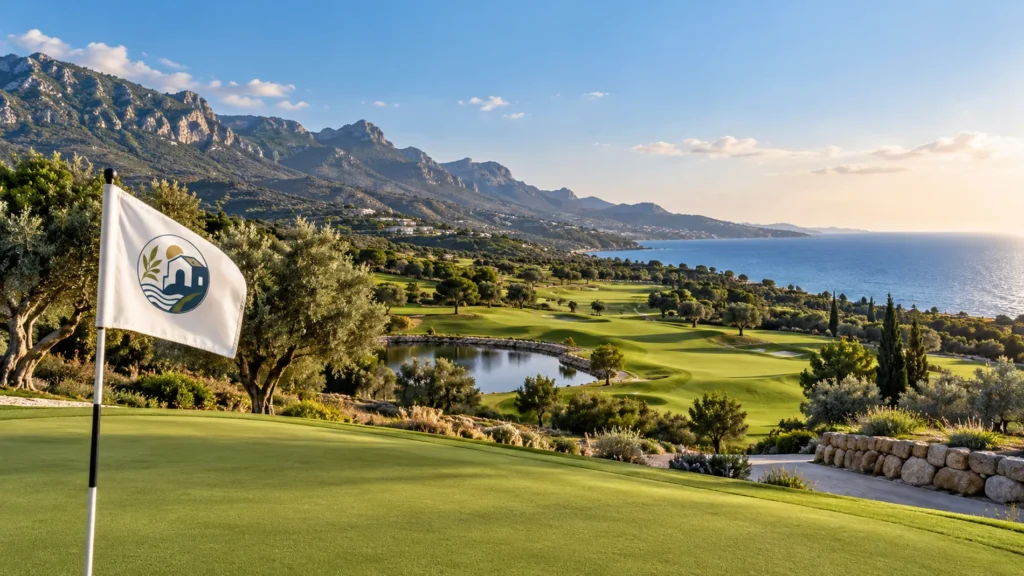
Visitor access at Korineum depends on the facility and the club’s current booking policies. Golf rounds, buggy hire, lessons, dining, and use of beach or resort amenities may be subject to different arrangements, charges, or guest restrictions. Travellers who are not staying at the resort should contact the club before visiting to confirm which services are available to non-residents, whether advance reservations are necessary, and what fees apply. This is particularly useful outside the main holiday season, when operating arrangements may differ.
For anyone considering moving to the area, Korineum is also an important local landmark. The golf course, academy, and clubhouse restaurant help sustain year-round recreational and social activity, giving the neighbourhood a dimension that extends beyond the summer beach season.
7. Alagadi Turtle Beach
Alagadi Turtle Beach is the best-known natural attraction in the eastern part of the Kyrenia district. Located west of Esentepe, closer to Kyrenia, it is best reached by car from Bahçeli. The long stretch of sandy coastline is divided into two bays, known locally as Alagadi 1 and Alagadi 2. The beach lies within a protected Natura 2000 conservation area, and its greatest ecological significance comes from the sea turtles that nest along its shores.
Two species lay their eggs at Alagadi: the green sea turtle (Chelonia mydas) and the loggerhead sea turtle (Caretta caretta). Both are protected species. Since the early 1990s, the beach has been monitored and protected by SPOT (Society for the Protection of Turtles), a conservation organisation whose volunteers and researchers monitor nesting activity, protect nests and record the number of hatchlings that emerge.
During the day, Alagadi is open to visitors as a natural beach, where you can swim, take a walk along the shore and visit the information centre. According to SPOT’s turtle-watching information page, the centre operates seasonally from late May until the end of September. Volunteers explain the conservation project and show visitors a short film about their work. Facilities are limited: there are no sun loungers, so you will need to bring your own shade, although several fish restaurants nearby offer places to eat.
During the nesting season, Alagadi Beach is closed to the general public at night, with access restricted to authorised conservation personnel and visitors participating in approved activities. SPOT organises several types of educational experiences, each with different conditions. Guided night watches for nesting females generally take place in June and July and require advance booking. Public nest excavations and supervised hatchling-release events are typically offered from late July through September, depending on nesting activity and conservation needs. Some releases require same-day reservations, while certain public events may be available without advance booking. Visitors should check the current programme and instructions on the official SPOT website before making plans. Turtle sightings and participation in individual activities are never guaranteed.
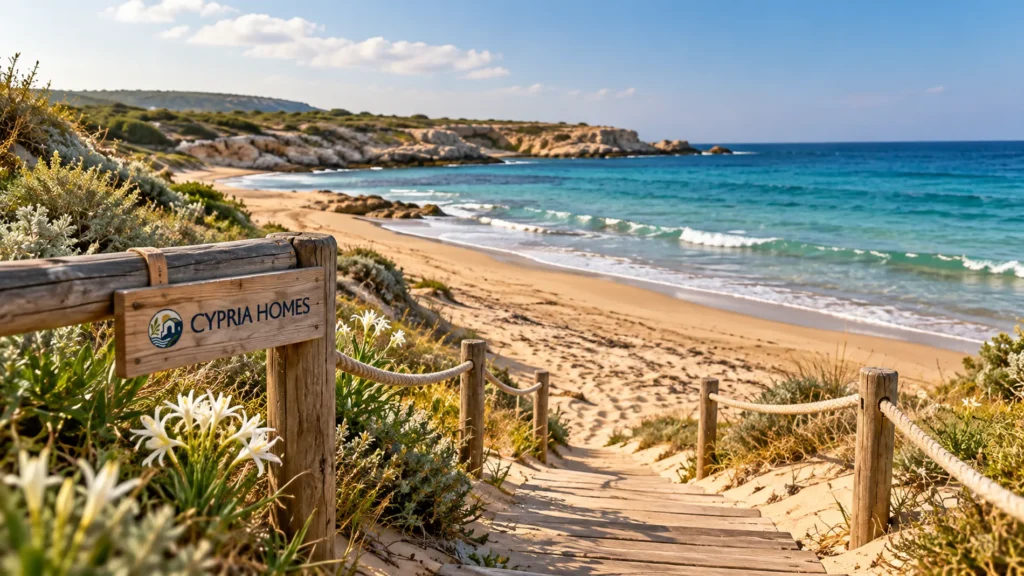
If you are visiting in October, most organised turtle-watching activities will usually have finished for the season. Alagadi remains worth visiting for its natural coastal setting, but travellers should not expect to join a nesting watch or hatchling release at this time of year. Check the official SPOT website for current visitor information before travelling.
Responsible visiting guidelines: Never search for turtle nests on your own, step into fenced-off nesting areas, shine torches or phone lights onto the sand, or leave holes and sandcastles behind. Artificial light and physical obstacles can disorient both nesting females and newly hatched turtles as they make their way towards the sea.
Before visiting Alagadi, make sure to check:
- Whether the SPOT information centre will be open on your intended dates.
- Whether nighttime turtle-watching sessions, nest excavations or hatchling releases are taking place that season, and how to book a place.
- Whether you have packed a beach umbrella, drinking water and warm clothing if you plan to attend an evening or nighttime activity.
- Which part of the beach has the calmest sea conditions, as the western bay is generally more sheltered.
8. Hiking Trails in the Beşparmak Mountains
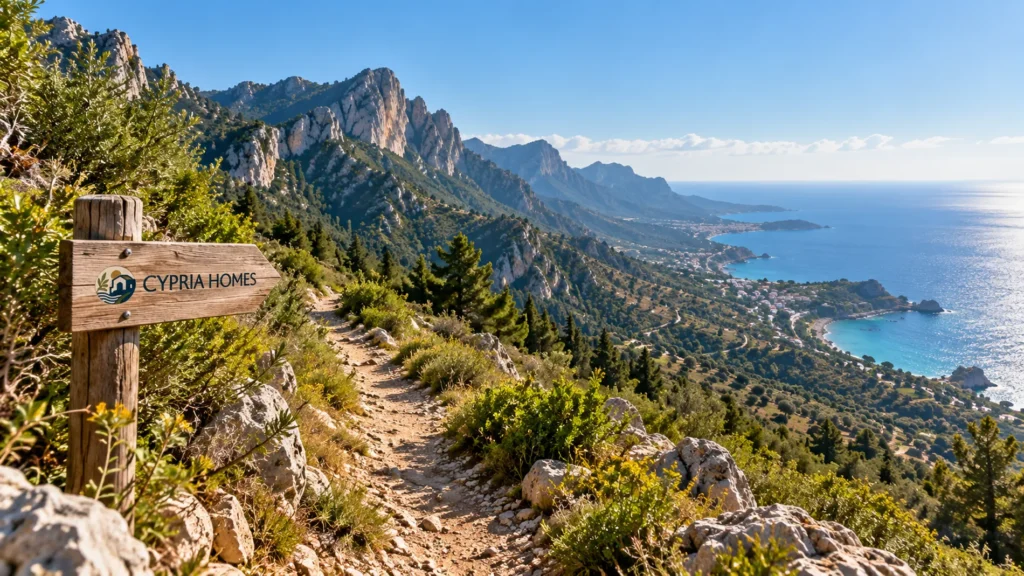
The Beşparmak Mountains form the eastern section of the Kyrenia mountain range, which stretches along the northern coast of Cyprus. The name translates from Turkish as “five fingers,” referring to the distinctive shape of a peak near the mountain pass on the Kyrenia–Nicosia road. For Bahçeli, the mountains are an ever-present backdrop: the slopes rise immediately behind the village and are clearly visible from the coast on a clear day. The landscape is dotted with pine and cypress trees and Mediterranean maquis scrubland, while cyclamen and wild orchids bring colour to the hillsides in spring.
One of the best ways to explore the mountains is along the Kyrenia Mountain Trail, a marked long-distance hiking route divided into several stages. Few hikers attempt the entire trail; most choose a section that suits their experience and fitness level. A popular starting point for walks in the eastern part of the range is the Alevkaya Forest Recreation Area, which offers access to nearby trails and the ruins of the Armenian Surp Magar Monastery. The coastal slopes above Bahçeli and Esentepe are crisscrossed by dirt tracks, but many are not officially designated hiking trails. For this reason, it is best to stick to clearly marked routes.
The mountains can be more challenging than they appear. In summer, the greatest dangers are heat and dehydration: exposed slopes offer very little shade, and water sources along the trails are scarce. Rocky paths call for sturdy, closed-toe footwear, mobile reception can disappear in the valleys, and darkness falls quickly at this latitude.
How to prepare for a mountain hike:
- Choose a marked trail and download the route to an offline navigation app before setting out.
- Start early in the morning, particularly between May and September.
- Carry at least two litres of water per person, along with a hat and sunscreen.
- Wear sturdy, closed-toe footwear with good grip.
- Let someone know which route you plan to take and when you expect to return.
The best months for hiking are October through May, when temperatures are cooler and the trails are generally more comfortable to explore. Spring is particularly beautiful, as the hillsides turn lush and green.
9. Tatlısu Coastline
Tatlısu lies east of Bahçeli, along the road towards the Karpaz Peninsula. This is a different, even quieter stretch of coastline, characterised by scattered development, a village set back from the main road, and a shoreline where small sandy coves alternate with rocky outcrops and agricultural land. While Esentepe is associated with golf courses and beach clubs, Tatlısu is all about tranquillity and the feeling of having reached the quieter, less developed edge of the coast.
Tatlısu is worth visiting when you fancy a change of scenery or simply want to enjoy a leisurely drive along the coast without a particular destination in mind. A pleasant way to spend the day is to take a walk by the sea, stop for lunch at a village taverna or seafood restaurant, and make the return journey at sunset. There are fewer restaurants here than in Esentepe, and some close during the winter months, so it is worth deciding where to eat in advance.
Not all of Tatlısu’s coves are accessible or safe for swimming. Some can only be reached via unpaved tracks, while others border private property. Exposed sections of the coastline can also experience significant waves when northerly winds pick up. There are relatively few organised beaches with lifeguards, so the same precautions that apply to Bahçeli’s secluded coves should be followed here.
For more information about the village and its surroundings, explore our guide to the top attractions in Tatlısu. If you are interested in living in the area, our Tatlısu property and lifestyle guide offers a closer look at everyday life and local real estate.
10. Buffavento Castle
Buffavento is the highest of Northern Cyprus’s medieval castles, with its ruins perched on a mountain ridge approximately 960 metres above sea level. Its name comes from Italian and means “defying the winds.” Together with St Hilarion Castle and Kantara Castle, Buffavento formed part of a defensive network protecting the island’s northern coastline. Both neighbouring fortresses are visible from Buffavento, allowing signals to be relayed between them. During the 13th and 14th centuries, the castle also served as a prison for high-ranking captives.
One important geographical detail: Buffavento Castle is not located in Bahçeli. Access is via the Beşparmak Pass on the Kyrenia–Nicosia road. Near the highest point of the route, a narrow mountain road branches off towards a parking area below the castle. The journey from Bahçeli takes considerably longer than reaching any of the other attractions in this guide, and the final stretch requires particularly careful driving. Do not turn onto restricted military roads; follow the signs directing visitors to the castle.
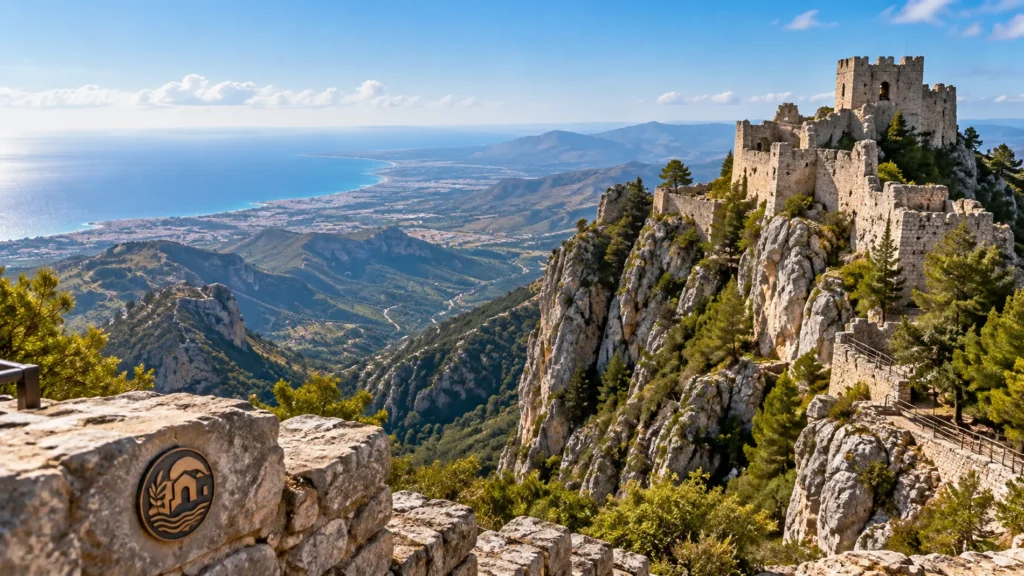
From the parking area, a steep trail of approximately 600 uneven steps leads up to the ruins. Depending on your fitness and walking pace, the climb can take anywhere from 20 minutes to an hour. There are no facilities at the summit: no cafés, drinking water, or toilets. The reward, however, is a spectacular panoramic view. On a clear day, you can see both the northern coastline and the Mesaoria Plain stretching towards Nicosia. Strong winds are common at the top, and clouds can obscure the scenery, so choose a clear day when temperatures are not excessively high.
Bring plenty of water, sturdy closed-toe shoes, and a windproof jacket, even in summer. The ascent can be demanding for older visitors and young children, who may prefer to enjoy the views from the lower lookout points rather than attempting the full climb.
One-Day Itineraries
The ten attractions are best spread across several days rather than squeezed into a single trip. Below are three realistic itineraries designed for travellers staying in Bahçeli and exploring the area by car.
| Itinerary | Main Stops | Best For | Things to Keep in Mind |
|---|---|---|---|
| A Relaxed Day in Bahçeli | Morning in the old village → coves below the village → lunch and relaxation at Esentepe Beach | First-time visitors, couples, and travellers who prefer a leisurely pace | Bring sturdy footwear for rocky terrain and plenty of water; the coves have no facilities |
| Nature and the Sea | Alagadi and the SPOT centre → Esentepe Beach → sunset at a Bahçeli cove or dinner near Korineum | Families and ecotourism enthusiasts | Restrictions apply during turtle nesting season; there are no sun loungers at Alagadi |
| History and Mountains | Antiphonitis Church → a short, suitable walking route in the nearby mountains | History enthusiasts and active travellers | Confirm access to Antiphonitis and check trail conditions in advance. Plan Buffavento Castle as a separate excursion because of the additional driving and steep ascent. |
The first itinerary involves very little driving or complicated planning, making it ideal for your first day in the area. The second follows the coastal road westwards and can easily be shortened if you prefer a more relaxed schedule. The third is the most demanding: if you want to include Buffavento Castle, set off early and allow extra time for the climb.
A note on driving times: Distances in Northern Cyprus may look short on a map, but winding mountain roads, narrow access routes, and stops for photographs can make journeys take longer than expected. Aim for no more than three or four stops per day; otherwise, sightseeing can quickly become a race against the clock.
Trying to visit all ten attractions in a single day is not recommended. You might glimpse them all from your car window, but you would have little time to swim, explore Antiphonitis Church properly, or climb up to the castle before the midday heat.
To organise your own self-drive itinerary:
- Book your rental car in advance and check the rental agreement for restrictions on unpaved roads, mountain access tracks, and any other routes you plan to use. Insurance coverage and exclusions depend on the specific policy.
- Download offline maps before setting off, particularly if your route includes mountain roads.
- Keep drinking water, snacks, sun protection, and suitable footwear in the car.
- Check your fuel level before travelling into remote areas, where filling stations may be less convenient to reach.
- Confirm restaurant opening hours outside the main tourist season, as some establishments may operate on reduced schedules.
When Is the Best Time to Visit?
The eastern coast has a Mediterranean climate, with hot, dry summers, warm autumns, mild, rainy winters, and springs when the countryside bursts into bloom. The best time to visit depends on what you want to experience, whether that means swimming, hiking, or watching sea turtles.
| Season | Best For | Potential Limitations |
|---|---|---|
| Spring (March–May) | Mountain walks, Antiphonitis Church, Buffavento Castle, and hillsides covered in spring flowers | The sea generally becomes warm enough for comfortable swimming towards the end of the season; some beach clubs do not open until May |
| Summer (June–August) | Swimming, snorkelling, and guided nighttime turtle-watching activities booked through SPOT | Intense heat makes early-morning hiking essential; nighttime access restrictions apply at Alagadi |
| Autumn (September–November) | Warm sea temperatures, comfortable sightseeing, and hiking from October onwards | The first autumn rains may arrive, while beach establishments gradually reduce their opening hours |
| Winter (December–February) | Peaceful coastal walks, golf, and exploring the area as a potential place to live | Cold sea temperatures, windy weather, and the closure of many seasonal resort businesses |
For a trip combining several activities, late spring and mid-autumn are generally the best choices. The sea is either warming up or still pleasantly warm, while the mountains can be explored without the exhausting summer heat. If you are considering relocating, a winter visit is also worthwhile, as it gives you a much clearer picture of what the area is like outside the holiday season.


 Bahceli
 from 80м²
 Bahcelifrom 56м²
 Bahcelifrom 55м²
Is Bahçeli a Good Place to Live?
Many of the qualities that make Bahçeli appealing to holidaymakers also attract people looking for a home: peace and quiet, the sea just minutes away, mountains rising behind the village, and an absence of large crowds. This kind of setting can work particularly well for remote workers, retirees, or those looking for a second home by the sea. However, spending a week here on holiday is very different from living here year-round, and it is important to consider both experiences before making a decision.
The main limitation is the area’s dependence on cars. Major shopping facilities, healthcare services, schools, and most everyday amenities are concentrated in Kyrenia, with some also available in Esentepe.
There are also noticeable differences between the old village and the newer residential developments. The traditional village has small shops and an established local community, while modern complexes may offer swimming pools, security, and professional property management. However, some developments can feel considerably quieter in winter, when fewer residents are around. Seasonality is another important consideration, as certain coastal restaurants and businesses close once the main holiday season ends.
| Factor | Advantages of the Area | What to Check Before Moving |
|---|---|---|
| Natural surroundings | The sea and mountains are close by, with predominantly low-rise development | Whether future construction on neighbouring plots could obstruct your view |
| Access to the sea | Small coves and beaches in nearby coastal areas | Whether your property has genuinely convenient and practical access to the waterfront |
| Transport | The coastal highway provides connections to Kyrenia and the airport | Journey times to work, schools, and medical facilities, as well as the condition of the road leading to your property |
| Everyday amenities | Basic shops are available in the village and neighbouring areas | The location of the nearest supermarket, pharmacy, and doctor, and whether these services operate year-round |
| Seasonality | Peaceful surroundings and relatively few tourists during winter | Which restaurants, businesses, and essential services remain open between November and March |
| Residential complex vs traditional village | A choice between managed amenities and a more authentic village environment | What maintenance fees cover, how much they cost, the quality of property management, and the condition of the property |
Before purchasing, it is also essential to have an independent lawyer examine the property’s documentation and legal status. This due diligence is particularly important in Northern Cyprus, where property ownership and title issues require careful scrutiny.
If you are comparing different locations, it is worth exploring neighbouring areas as well. For a livelier urban environment, see our guide to Kyrenia, which covers the city’s lifestyle and property market. Alternatively, our overview of Bellapais offers a closer look at life in a traditional mountain village.
Looking for property in Bahçeli or near Esentepe? Finding a comfortable place to live involves more than choosing a sea view or a home close to the beach. Road access, local infrastructure, property condition, and your long-term plans all deserve attention. Complete our short property search questionnaire to explore options that may suit your needs and preferences.
Final Thoughts on Visiting Bahçeli
Bahçeli offers a quieter way to experience Northern Cyprus, with traditional village surroundings, rocky Mediterranean coves, and access to historical and natural attractions across the eastern Kyrenia region. Antiphonitis Church, Alagadi Turtle Beach, and the Beşparmak Mountains provide different reasons to explore beyond the coastline, while Buffavento Castle deserves its own excursion. For travellers, the key is to plan realistically and allow enough time for each location. For prospective residents, visiting during different seasons can also reveal how the area’s peaceful character translates into everyday life.
 Real estate in Georgia
 Real estate in Montenegro
 Real estate in the UAE
 Real estate in Bali
 Real estate in Thailand
 Real estate in Spain
 Real estate in Saudi Arabia
 Real estate in Turkey
 Real estate in Zanzibar
 +90 533 888 29 50
 hello@cypria.homes
 Karsıyaka Sokak 8, Girne



 Get catalogue of TOP-7 objects