
 +90 533 888 29 50


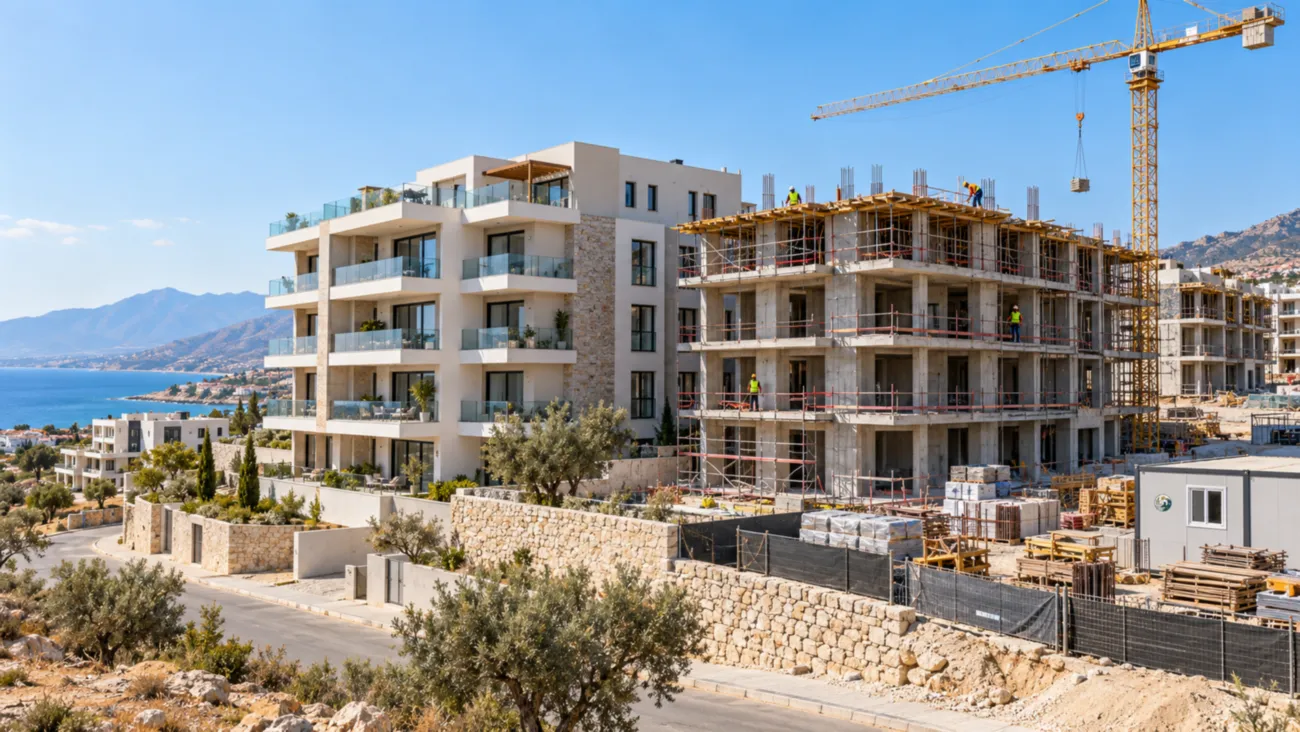
When you buy off-plan, you are committing money to a property that does not yet exist in its finished form. The developer shows you floor plans, renders and a payment schedule; you sign a contract, make staged payments, and wait. What you ultimately receive depends on who built it, what the contract actually says, what happens on site, and whether the legal paperwork keeps pace with the construction.
That arrangement can suit certain buyers very well. It can also leave others exposed if the right checks are skipped at the start. This guide sets out what those checks are, in the order they matter, so you understand the process before you sign anything.
Quick Answer: Buying off-plan in North Cyprus involves reserving a property under construction, making stage payments tied to build milestones, and waiting for both physical completion and legal title. Before committing, verify the developer, land title, required unit-level registration, permits and the current foreign-buyer rules with an independent lawyer. Completion of the building and registration of the individual title deed are separate events — sometimes separated by months or years.
Buying Off-Plan in North Cyprus: Key Facts for 2026
| What buyers need to know | Position as of October 2026 |
|---|---|
| Foreign-buyer purchase permission | Required before ownership can be transferred |
| Standard apartment purchase limit | Up to 3 apartments for eligible foreign buyers, subject to statutory conditions |
| Contract stamping and registration | Within 1 month for qualifying new contracts |
| Permission to Purchase application | Subject to the same one-month requirement |
| Transfer fees after permission | Generally payable within 75 working days of publication of permission |
| Title-transfer deadline | Generally within 1 year, subject to the applicable starting point and conditions |
| Temporary foreign-buyer transfer charges | 4%, 5.5% or 6%, depending on the qualifying acquisition category |
| Current temporary fee schedule | Effective through 5 January 2027 |
| Developer instalment plan | Contract-specific; no standard mandatory deposit or payment period |
| Individual title deed | May be issued or transferred separately from physical completion |
These rules reflect the TRNC-administered framework in force in October 2026, particularly Decree-Law No. 119/2026. Special buyer categories, transitional provisions and contractual circumstances can change the outcome. Have an independent lawyer confirm the rules applicable on the date of signing.
Find an Off-Plan Property That Matches Your Budget
Answer four questions about your budget, preferred location and purchase plans. Cypria Homes can prepare a personalised selection of available properties and developments.
Start the Property Quiz
What Is Off-Plan Property?
Off-plan means you are purchasing a property based on plans, specifications and a developer’s promise — not on the finished article. You may be buying before a single brick has been laid, partway through construction, or in the final few months before a building is handed over. In each case, you cannot inspect what you are actually buying, only what the developer intends to build.
It is worth separating the stages clearly, because the risks and the leverage you have as a buyer differ significantly depending on where a project sits.
- Pre-launch or early-stage: The site may be cleared land, or construction may not yet have started. Developers may offer introductory pricing at this stage, but any apparent discount should be assessed against construction, financing, completion and title-registration risks.
- Under construction: Building has begun. You can visit and assess progress, though structural decisions have already been made and specification changes become harder and more expensive.
- Near-completion: The shell is up, interiors are being finished. You can assess quality more directly, but most unit choices — floor, orientation, layout — have already been taken.
- Completed but untitled: The building is physically finished, but individual ownership documents have not yet been issued for each unit. The buyer takes possession but may be waiting on administrative processes before a separate title deed is registered in their name.
This last category is particularly relevant in North Cyprus. Building completion and individual title registration are distinct legal events. Before signing an off-plan purchase contract, your independent lawyer must verify whether the unit has a separate registered title or an established kat irtifakı (a preliminary floor-easement or pre-registration record) under the applicable legislation. For foreign buyers, the absence of the required unit-level registration may affect the legal validity of the sale agreement itself — not merely delay title transfer. Do not assume that a developer can remedy this position after you have paid a deposit.
A developer may hand you keys while the process of registering your specific unit’s koçan (title deed) is still months or more away. Understanding this distinction from the outset shapes how you approach every other part of the transaction.
| Buying factor | Off-plan property | Completed property | What buyers should consider |
|---|---|---|---|
| Purchase price | Agreed before construction is finished; introductory pricing may be available | Based on an existing property that can be inspected | Compare total costs, not just advertised prices |
| Payment schedule | Often paid in instalments during construction or after handover, depending on the contract | Payment arrangements depend on the seller and agreed completion terms | Check when payments become due and whether they are linked to verified milestones |
| Property selection | Early buyers may have more choice of floors, layouts and views | Limited to available completed units | Confirm the exact unit, approved plans, orientation and specifications |
| Construction quality | Final workmanship cannot be fully inspected before completion | Existing finishes and visible defects can be assessed | Arrange independent technical inspections |
| Building services | Electricity, water, lifts and shared facilities may not yet be operational | Existing systems can generally be inspected and tested | Verify connections, commissioning and maintenance responsibilities |
| Completion timeline | Future delivery date with possible construction delays | Property is physically complete, although handover may still take time | Check contractual deadlines and remedies for delays |
| Legal title | Individual title or required kat irtifakı status must be verified; transfer may occur after handover | Individual title may already exist, but its status still requires verification | Confirm ownership, encumbrances and title-transfer requirements with an independent lawyer |
| Financial exposure | Substantial payments may become due before construction finishes or ownership transfers | Payment and title transfer may be arranged closer together | Check how much money is paid before registered ownership and what safeguards exist |
| Mortgage and encumbrance risks | Developer financing or charges over the land may affect the purchased unit | Existing mortgages or charges may also affect completed properties | Obtain an independent land registry search and verify any enforceable release arrangement |
| Rental income | Cannot begin before lawful occupation and compliance with applicable letting requirements | May begin sooner if the property is legally ready for the intended rental use | Do not assume immediate rental income or guaranteed occupancy |
| Maintenance costs | Initial service charges may be estimates until the development is fully operating | Existing operating costs may provide a more useful reference | Request a full annual budget for management, lifts, pools, security and insurance |
| Buyer flexibility | More choices may be available early, but changes depend on project progress and contract terms | Buyers can evaluate the finished layout and condition | Decide whether design choice outweighs construction and delivery uncertainty |
| Resale before completion | Assignment may be restricted by the contract and applicable law | Resale depends on ownership status, applicable permissions and market conditions | Check resale rights and costs before committing |
| Main risks | Delays, developer financial difficulty, specification changes and title-transfer complications | Hidden defects, existing liabilities, title issues and maintenance costs | Neither option is automatically safer; independent due diligence is essential |
Important: In North Cyprus, physical completion, handover, individual title registration and lawful ownership transfer are separate matters. A completed apartment is not automatically free from legal risk, and a registered sale contract does not by itself guarantee ownership. Foreign buyers should verify the applicable purchase-permission requirements and the property’s ownership history before paying a deposit.
Why Buyers Choose Off-Plan
Several things genuinely attract buyers to off-plan developments, and they are worth examining honestly rather than either inflating or dismissing them.
Choice. Buying at an early stage means you can select a floor, an orientation, a view, or a specific layout that suits you — options that disappear once a development fills up. For buyers with particular preferences, this matters.
Spread of payments. Developer instalment plans allow buyers to pay in stages over the construction period rather than in a single lump sum. This can make a purchase financially manageable for buyers who would otherwise need to arrange full finance at once. It is not the same as a mortgage, and the legal protections differ; but for buyers who have capital available in tranches, it can be a practical structure.
New-build specification. A well-specified new-build offers modern construction standards, efficient systems, and finishes that older stock often cannot match — provided the specification in the contract reflects what is actually delivered. The key word is “specification”: it needs to be written into the contract, not described verbally in a sales meeting.
Early selection in a popular location. In areas where demand for new developments is active, waiting for a completed unit in a preferred location may mean finding limited availability. Some buyers choose off-plan precisely to secure something in a location before it becomes harder to access.
Two scenarios show where off-plan tends to work well and where it does not.
Scenario A — own use, flexible timeline: A buyer from the UK wants a two-bedroom apartment in a gated development near Kyrenia, with the intention of moving there within two to three years. They are not in a hurry, have sufficient savings to cover stage payments without financial strain, and are comfortable making regular site visits or appointing a representative. Off-plan is a reasonable fit if the developer and legal checks are solid.
Scenario B — rental income from year one: A buyer expects to generate rental income immediately after purchase. Off-plan is a poor fit. The property will not be available to let during construction, completion dates can slip, and rental licensing in North Cyprus is a separate regulatory matter from property ownership.
Off-plan tends to suit buyers who have a clear use in mind, a realistic timeline, financial reserves beyond the payment schedule, and the patience for due diligence. It is less suitable for buyers who need to occupy or let the property quickly, who are working to a fixed financial deadline, or who have little margin if costs exceed initial estimates.
Can You Rent Out an Off-Plan Property After Handover?
Completion does not automatically mean that a new apartment can be advertised for tourist accommodation.
Before relying on rental income, check whether the property is ready for lawful occupation, whether the development’s management rules permit the intended letting arrangement, and which registration or operating-permit requirements apply.
North Cyprus introduced a holiday-home regulatory framework under Law No. 54/2025, effective from 1 March 2026. Owners considering short-term tourist letting should obtain current legal advice on registration, operating permission, insurance and management obligations before advertising or accepting bookings.
A developer’s projected rental return is not evidence that tourist letting is legally permitted or that the advertised income will be achieved.
Explore Off-Plan Developments in North Cyprus


 Karsıyaka
 from 73м²



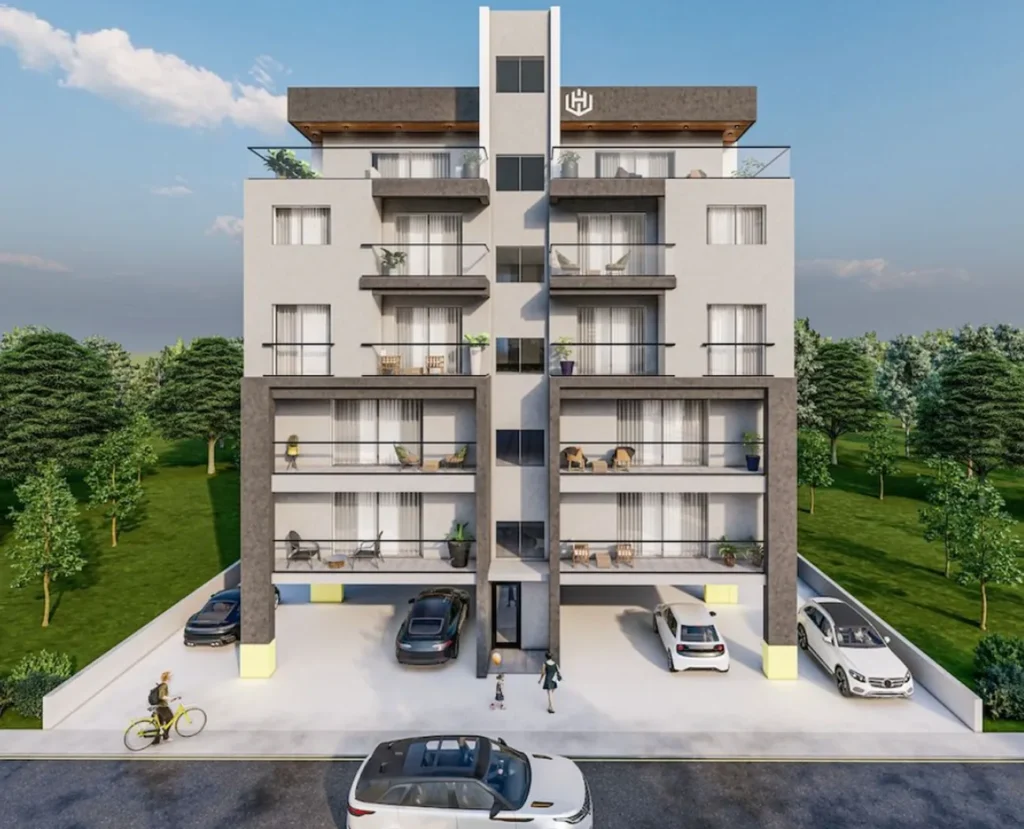
 Yenibogazichifrom 105м²
How the Buying Process Works
The sequence below represents the typical path from first interest to registered ownership. Each stage has a specific action and a specific document or outcome attached to it. Skipping or conflating stages is where problems begin.
- Define your budget and intended use. Before looking at developments, establish your ceiling — including all costs beyond the sale price (see the costs section below). Decide whether you intend to live there, use it seasonally, or rent it out, as this affects which locations, types of development and legal checks are relevant.
- Shortlist locations and developments. Research the areas that match your needs — infrastructure, access, the type of community, proximity to amenities. Visit if possible; renders and promotional video cannot tell you about road access, noise, or the quality of neighbouring developments. For more on the general buying process, see “How to buy property in North Cyprus“.
- Appoint an independent lawyer before anything is signed. This is not optional. Your lawyer should have no relationship with the developer, and should not be recommended solely by the agent or development sales office. They will conduct land registry checks, review the contract, advise on the permission procedures and represent your interests if disputes arise.
- Check the developer, the land and the permits. Establish who owns the land, confirm all relevant building permits are in place, and verify the developer’s track record (see the dedicated section below). This step should happen before any payment, including a reservation deposit.
- Review reservation conditions and refund terms. If a reservation deposit is requested at this stage, confirm in writing what it covers, whether it is refundable, under what conditions you would forfeit it, and whether it is credited against the purchase price. Get this in writing before handing over any money.
- Agree the sale contract and payment milestones. The main contract should specify the property, price, build timeline, payment schedule tied to construction milestones, specifications, and remedies for delay or material change. Your lawyer reviews and negotiates this document.
- Complete required registration and purchase-permission procedures. Under Decree-Law No. 119/2026, qualifying new purchase contracts involving foreign buyers are subject to a one-month requirement for stamping and registration at the District Land Registry and submission of the Permission to Purchase application. Failure to comply may render the contract automatically void. Your lawyer must confirm the applicable starting date, payment prerequisites and any transitional provisions before the contract is signed, and must obtain proof of registration once it is completed. Before registration, also obtain a written breakdown of the taxes and fees that must be settled by the buyer and seller at this stage — do not assume that all transaction taxes can be deferred until final title transfer. The TRNC Interior Ministry’s Land Property Unit is the official authority for these procedures.
- Inspect construction progress at key milestones. As each payment stage approaches, verify that construction has actually reached the milestone specified in the contract. This requires either a site visit or an independent technical representative. Do not make stage payments based on the developer’s word alone.
- Complete handover formalities and verify the title-transfer route. When construction is complete, conduct a thorough snagging inspection before signing any acceptance documents. Confirm with your lawyer what steps remain between handover and the registration of an individual title deed in your name, and when those steps are expected to be completed. Buyers purchasing remotely should read our guide to “Buying property in North Cyprus remotely” for practical advice on managing this process from abroad.
The central point: reservation, contract, construction, completion, handover, and title registration are distinct events. Each requires a specific action from you or your representatives. Confusing these separate stages can expose first-time buyers to avoidable legal and financial risks.
How to Check a Developer
The quality of an off-plan purchase depends largely on who you are buying from. Marketing materials can be produced by anyone; the question is whether the company building and selling the property has the legal authority, the track record, and the financial structure to deliver what it promises.

Start with the legal entity. The name on the billboard, the website and the sales brochure may not be the same as the registered company with which you are signing a contract. Ask for the full registered company name, its registration number, and confirmation that the signatory on the contract has legal authority to bind that company. Both facts should be verifiable.
Check the Construction Contractor, Not Only the Sales Company
The company marketing a development may be different from the contractor responsible for construction. Ask for the contractor’s registered identity, relevant professional authorisations and evidence of previous completed work.
Where applicable, verify registration or membership information through the relevant construction-industry body, such as the Cyprus Turkish Building Contractors Association (KTİMB). Confirm which entity is contractually responsible for defects, delays and completion.
Membership or licensing information is one part of due diligence; it is not a guarantee of financial stability or successful delivery.
Confirm who holds rights over the land. The developer or vendor should be able to demonstrate that the company selling you the property — not a related but distinct company — has the legal right to sell it. Your lawyer checks this directly against land registry records, not against documents supplied by the developer.
Verify the building permit. Construction in North Cyprus requires building permits and planning consent from the authority competent for the specific plot and project type. The permit should correspond to what is actually being built: number of floors, footprint, unit count. Your lawyer and technical adviser should verify these against the approved drawings and confirm that any amendments have been formally approved. Projects that have not yet obtained permits at the time of sale carry significant completion risk.
Look at completed projects. A developer with multiple delivered projects in North Cyprus gives you verifiable evidence to work with. Visit at least one completed development they built. Check whether the finish quality, the communal areas, and the management of the site match what you are being shown in renders for the new project. Poor maintenance in an earlier development is a reason for further investigation, although it does not necessarily establish how a new project will be managed.
Check actual delivery dates. Find buyers in completed projects and ask when they were told they would receive keys and when they actually did. A developer who consistently delivers within the agreed window is a different proposition from one with a pattern of delays.
Be alert to opaque ownership structures. Some projects involve a parent group, a land-owning entity, a construction company and a sales entity, all connected but legally separate. In the event of a financial difficulty, the obligations may be distributed between these entities in ways that complicate your position as a buyer. Your lawyer should trace the structure clearly before you sign anything.
A developer’s most credible reference is a completed building you can inspect and owners you can speak to. Sales presentations are designed to reassure; a finished project tells you what the developer actually delivers.
Legal Checks Before You Pay
This section is the most consequential part of any off-plan purchase in North Cyprus. Legal checks should be completed before a reservation deposit is paid — not after.
Documents to Request Before Paying a Reservation Deposit
Before transferring money, ask your independent lawyer to verify:
- The vendor’s full registered company name and signing authority.
- Current land registry records, including ownership and registered charges.
- The land’s pre-1974 ownership history and title classification.
- Planning consent, building permit and approved project drawings.
- Individual unit title or legally required kat irtifakı registration.
- The exact unit identification, floor plan and net/gross floor area.
- A written construction specification and completion timetable.
- A draft sale contract and deposit refund conditions.
- Any mortgage-release, bank guarantee or escrow documentation offered.
- The payee’s legal identity and independently verified bank details.
Do not treat a sales brochure, developer-produced title copy or verbal assurance as an alternative to independent verification.
Land Title and Ownership
Before anything else, your lawyer needs to search the relevant land registry to confirm who owns the plot on which the development is being built, whether any mortgages or encumbrances are registered against it, and whether the title category is appropriate.
Land title in North Cyprus is more complex than in many Western markets, and the category of title matters. Pre-1974 Turkish-Cypriot-owned land, exchange (eşdeğer) titles and allocation (tahsis) titles each have different origins and carry different considerations. None of these categories should be described as automatically free of international legal risk without a property-specific legal assessment.
The UK Government’s guidance on buying property in Cyprus specifically addresses the north of the island: some properties in Northern Cyprus may be built on land that was owned by Greek Cypriots before 1974, and buyers should be aware of the potential legal complications this creates, including the risk that former owners or their heirs may assert claims. The UK Government’s property-in-Cyprus guidance advises seeking independent legal advice before proceeding. Even a locally registered title does not necessarily resolve claims by pre-1974 owners or their heirs. In Apostolides v Orams (C-420/07), the Court of Justice of the European Union addressed the recognition and enforcement of a Republic of Cyprus judgment concerning property in the north — illustrating that in certain circumstances, civil judgments relating to disputed property may have consequences outside the territory. Dealings involving property with a contested ownership background may also present criminal-law considerations. These are not hypothetical: they should form part of any property-specific legal assessment.
This is not a reason automatically to avoid all off-plan purchases — it is a reason to understand what you are buying and to have independent legal advice that addresses the specific plot, its specific history, and what protections apply in your case.
Beyond title category, your lawyer should check:
- whether any mortgages or charges are registered over the land in the developer’s name, and — if so — whether all registered encumbrances affecting the purchased unit are subject to a legally verified and enforceable release arrangement;
- whether any court orders, injunctions or restrictions affect the plot;
- whether the land area and boundaries match what the developer is presenting.
Permits and Purchase Permission
Building permit and planning consent: Your lawyer and technical adviser should verify the planning consent and building permit with the competent authority for the specific plot and project. The approval should match the number of floors, the site coverage and the development type actually being sold; check whether approved drawings, unit count and any amendments correspond to what is offered.
Permission to Purchase: Foreign nationals purchasing property in North Cyprus must obtain a Permission to Purchase (Taşınmaz Mal Satın Alma İzni) from the Council of Ministers before legal ownership can be transferred into their name. This process takes time, and approval is not guaranteed. The permission covers the transfer of title, not the signing of the sale contract; these are different steps. Under Decree-Law No. 119/2026, the Permission to Purchase application must be submitted within the period prescribed by the applicable provisions of that decree — the same deadline that applies to contract registration. Your lawyer must confirm the precise calculation of the starting date and any payment prerequisites before the contract is signed. Foreign purchasers should also be aware that the decree includes restrictions on the number and type of properties that may be acquired; these limits may affect whether permission is granted even where the contract is otherwise correctly documented. Your lawyer should confirm the applicable restrictions and the consequences of a refusal before you commit.
How Much Property Can a Foreigner Buy?
Under the October 2026 TRNC-administered rules, the permitted type and number of properties depend on the buyer’s nationality and the applicable acquisition category.
| Property type | General foreign-buyer limit |
|---|---|
| Apartment | Up to 3 apartments |
| Detached house | Subject to the statutory detached-property and land-area limits |
| Building plot | Up to 1,338 m² for a qualifying plot with one dwelling |
| Detached home with land | Up to 3,300 m² under the applicable category |
| Nationals of qualifying states recognising the TRNC | Special limits may allow up to 6 apartments or 3 villas |
These categories are alternatives subject to legal conditions, not automatically cumulative entitlements. The applicable limits, including restrictions within developments, must be checked before signing. Purchasing through a company does not automatically remove foreign-buyer restrictions.
Contract registration: Under Decree-Law No. 119/2026, qualifying new purchase contracts involving foreign buyers must be stamped and registered at the District Land Registry within one month. Failure to meet this deadline may render the contract automatically void. Your lawyer must confirm the precise starting date for the one-month period, any payment prerequisites and applicable transitional rules, and must obtain written proof of registration once completed. Registration may provide important protections and notice of your contractual interest, but it does not itself remove existing mortgages, cure title defects or guarantee eventual transfer of ownership. A current land-registry search and legal opinion remain essential.
Following publication of the Council of Ministers’ purchase permission in the Official Gazette, further statutory deadlines apply. Under Decree-Law No. 119/2026, the relevant land registry transfer fees must generally be paid within 75 working days, while title transfer is subject to a separate one-year deadline and applicable conditions. Your lawyer must confirm the precise deadlines, any alternative starting point and the consequences of non-compliance for your transaction.
What Happens After Purchase Permission Is Granted?
| Event | What the buyer should do |
|---|---|
| Permission is published | Obtain the official reference and confirm the effective date |
| Transfer fees become due | Confirm and pay the required charges within the applicable statutory deadline |
| Developer’s obligations remain outstanding | Check whether the unit title and subdivision procedures are complete |
| Purchase price is paid in full | Confirm whether full payment triggers a separate transfer deadline |
| Title transfer is scheduled | Arrange the required signatures and updated registry checks |
| Transfer is registered | Obtain official evidence that the buyer is the registered owner |
The October 2026 framework includes a 75-working-day fee deadline and a one-year transfer requirement, but the starting point and exceptions depend on the legal circumstances. A contract for deferred instalments should be reviewed against these rules.
| Document or check | What it confirms | Who should verify it | Warning sign |
|---|---|---|---|
| Land registry title search | Who owns the plot; mortgage or charge status; title category | Independent lawyer (direct registry search) | Developer-supplied copy only; no unencumbered title confirmation |
| Building permit and planning consent | Authority to construct the project as described; approved drawings match what is sold | Lawyer and technical adviser; cross-reference with competent authority | Permit not yet issued, expired, not matching development described, or amendments not formally approved |
| Developer company registration | Legal identity of vendor; authority to sell | Lawyer; company registry search | Brand name differs from registered entity; signatory lacks authority |
| Developer’s land rights | Company selling units has rights over the plot | Lawyer | Developer leases rather than owns land, or land rights held by a separate entity |
| Registered encumbrances | No unresolved mortgages or charges on the land | Lawyer (land registry) | Mortgage registered in developer’s name with no discharge confirmed |
| Title category and pre-1974 history | Risk of displaced-owner claims; Apostolides v Orams enforcement implications | Lawyer with property-specific assessment | Title with potential pre-1974 background and no independent legal assessment |
| Kat irtifakı or individual title status | Whether unit-level pre-registration record exists | Lawyer | Potentially invalid transaction where the legally required unit-level registration is absent |
| Contract registration | Buyer’s contractual interest noted at land registry within applicable deadline | Lawyer; confirmed with land registry | Developer resists registration or delays beyond statutory period |
| Permission to Purchase process | Foreign buyer understands requirements, application deadline, timeline, refusal risk | Lawyer | Agent describes permission as routine with no detail on current rules, application deadline or refusal scenarios |
| Written specification attached to contract | Development plans and finishes match what is being sold | Lawyer; compare against permit drawings and sales materials | No written specification attached to contract; discrepancies between approved plans and sales materials |
Contracts and Payment Plans
What Your Contract Must Include
A contract for an off-plan purchase in North Cyprus should be a specific legal document, not a generic template. Before signing, your lawyer should confirm that it contains the following as a minimum:
- Exact property identification: unit number, floor, building phase, total floor area (with a clear statement of whether net or gross area applies), and an attached floor plan.
- Full specification: construction materials, finishes, fixtures, fittings, appliances and any communal facilities that form part of what you are paying for. Material specifications and commitments should be incorporated into the signed contract or its annexes. Enforceability of statements made outside the contract depends on the facts and applicable law, so do not leave any material detail to a verbal understanding.
- Currency of the contract: whether the price is fixed in sterling, euros or another currency, and what happens if payments are made in a different currency.
- Payment schedule with milestone links: each payment should be linked to a specific, verifiable construction milestone, not simply a calendar date.
- Completion date and delay provisions: a defined expected completion date, what constitutes a delay, how you are notified, and what remedies you have — including whether you can terminate and recover payments if delay exceeds a specified period.
- Specification change procedure: if the developer needs to substitute a material or fitting, the process for notifying you and obtaining your agreement in writing.
- Remedies and termination: what happens if the developer fails to complete; what entitles either party to terminate; how refunds are calculated.
- Buyer default and late payment: Define notice periods, default interest or penalties where applicable, cure periods and the circumstances in which the developer may terminate the agreement.
- Dispute resolution: Specify the governing law, competent court or valid agreed dispute-resolution mechanism, contractual language and allocation of dispute-related costs.
- Notices and evidence: Set out how formal notices must be delivered, which addresses or communication methods are legally effective, and how construction milestones and defects are documented.
- Resale and assignment rights: whether you can sell or assign the contract before completion, and on what terms.
- Permission to Purchase: what the contract says about your obligations and the developer’s if your Permission to Purchase application is refused.
- Title transfer route: the steps the developer will take to register an individual title deed in your name after completion and your Permission to Purchase has been granted.
- Maintenance and service charges: an agreed basis for calculating communal charges, who manages the development, and your rights regarding service quality.
Do not sign a contract that lacks an attached written specification. If material specifications are missing from the signed contract, proving and enforcing the developer’s obligations may be substantially more difficult.
Verbal assurances can be difficult to prove and enforce. Require any material variation to the contract — specification, payment schedule, completion date — to be documented in a signed written amendment before accepting it.
How Stage Payments Work
Developer payment schedules may be linked to construction milestones, calendar dates or a combination of both. The structure varies between developers and projects; there is no single standard schedule.
The principle behind stage payments is that you pay more as more is built. In practice, some payment schedules are genuinely milestone-linked; others attach payments to calendar dates regardless of what has actually been built. The difference matters: if you are paying on calendar dates rather than verified milestones, you may be funding construction that has not yet happened — and in the event the project stalls, your financial exposure is higher.
Before each stage payment, your contract should specify what physical progress you can verify. Ask for photographic evidence and consider a site visit or an independent technical inspection for major payments.
| Milestone | Illustrative payment | Evidence to request | Buyer action |
|---|---|---|---|
| Reservation | 5% | Signed reservation agreement; refund conditions in writing | Confirm whether amount is credited to purchase price; appoint lawyer before signing anything further |
| Contract signing | 20% | Signed sale contract; proof of stamping and registration obtained within the applicable statutory deadline | Confirm the contract-registration and Permission to Purchase application deadlines with your lawyer, and obtain documentary evidence of compliance |
| Foundation / slab | 15% | Site photographs; independent inspection report | Visit site or instruct technical representative to confirm progress |
| Structural frame / shell | 20% | Photographs; inspection certificate if applicable | Cross-reference with contract milestone definition |
| Roof and weathertight | 15% | Site photographs; roofing completion confirmation | Check roof type and terrace waterproofing at this stage |
| Internal fit-out | 15% | Photographs; comparison against written specification | Raise any specification discrepancies in writing now |
| Completion / handover | 10% | Snagging inspection completed; agreed remedies in writing | Do not sign handover acceptance until snagging list is documented and agreed |
| Total | 100% |
This is a single illustrative example only — not market data, a legally required structure or a typical schedule. Actual payment plans vary between developers and projects. The reservation deposit is credited against the total purchase price, not added on top of it. For any actual purchase, obtain a contract-specific schedule totalling exactly 100% of the agreed price, with each payment linked to a verifiable milestone.
Calendar-based payment schedules — where you pay on the first of a given month regardless of progress — transfer financial risk to the buyer. If construction is behind schedule when a calendar payment falls due, you are paying for work that has not been done and may not be done. A milestone-linked schedule provides at least some mechanism for verification before each payment.
Take a look at the villa complex in Alsancak
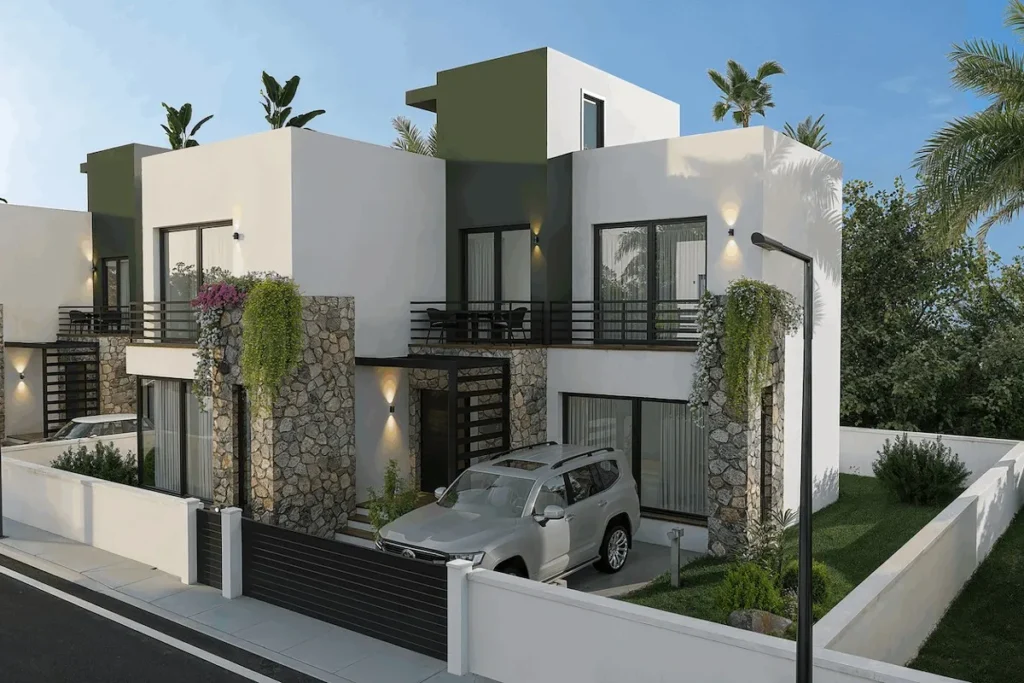
 Alsancakfrom 106м²
 Alsancakfrom 150м²
 Alsancakfrom 285м²
Is an Interest-Free Developer Payment Plan Really Cheaper?
A developer may advertise zero interest while offering a different price for cash buyers. Always compare the total contractual prices.
| Item | Offer A: Cash | Offer B: Instalments |
|---|---|---|
| Illustrative property price | £150,000 | £158,000 |
| Amount paid upfront | £150,000 | £47,400 |
| Remaining amount | £0 | £110,600 |
| Advertised interest | Not applicable | 0% |
| Total contract price | £150,000 | £158,000 |
| Difference | — | £8,000 |
These are hypothetical offers, not quotations from North Cyprus developers.
The instalment offer costs £8,000 more in nominal contractual payments despite advertising no interest. This does not establish an annual interest rate or prove that either offer is preferable: payment timing, currency exposure, security and opportunity costs also matter.
Ask developers for a written cash-price quotation and a written instalment-price quotation for the same unit and specification.
Compare Off-Plan Payment Options
Tell us your budget and preferred payment structure. Explore available developments and request a breakdown of deposits, instalments and handover conditions.
Find Properties With Payment Plans
The Real Cost of Buying
The advertised price of a North Cyprus off-plan property is the starting point, not the total cost. Buyers should calculate taxes, professional fees, connections, furnishings and ongoing charges before committing.
The payments and additional transaction costs you need to account for include:
- Reservation deposit: typically paid to secure a unit; confirm whether it is refundable and whether it is credited against the agreed purchase price — to avoid double-counting it when budgeting.
- Lawyer’s fees: independent legal advice is essential and carries a cost. Agree the fee basis in advance.
- Stamp duty: the applicable rate and payment deadline should be confirmed with your lawyer against current TRNC rules, not assumed from older guides. Rates and deadlines have been subject to amendment in October 2026.
- VAT: whether VAT applies, at what rate, and whether it is included in the advertised price needs to be confirmed in writing for each specific transaction.
- Title transfer fees: payable according to the applicable statutory payment schedule, which may require payment before the final transfer of ownership. Confirm the amount, payment deadline and applicable exemptions or transitional rules with your independent lawyer. As of October 2026, published legal analysis indicates that a temporary transfer-fee framework for foreign buyers includes rates that vary by acquisition category, with rates cited in the range of 4%–6% under the current framework, which is due to change or expire in early January 2027. Obtain a dated, written breakdown from your lawyer identifying the legal payer, the valuation base, the applicable rate and any transitional provisions before relying on any percentage. Verify against the Official Gazette before committing. These rates should not be used as a final transaction budget without confirming the buyer’s category, number of properties, applicable valuation basis and payment stage obligations. See Northern Cyprus Property Law 2026 — Decree-Law 119/2026 for published legal commentary.
- Permission to Purchase administration fees: there are administrative charges associated with the permission application; your lawyer should advise on current amounts.
- Utility connections: water and electricity connections to a new-build unit may involve a connection charge.
- Furniture and appliances: unless the contract includes a furniture pack or appliance specification, budget separately.
- Service and maintenance charges: ongoing costs for communal areas, pool, landscaping and management. Ask the developer to put the expected annual charge in writing; this is a recurring commitment, not a one-off.
- Building insurance and contents insurance: Confirm who insures the building during construction, what cover applies to communal areas after completion, and when the buyer becomes responsible for arranging building or contents insurance. These obligations depend on the contract, policy terms and management arrangements.
- Currency exchange and international transfer costs: if you are buying in a foreign currency, exchange rate movements and bank transfer charges can add a meaningful amount to the total.
For current guidance on property-related taxes and charges in North Cyprus, see “Property taxes in North Cyprus“.
| Cost item | When it arises | How to verify the amount | Included in advertised price? |
|---|---|---|---|
| Reservation deposit | Before the main contract | Written reservation agreement; confirm whether refundable and credited to agreed price | Normally credited to purchase price if contract so provides; confirm in writing to avoid double-counting |
| Legal fees | During purchase | Agree fee letter with lawyer before instruction | No |
| Stamp duty | At contract or registration | Lawyer confirms current rate and payment deadline against applicable legislation | No |
| VAT | Dependent on transaction structure | Written confirmation from developer; lawyer advice | Sometimes — confirm in writing |
| Title transfer fee | At the stage required by applicable legislation and transaction procedure; confirm any advance payment requirements | Lawyer confirms current rate; verify October 2026 amendments | No |
| Permission to Purchase fee | During application | Lawyer advises on current charge | No |
| Utility connections | At or after completion | Request written estimate from developer | Sometimes — confirm in writing |
| Furniture and appliances | After handover | Separate budget item unless specified in contract | No unless stated in specification |
| Service and maintenance charges | Ongoing from handover | Request projected annual figure in writing from developer | No |
| Currency exchange and transfer costs | At each payment stage | Obtain quotations from currency provider | No |
Example: Budgeting for a £150,000 Off-Plan Apartment
The following example illustrates how to calculate a purchase budget. It is not a quotation for an actual property.
| Budget component | Illustrative amount |
|---|---|
| Contract purchase price | £150,000 |
| Reservation payment, credited to price (5%) | £7,500 |
| Remaining purchase-price balance | £142,500 |
| Transfer-related charges at 4% | £6,000 |
| Transfer-related charges at 5.5% | £8,250 |
| Transfer-related charges at 6% | £9,000 |
| Stamp duty | Obtain current assessment |
| VAT, if applicable | Obtain written transaction-specific calculation |
| Independent lawyer | Written quotation |
| Utilities and handover fees | Developer’s written schedule |
| Furniture and equipment | Based on intended use |
| First-year maintenance and insurance | Written estimates |
For this example, the purchase price plus the illustrative 4% transfer charge is £156,000, before other applicable costs. At 6%, the corresponding amount would be £159,000.
The £7,500 reservation payment is part of the £150,000 purchase price if the agreement expressly credits it. It must not be counted a second time.
The percentage selected for any real transaction depends on the applicable legislation, buyer category and valuation base. This example assumes the charge is calculated on the £150,000 contract price solely to demonstrate the arithmetic; the assessed basis may differ.
Developer instalment plans are not the same as a mortgage. Unlike a bank mortgage, a developer instalment plan does not automatically involve an independent valuation, lender oversight or mortgage-backed security. Buyers should commission independent checks and verify whether separate contractual or financial safeguards are available. Your protections depend on the contract, applicable law, the status of the land and any valid security arrangements.
Where to Buy Off-Plan
North Cyprus covers a variety of distinct areas, each with a different character, infrastructure and profile of off-plan development. The choice of location should be driven by how you intend to use the property.
Kyrenia (Girne) is an established coastal centre with year-round shops, restaurants, medical services and a busy harbour district. Development density is high in established parts of town, parking can be limited, and hillside sites offer sea views but require consideration of road access and terrain.
Iskele / Long Beach has seen concentrated new development in recent years, with a high proportion of large resort-style complexes close to the beach. The infrastructure built around some of these developments is improving, but the area’s character is more resort than town. Buyers intending to use a property year-round should assess what services are available locally outside of peak season.
Esentepe appeals to buyers seeking a quieter setting with coastal views, in a village environment. Infrastructure is more limited; access to services involves travel. Off-plan developments here tend to be smaller scale.
Famagusta (Gazimağusa) is a historic walled city and university centre. Coastal developments in the wider eastern and north-eastern region — including Bafra and Tatlısu, which have different access and infrastructure profiles from the city itself — vary significantly in character, legal status and ongoing management costs.
Which North Cyprus Area Suits Your Off-Plan Purchase?
| Area | Potential appeal | What to check before buying |
|---|---|---|
| Kyrenia / Girne | Established town services and year-round living | Traffic, parking, terrain, local amenities and approved density |
| Iskele / Long Beach | Large new-build complexes and shared facilities | Competing supply, annual service charges, winter services and delivery schedules |
| Esentepe | Quieter coastal setting and sea-view developments | Road access, coastal maintenance, utilities and distance to services |
| Famagusta | Urban amenities and university-related activity | Exact neighbourhood, building condition, local letting rules and title history |
| Bafra / Tatlısu | Coastal developments outside established urban centres | Transport, completed infrastructure, year-round accessibility and developer obligations |
These are location-screening considerations, not rankings by investment return. A property’s legal status, total purchase cost and suitability for its intended use matter more than the district name alone.
None of these areas can be ranked straightforwardly against one another — what makes a location right depends on your specific use, your budget and what you actually need within reach. More importantly: two projects in the same district can differ substantially in build quality, legal status, communal facilities and ongoing management costs. Location is one factor; the specific development is another, and they should be assessed separately.
Not sure which North Cyprus development suits your plans? Explore a personalised property shortlist based on your budget, preferred location and intended use with Cypria Homes’ property selection quiz.

Not Sure Which North Cyprus Area to Choose?
Compare property options in Kyrenia, Iskele, Esentepe and other locations based on your budget and intended use.
Get a Personalised Property Shortlist
Risks and Warning Signs
Buying off-plan in North Cyprus carries genuine risks. Independent checks can identify and sometimes reduce those risks, but they cannot guarantee completion, clear title or protection from competing ownership claims. Decide only after a property-specific legal and financial assessment.
Construction delays affect plans, rental income projections and your financial position if stage payments have already been made against a schedule that has slipped. A developer who misses one milestone may miss others; the contract’s delay provisions determine what remedies you have.
Developer financial distress is a more serious risk that, while not universal, is worth planning against. If a developer runs into difficulty partway through a project, your payments may be at risk unless the contract includes specific protections. Ask whether a genuine independent escrow arrangement or enforceable bank guarantee is available, and have your lawyer verify the issuer, beneficiary, release conditions and insolvency treatment — a refund clause in the contract alone does not guarantee recovery.
Specification changes happen. A developer may substitute materials, change finishes, or reduce the specification of communal areas. Your contract needs to define the specification precisely and set out what happens if the developer wishes to change it.
Undisclosed land charges can affect your ability to obtain clear title. A mortgage registered against the developer’s land that is not discharged before title transfer creates a problem for the buyer.
Difficulties obtaining individual title. Even when construction is complete, the registration of an individual title deed in a foreign buyer’s name is a separate process that depends on the Permission to Purchase being granted and the developer fulfilling their obligations to the land registry. These steps take time, and in some cases the process extends well beyond what buyers anticipated.
Unexpectedly high communal fees can arise where initial developer estimates prove lower than the actual running costs, particularly where pools, lifts, security or extensive shared facilities are involved. Ask for a projected full operating budget, not just a headline monthly charge.
Resale restrictions. Some contracts restrict your ability to assign or sell before completion. If you buy with the intention of reselling before keys are handed over, verify that the contract permits this and on what terms.
Construction delays, developer financial distress and unexpectedly high communal fees are material risks to assess; their frequency varies considerably by project and by developer, and no market-wide generalisations should be assumed.
Red flags before signing:
- Developer cannot provide a verifiable building permit for the current project
- A mortgage or other charge affects the plot, and no independently verified, enforceable mechanism exists to release the purchased unit from that encumbrance before title transfer
- Sales office cannot confirm which registered legal entity will be the contracting party
- Contract lacks an attached written specification for materials and fittings
- Payment schedule is calendar-based rather than construction-milestone-based
- No written provisions for delay remedies or refund in the event of insolvency
- Developer’s previous projects show a consistent pattern of late delivery
- Title category on the plot has a pre-1974 origin with no independent legal assessment provided
- Independent legal advice is discouraged or the agent insists you use their own lawyer
Example: Your Apartment Is 12 Months Late
Suppose a buyer has already paid 70% of the agreed purchase price, but the contractual handover date has passed and construction is still unfinished.
The buyer should not assume they can automatically stop payments, claim a fixed penalty or obtain an immediate refund. The available remedies depend on the contract, applicable law, the developer’s legal and financial position and the evidence of delay.
Before taking action, obtain an independent construction-progress report, preserve payment records and correspondence, and ask your lawyer to assess formal notice requirements, available security and enforceable remedies.
A late-completion clause is valuable only if its terms are enforceable and the party responsible can satisfy the resulting obligation.
If your project is delayed:
- Gather all contracts, payment receipts, correspondence and any written confirmations of milestones from the developer.
- Check your contract for the specific provisions on delay — what constitutes a default, what notice period applies, and what remedies are available.
- Commission an independent assessment of the actual construction stage from a qualified technical professional.
- Consult your lawyer before stopping payments or issuing any termination notice — acting without legal advice can undermine your contractual position.
- Explore whether the developer’s delay triggers any contractual right to terminate with a refund, and what the realistic enforcement route is if they resist.
For a fuller assessment of the legal landscape, see “Risks of buying property in North Cyprus“.
If a developer or agent cannot provide the building permit, land registry confirmation and written specification within a reasonable time, that is grounds to pause the transaction until they can — not to sign and hope.
Inspecting the Finished Property
When construction reaches completion, you will be invited to a handover. This is a distinct event from the registration of your individual title deed. Receiving keys may give you possession or contractual use rights. It does not by itself establish registered legal ownership or resolve any title dispute. The registered koçan in your name is what matters legally — confirm with your lawyer what steps remain between handover and that outcome, and get a written timeline from the developer as a contractual commitment.
Before you sign any acceptance or handover document, carry out a thorough snagging inspection. If you cannot attend in person, appoint an independent technical representative. Do not rely on the developer’s own handover team to identify defects — their interest is in completing the handover, not in generating a list of things they need to fix.

Property inspection checklist:
- Walls and ceilings: check for cracks, uneven surfaces, paint quality
- Moisture and damp: look for staining, smell, discolouration particularly around windows, balcony junctions and flat roofs
- Windows and external doors: open and close every one; check seals, locks, drainage channels
- Ventilation and air conditioning: test all units; check they are the specification agreed
- Electrical: test all sockets, switches and fuse boards; check the meter and any communal electrical installations
- Plumbing: run all taps and showers; check under-sink connections; confirm water pressure
- Balconies and terraces: check drainage, waterproofing joints and any structural connections to the main building
- Floor area and layout: walk the plan against the contract drawings; note any discrepancies
- Finishes and fittings: compare against the contract specification tile by tile, fitting by fitting; note substitutions
- Lifts, car park and communal areas: inspect against what was promised in the specification and planning documentation; check operation, safety and finish
- Promised infrastructure: if the development was sold with a pool, gym, landscaping or other amenity, confirm these are complete and functional
For coastal properties, pay particular attention to the quality of materials in a salt-air environment, the standard of waterproofing on roofs and balconies, and drainage around the building. Marine environments are demanding on construction quality; shortcuts in materials or waterproofing show up quickly near the coast.
Produce a snagging list — a written record of every defect, with photographs. Give this to the developer in writing before or at the handover meeting, not verbally. Confirm in writing their commitment to rectify each item and within what timeframe. Signing an unqualified acceptance may make some defect claims harder to pursue. Record outstanding defects and agreed remedies in writing, and ask your lawyer whether signing affects your statutory or contractual defect rights before you do so.
Final Advice Before Buying
Off-plan property in North Cyprus can suit buyers who complete thorough due diligence and understand what they are committing to. It can also be a frustrating and costly experience if key steps are skipped. Thorough preparation can reduce avoidable risks, although some outcomes remain outside the buyer’s control.
Verify the land and the developer first. Everything else rests on these two foundations. Do not commit funds until your independent lawyer has verified the building permit, the land registry position, all relevant encumbrances and any enforceable arrangements for releasing your unit from existing charges.
Appoint an independent lawyer before any payment. Not the agent’s recommended lawyer. Not the developer’s legal team. Someone who works exclusively in your interest and has no commercial relationship with anyone else in the transaction.
Get everything material in writing. Record every material commitment in the contract or signed annexes, rather than relying on statements whose legal effect may be disputed — specification, payment milestones, completion date, delay remedies, what happens if your Permission to Purchase is refused.
Budget beyond the sale price. Legal fees, stamp duty, transfer fees, connection costs, furnishing and ongoing service charges will add to your total outlay. Confirm the current rates for each item with your lawyer, particularly given recent legislative changes in October 2026. Know what these are before you commit.
Do not confuse handover with title. Receiving keys may give you possession — it is not the same as a registered koçan in your name. Understand when title registration is expected, what steps remain and confirm this with your lawyer.
Conduct a snagging inspection before signing acceptance. Document defects, get written commitments on rectification, and ask your lawyer about the effect of signing before doing so.
If you are exploring developments and would like help identifying options that match your budget, preferred location and intended use, the team at Cypria Homes can put together a relevant shortlist and arrange viewings or site visits — but the independent legal checks described in this guide remain yours to commission separately.
 Real estate in Georgia
 Real estate in Montenegro
 Real estate in the UAE
 Real estate in Bali
 Real estate in Thailand
 Real estate in Spain
 Real estate in Saudi Arabia
 Real estate in Turkey
 Real estate in Zanzibar
 +90 533 888 29 50
 hello@cypria.homes
 Karsıyaka Sokak 8, Girne




 Get catalogue of TOP-7 objects