
 +90 533 888 29 50



Last checked: October 2026. This guide reflects the foreign-buyer framework and tax rules checked against legislation and official publications available at that date.
Buying property in North Cyprus involves several distinct payments that sit on top of the advertised purchase price. The phrase North Cyprus property taxes is often used loosely to describe everything from a one-off stamp duty charge to a modest annual levy, but conflating these creates budgeting errors that are difficult to correct once a contract is signed. In practice, the significant upfront costs most buyers face are stamp duty, VAT where it applies, and the title deed transfer charge — three separate obligations with different rates, different payers and different trigger points across the transaction.
The annual property tax that applies once you own the property is a separate and typically much smaller figure. Non-tax costs — legal fees, utility deposits, infrastructure contributions, service charges — matter considerably for your cash-flow plan, but they are not taxes and should not be added to a “tax total” as though they were.
A further complication: the rules governing several of these payments have changed in recent years, and some widely circulated online guides still carry figures that no longer reflect current legislation. The stamp duty tariff was amended again in August 2026; the title deed transfer charge structure for foreign buyers changed significantly in May 2025; and VAT regulations have also been updated. Tax and property rules in North Cyprus can change. The figures and frameworks in this article are for general guidance as of October 2026 and should be confirmed for your specific transaction before signing or transferring title.
North Cyprus Property Taxes 2026: Quick Answer
For a qualifying non-Turkish foreign buyer, the main purchase taxes in North Cyprus in 2026 are a 9% title deed transfer charge, normally split 6% at contract registration + 3% at title transfer for a first permitted acquisition; stamp duty of 0.5% on the first TRY 89 million of the relevant contract amount and 0.1% on the portion above that threshold under the current tariff; and VAT where the transaction is taxable, with 5% commonly applicable to qualifying residential supplies but requiring confirmation for the specific property. After Permission to Purchase is published, applicable outstanding taxes and fees must be settled within 75 working days. Annual immovable property tax is separate and calculated under statutory property assessment tables rather than as a percentage of the purchase price.
Not sure what your real property budget is after taxes?
Tell us your budget, preferred area and property type. We’ll show you North Cyprus options that fit your target purchase budget rather than only the advertised price.
[Find properties within my budget →]
North Cyprus Property Taxes at a Glance
Before examining each charge in detail, it helps to see the main items together. The table below gives a structured overview; the sections that follow explain the nuances that no single table can fully capture.
| Cost | Typical 2026 rate / basis | Who pays | When |
|---|---|---|---|
| Stamp duty | 0.5% up to TRY 89m; 0.1% above threshold | Buyer | Contract registration |
| VAT / KDV | 5% commonly applicable to qualifying residential supply; verify category | Buyer on taxable supply | According to taxable transaction/payment schedule |
| Title transfer charge | Generally 9% for qualifying non-Turkish foreign buyer | Buyer | Split between registration and transfer |
| First permitted acquisition | 6% + 3% | Buyer | Registration + title transfer |
| Seller withholding | Transaction-specific | Seller | Transfer |
| Annual immovable property tax | Statutory assessment tables | Owner | Annually |
The most important point from this overview is that the total tax burden as a percentage of purchase price is not a single fixed number. It shifts depending on whether the property is a new build or a resale, whether VAT applies and at what rate, what the Land Registry assessed value is, the buyer’s legal status and purchase history, and how the transaction is structured. Any article — including this one — that quotes a universal “total tax percentage” is giving you a budgeting starting point, not a reliable cash requirement.
The relevant question is not only “What is the rate?” but also “What value is it calculated on, who pays it, and when?”

Stamp Duty
Stamp duty in North Cyprus is a charge levied on the contract of sale rather than on the property itself. It is calculated as a percentage of the contract value stated in the signed agreement and becomes payable when the contract is registered with the Land Registry.
Registration timing matters for two distinct reasons. First, registering your sales contract at the Land Registry records your contractual interest in the property and provides important protection against subsequent dealings with the property — the exact scope of that protection should be confirmed with your solicitor for the specific transaction. Second, stamp duty is due at or around the point of registration, which makes it an early transaction cost rather than one that arrives at completion.
Under the current stamp-duty tariff, agreements linked to a monetary amount are charged at 0.5% (five per thousand) on the first TRY 89,000,000 and 0.1% (one per thousand) on the portion above TRY 89,000,000. For an ordinary residential purchase below the threshold, 0.5% is therefore the relevant headline rate. The threshold and tariff should still be rechecked at the date of signing because stamp-duty orders can be amended.
This is not a reason to panic, but it is a reason to ask your solicitor to confirm the current stamp duty amount for your specific contract value before exchanging funds.
Stamp duty is a buyer obligation. It should not be confused with the title deed transfer charge, which is a larger and entirely separate payment arising at a different stage of the transaction.
VAT on North Cyprus Property
VAT — known locally as KDV, from the Turkish Katma Değer Vergisi — is arguably the most misrepresented element of North Cyprus property taxation in online guides. Two oversimplifications appear repeatedly and can lead to significant budgeting errors: that every new build automatically carries exactly 5% VAT, and that every resale is VAT-free. Both of these statements can be wrong for a specific transaction.
The TRNC VAT framework, governed by legislation available through the TRNC Revenue and Tax Department, applies VAT on the supply of goods and services by VAT-registered entities. For property, the decisive factors are whether the seller is VAT-registered, whether the sale constitutes a taxable supply under current legislation, and whether the category of the unit or the nature of the transaction falls within a particular rate category under the current VAT rate regulations. Those regulations have been updated in 2026, including amendments published in August 2026, so the applicable treatment for any specific unit should be confirmed against the current schedule rather than assumed from a listing or a general guide.
A 5% rate is widely cited for qualifying new residential supply, and it is the figure most commonly seen in developer price schedules. However, the applicable rate for a given property should be confirmed from the current official VAT rate schedule, not assumed from an agency summary alone. The VAT treatment can depend on the category of the taxable supply under the current regulations — and this may differ across types of residential property. Confirm the precise rate applicable to the specific unit before exchange.
A resale property should not be assumed VAT-free until the transaction history and seller status have been checked.
The reason is straightforward: if a private individual is selling their home, that sale is typically outside the scope of VAT. But if the seller is a VAT-registered business or developer — even on a second-hand sale — the VAT position is more complex. Similarly, assigning an existing off-plan sales contract (selling your purchase rights before a title deed exists) can create a different VAT question from a straightforward freehold resale, because the original VAT position on the underlying supply may not yet have been settled.
New Build vs Resale
The table below helps frame the questions to raise before exchange. It does not replace a transaction-specific VAT assessment.
| Scenario | VAT question to ask | Why it matters |
|---|---|---|
| New apartment from developer | Is this developer VAT-registered? What rate applies to this unit’s category under current regulations? | VAT may be a substantial addition; confirm the rate before agreeing to a price |
| Private resale with existing title deed | Is the seller acting in a personal or business capacity? Are they VAT-registered? | Usually outside the VAT scope, but must be confirmed |
| Assignment of an existing off-plan contract | Does the assignment itself trigger a VAT liability? Has VAT been settled on the original supply? | Less clear-cut than a direct sale; independent legal advice is essential |
| Resale by a developer or company | Is the seller VAT-registered regardless of the property’s age? What is the seller’s VAT status? | A business seller on a resale may create a VAT position that a private seller would not |
The practical takeaway: ask the seller for written confirmation of the VAT treatment before exchange. Where the answer is not straightforward, take independent legal advice. Do not accept “it’s 5%” as a complete answer unless the basis for that rate has been explained for this specific property and confirmed against the current official schedule.
Which Taxes Are Likely to Apply to Me?
| You are buying… | Stamp duty | Transfer charge | VAT |
|---|---|---|---|
| New build from VAT-registered developer | Yes | Yes | Usually relevant; verify rate |
| Private resale with VAT already settled | Yes | Yes | Often not applicable |
| Resale from company/developer | Yes | Yes | Must be checked |
| Assignment of off-plan contract | Yes / transaction-specific | Transaction-specific | Must be checked |
New build vs resale does not by itself determine the tax result. Seller status, VAT history, title status and transaction structure must also be checked.
Compare New-Build Properties


 Karsıyaka
 from 73м²

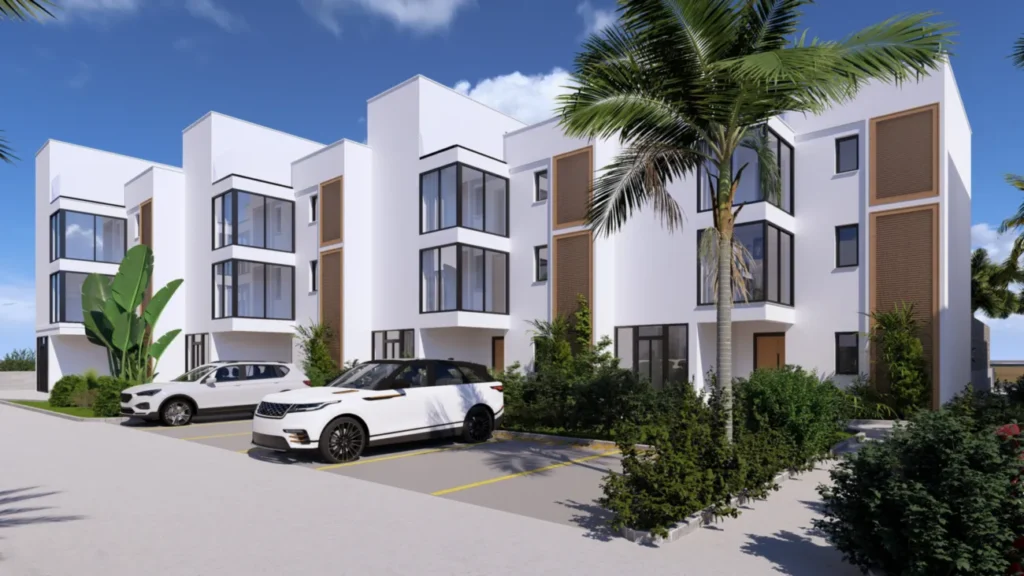 Karşıyakafrom 93.67м²
 Alsancakfrom 65м²




Title Deed Transfer Fees
For most foreign buyers, the title deed transfer charge is the single largest tax-related cost in a North Cyprus property purchase. Understanding how it works — and why older online guides can be actively misleading — is essential before you commit. The title deed is commonly referred to locally as the koçan (kocan). When an agent says that a property “has its koçan”, this generally means that a title deed exists, but buyers should still verify whose name it is registered in, whether it is an individual or shared title, and whether any encumbrances are recorded.
What it is: when title to a North Cyprus property is formally registered in your name at the Land Registry, a transfer charge becomes payable. This is calculated by reference to a value established by the Land Registry at the time of transfer, which may differ from the price you agreed with the seller or the price advertised. The distinction matters because your tax base is not automatically the same as the sale price — the Land Registry assessed value could differ from the contracted figure, and you should ask your solicitor to clarify the likely assessment basis for the specific property.
You may also encounter the term “Epsima” in North Cyprus property discussions. It is commonly used in the market when referring to the property/title transfer charge. For legal and budgeting purposes, however, use the terminology and calculation shown on the Land Registry documentation rather than relying on informal labels.
The current framework for foreign buyers: following the changes that took effect on 15 May 2025, the transfer-fee rate for foreign nationals other than Turkish citizens is generally 9%, subject to the applicable foreign-acquisition rules and the circumstances of the transaction. This charge is not a lump sum due at one moment. The fee is typically split between two stages of the transaction:
- For a first permitted acquisition by a qualifying foreign buyer: 6% is payable at the point of contract registration, and the remaining 3% falls due at the final title transfer stage.
- Where a second or third acquisition is permitted under the applicable foreign-ownership rules, the published fee structure is generally reversed: 3% at contract registration and 6% at title transfer.
The registration-stage payment forms part of the total transfer charge, not an additional sum on top of it. Your solicitor should confirm which split applies to your situation and ensure your payment schedule reflects this.
Why do older guides quote such different numbers? Because the structure has changed several times. Some sources still carry 12%, 6%, 3% or figures from previous regimes or different buyer categories. Do not rely on any article written before May 2025 for the current transfer charge framework. Before any transaction, confirm the rate and split applicable to your specific circumstances — buyer nationality, prior TRNC property purchases, and transaction structure can all influence the calculation.
The Land Registry assessed value, as noted, may differ from the sale price. This means that even where the 9% rate is confirmed, the calculation base requires its own separate verification.
For a practical understanding of the different types of title deeds in North Cyprus and their implications, the “North Cyprus Title Deeds Explained” guide covers what you need to know before comparing properties. Foreign buyers are required to obtain Permission to Purchase (PTP) from the TRNC Council of Ministers before title can formally transfer; the timeline and process are covered in the “North Cyprus Permission to Purchase” guide. The PTP publication date is a critical payment deadline trigger, not simply an administrative milestone — see the next section for why this matters to your cash-flow planning.
A further point specific to property in northern Cyprus: registration under the TRNC land registration system should not be confused with eliminating all title-related legal risk. Some property in northern Cyprus may also raise issues relating to pre-1974 ownership claims and the legal position taken by the Republic of Cyprus. Buyers should obtain independent legal advice on the title history of the specific property, not only on the TRNC purchase procedure and its associated taxes.

Why Do North Cyprus Tax Guides Show Different Rates?
North Cyprus property-tax rules have changed repeatedly, which is why current search results may show 3%, 6%, 9% or 12% for title-transfer charges and different deadlines for completing the transaction. Some of these figures describe previous rules; others apply to different buyer categories. Always check three things before using a number: the publication date, the buyer nationality/category and whether the source describes contract registration or final title transfer.
Who Pays Which Taxes?
One of the most consistent sources of confusion in North Cyprus property guides is the blurring of buyer costs and seller costs. They are legally distinct obligations, and understanding the difference protects you from being presented with a cost schedule that includes items that are not, in fact, your statutory liability.
Buyer-side costs in a standard transaction typically include stamp duty, VAT where the transaction falls within scope, and the title deed transfer charge. These are the buyer’s obligations under current TRNC legislation.
Seller-side costs include withholding tax on immovable property transfers. This is a charge that falls on the seller in connection with the transfer. Under the official VD89 form — the Taşınmaz Mal Devirleri İle İlgili Stopaj Beyannamesi — the taxpayer is the transferring party (devreden), and the tax base is calculated by reference to the higher of the Land Registry market value and the sale value. This form is available through the TRNC Revenue and Tax Department. This is a seller’s statutory liability, not a buyer’s cost. In some commercial negotiations, parties discuss how certain costs are reflected in pricing or shared by agreement — but contractual cost-sharing is not the same as statutory liability. Knowing which obligations are yours by law is different from knowing which costs appear in the sale price.
A professional or business seller, such as a developer, may have different tax treatment and obligations than a private individual selling their home. This affects how you should interpret the asking price and what your solicitor should clarify before exchange.
| Item | Buyer or seller? | Key caveat |
|---|---|---|
| Stamp duty | Buyer | Verify current tariff; falls early in the transaction at contract registration |
| VAT / KDV on taxable supply | Buyer (via purchase price or separately) | Depends on seller VAT status and property category under current regulations |
| Title deed transfer charge | Buyer | 9% total for most foreign nationals; split between registration and transfer stages |
| Seller withholding (VD89) | Seller | Calculated on higher of Land Registry market value and sale price; not a buyer statutory cost |
| Annual immovable property tax | Property owner | Liability and payment timing should be confirmed under the current annual assessment rules |
| Gain-related charges on sale | Seller (where applicable) | Do not include in buyer line items |
The distinction between statutory taxpayer and contractual cost allocation matters. Confirm with your solicitor which obligations fall to you by law — not just which costs appear bundled into the sale price.
Worked Cost Examples
The table below sets out three illustrative budgeting scenarios. These are planning tools, not tax assessments. The actual figures for your transaction may differ based on the Land Registry assessed value, the applicable VAT determination, the legal fees specific to the transaction, and the confirmed transfer charge applicable to your buyer profile.
Stamp duty is listed as “confirm current rate” because the tariff was amended in August 2026 and the specific figure for each contract value requires verification against the current order before being used in any real calculation. Legal and administrative costs are listed as “obtain quote” throughout.
Example: £150,000 New-Build Apartment
Suppose a qualifying foreign buyer is purchasing a £150,000 new-build apartment as a first permitted acquisition. Using the current 9% transfer-charge framework, the transfer charge would be approximately £13,500 if the Land Registry assessment were also £150,000: about £9,000 at the 6% registration stage and £4,500 at the 3% title-transfer stage. If the particular residential supply is confirmed as subject to 5% VAT, that would add approximately £7,500. Stamp duty would then be calculated separately under the current TRY-denominated tariff. Legal fees, PTP costs, utility connections, infrastructure charges, service charges and furnishing are additional.
Therefore, do not interpret £150,000 as the cash cost of acquiring the property. Ask for a written schedule showing the purchase price plus each tax and non-tax cost separately.
| Cost item | Resale apartment ~£100k | New-build apartment ~£150k | Villa ~£300k |
|---|---|---|---|
| Purchase price | £100,000 | £150,000 | £300,000 |
| Stamp duty | Confirm current rate | Confirm current rate | Confirm current rate |
| VAT / KDV | Confirm — often not applicable on private resale | If applicable at ~5%: ~£7,500; confirm rate and category | Must confirm — obtain specific VAT assessment for this transaction |
| Title deed transfer charge (9% working assumption, first purchase, foreign buyer) | ~£9,000 on sale price basis (6% at registration + 3% at transfer) | ~£13,500 on sale price basis (6% at registration + 3% at transfer) | ~£27,000 on sale price basis — Land Registry value and rate category require specific verification |
| Legal / administrative costs | Obtain quote | Obtain quote | Obtain quote |
| Total indicative transfer charge | ~£9,000 | ~£13,500 | ~£27,000 |
| VAT where applicable | Not automatic | ~£7,500 if applicable | Confirm separately |
| Non-tax purchase costs | Utility deposit, connections | Transformer/infrastructure fee, utility deposit | All of the above; likely higher sums |
A few points essential to reading this table correctly:
The transfer charge uses 9% as a working budgeting assumption based on the post-May 2025 framework for foreign buyers on a first acquisition. It is applied to the sale price in this example, but the Land Registry may assess the property at a different value, which would change the outcome.
On the villa scenario, both the VAT position and the transfer charge base warrant specific legal confirmation before exchange. Applying apartment-scale assumptions to a £300,000 transaction carries material financial risk.
The table excludes legal fees, utility deposits, infrastructure contributions, service charges and stamp duty (pending rate verification). Those are real costs that affect your total cash requirement — but they are not taxes, and they belong in a separate category. The “How to buy property in North Cyprus” guide covers the full purchase process and the additional costs involved at each stage.
Treat any calculated figure in this table as a budgeting estimate, not a binding tax assessment. A transaction-specific cost schedule from a qualified solicitor is the only reliable basis for final financial planning.
Tax Payment Timeline
Sign contract
↓
Pay stamp duty and register contract
↓
Pay registration-stage transfer charge — typically 6% on first permitted foreign acquisition
↓
VAT according to the taxable supply/developer payment schedule, where applicable
↓
Apply for Permission to Purchase
↓
PTP published in Official Gazette
↓
Pay applicable outstanding taxes and fees within 75 working days
↓
Complete title transfer within the applicable transfer deadline
Compare North Cyprus Properties by Total Budget
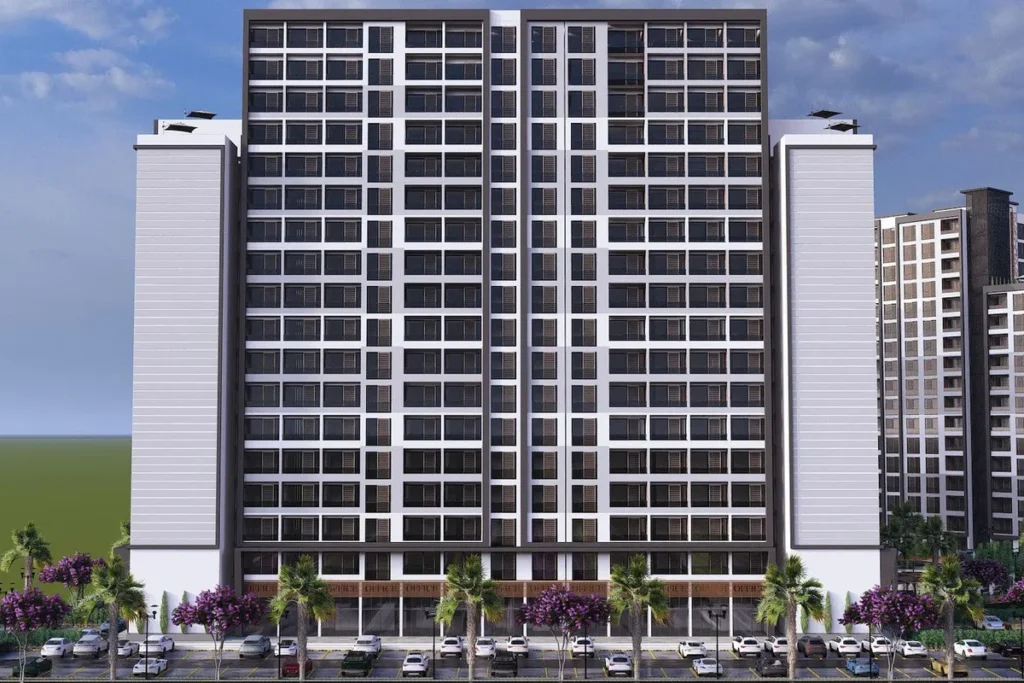

 Bogazfrom 42м²
 Kyreniafrom 321м²
 Gaziverenfrom 28м²
When Each Payment Is Due
Understanding when each payment falls due matters not just for knowing the total amount, but for managing cash flow. Different costs arise at very different points across a North Cyprus property transaction — and in a new-build purchase, the window from contract to title transfer can span several years. For foreign buyers in particular, the Permission to Purchase stage introduces a legally significant payment deadline that is often misunderstood.
- Before or at contract signing: Stamp duty is typically required at or shortly after the contract is signed and registered. Budget for this from day one, and confirm the current rate before signing.
- Contract registration: Registering your contract at the Land Registry records your interest in the property. For foreign buyers, this stage also triggers the registration-stage portion of the title deed transfer charge — under the current framework for a first acquisition by a non-Turkish foreign national, this is 6% of the applicable value, not a deferred payment.
- During the build (new build): VAT on a new-build purchase may be incorporated into developer stage payments. Check whether VAT is included in the headline price or added on top of each instalment.
- Permission to Purchase application and publication: Foreign buyers must apply to the TRNC Council of Ministers for PTP before title can transfer. This is an administrative process with associated legal costs. Critically: once the PTP is published, the applicable outstanding taxes and fees relating to the transaction must be settled within 75 working days. Under the currently applicable framework, failure to settle the required taxes and fees also affects utility connections: permanent or temporary water and electricity connections generally cannot be made until the required amounts have been paid, subject to the applicable exceptions. For the buyer, this includes the outstanding portion of the title-transfer fee. Failure to meet the statutory deadline can result in the Permission to Purchase becoming invalid. This is not a soft deadline — plan your finances so all outstanding balances are ready to be paid as soon as PTP is received.
- Final title transfer: The remaining portion of the title deed transfer charge (3% for a first acquisition in the standard foreign-buyer framework) falls due within the 75-working-day window after PTP publication. The deadline for completing the actual deed transfer is separate: under the current framework it is generally one year from publication of the Permission to Purchase, subject to the specific rule applying where contractual purchase-price instalments remain outstanding.
- After becoming owner: Annual immovable property tax becomes your responsibility once title is held. Any municipality-related levies also fall to the owner.
For buyers managing this process from overseas, the “How to buy property in North Cyprus remotely” guide covers power of attorney arrangements and the mechanics of remote purchase, which affect how and when each payment is authorised.

Annual Property Tax and Ownership Costs
A) Annual Immovable Property Tax
Owners of property in North Cyprus are subject to an annual immovable property tax (in Turkish: taşınmaz mal vergisi). This is assessed under the statutory valuation and rate tables applicable to the property, as published under the Immovable Property Tax Law through the TRNC Revenue and Tax Department.
The assessment is not a simple flat percentage of the purchase price. The calculation may take account of factors such as floor area, property category, age and certain property features — the statutory tables set out the applicable rates and adjustments, which vary by these characteristics rather than by sale price alone. The levy is expressed in Turkish Lira, meaning the GBP equivalent changes continuously with the exchange rate.
The actual annual amount for any specific property should be confirmed against its characteristics and the current statutory tables — not estimated from a generic figure in an agency article. What can be said is that for many residential properties the annual tax figure is relatively modest compared with the much larger one-off acquisition charges, but the amount depends on the statutory assessment applicable to the particular property.
A low annual property tax does not mean a low total cost of ownership.
B) Non-Tax Recurring Ownership Costs
Annual property tax is only one element of what it costs to own property in North Cyprus each year. In managed developments — which cover most new-build apartment schemes and many villa complexes — the following costs are also a regular part of ownership:
- Service/maintenance charge: a regular fee covering communal area upkeep, security, cleaning and management. These vary significantly by development and are not set by a government tariff.
- Building insurance: a normal ownership cost and one that may also be required by a lender, management arrangement or contract. Buyers should confirm whether any specific insurance obligation applies to the property and what coverage is required.
- Pool and garden maintenance: often included within the service charge on managed developments, but confirm exactly what is and is not covered.
- Utilities: electricity (KIBTEK), water and internet each carry standing charges and consumption costs. Initial connection deposits may apply on a new property. Whether deposits are refundable depends on the provider’s current terms and conditions.
- Property management: owners who do not live locally may choose to appoint a management agent for maintenance coordination, key-holding or rental administration. This is a practical choice rather than a universal legal requirement.
- Rental income: if you let the property, rental income is subject to TRNC tax. The applicable rate and declaration process depend on your individual circumstances and should be confirmed with a local tax adviser — this article does not quote a universal rental income tax rate.
What to ask before buying in a managed development:
- What is the current annual service charge, and what exactly does it cover?
- Is there a reserve or sinking fund for major works, and what is its current balance?
- Are utility standing charges billed within the service charge or separately?
- Are there outstanding communal debts attached to the property or development?
- Can the service charge be increased unilaterally by the management company, or is the mechanism defined in the purchase contract?
- Who manages the development, and what is the term of the management contract?
These questions are practical and specific. The answers can materially affect whether a property at a given purchase price is genuinely affordable to hold year-to-year.
New Build vs Resale: Tax Differences
The tax and cost structure of a new-build purchase differs from a resale in several meaningful ways, and understanding these differences helps avoid two opposite errors: assuming a new build is always more expensive, or assuming a resale is always simpler and cheaper.
VAT is the most significant variable. A new-build purchased directly from a developer as a first commercial supply typically triggers VAT. A private resale by an individual who is not VAT-registered usually does not. But this is not a universal rule. The seller’s VAT status and the nature of the transaction determine the outcome — not the age of the property. A resale by a developer holding excess stock, or an assignment of an off-plan contract, may carry VAT implications that require legal confirmation before exchange.
Title deed availability differs between the two routes. With a resale that already carries a registered title, an existing individual title deed can remove one source of uncertainty, although the transfer timeline still depends on the legal status of the property, PTP requirements and the circumstances of the transaction. With a new build, the title deed may not be issued until construction is complete and the developer obtains the relevant completion certificates — sometimes years after the original contract. During that period, your contract is registered and your interest is protected under the TRNC registration system, though this does not eliminate separate title-related risks that an independent legal review of the specific property should address. This structure also affects when each portion of the transfer charge falls due.
Infrastructure and utility costs tend to be more visible in new-build purchases. Developer contracts frequently include a transformer contribution, utility connection fees and other infrastructure charges. These are not taxes, but they are real costs with real amounts. A resale in an established development will typically already have these connections in place. Confirm with the developer’s contract schedule what is included and what is additional.
Stage payment VAT: in a new-build transaction with stage payments, VAT may be incorporated into each payment tranche as specified in the developer’s schedule, meaning you are effectively paying VAT progressively over the build period rather than in a single lump at completion. Ask your solicitor to confirm the mechanics of this before you sign.
Historical tax position: on a resale, confirm before exchange that all previous annual property taxes and any outstanding liabilities have been settled by the seller. These obligations do not automatically disappear on change of ownership.
The practical conclusion is that a resale sometimes offers a more predictable cost structure — but it is not automatically cheaper, VAT-free, or free of complexity. Both routes require proper legal due diligence on the tax and cost position before you sign.
Costs That Are Not Property Taxes
A consistent weakness in many competitor guides is the conflation of taxes with other purchase costs. The following items genuinely affect the cash you need to complete a North Cyprus property purchase — but none of them is a property tax, and they should not appear in a “tax total”.
- Independent legal fees: your solicitor charges for contract review, due diligence, Land Registry searches and managing the transfer process. The cost depends on transaction complexity and property value. Non-negotiable as a purchase cost, but a professional service fee, not a tax.
- Notary, certification and translation costs: certain documents require official translation and notarisation, particularly for foreign buyers preparing the Permission to Purchase application.
- Permission to Purchase administration: the PTP application involves a government fee and associated legal and administrative costs. It is a required step for foreign buyers, not a tax on the property itself.
- Utility deposits and connection charges: electricity, water and internet connections require deposits and, on new-build properties, initial connection fees. Whether deposits are refundable is subject to each provider’s current terms.
- Transformer/infrastructure contribution: many new-build developers charge a fee covering the cost of bringing electricity and other infrastructure to the development. This can range significantly depending on the project.
- Snagging and survey: a professional inspection of the property before handover or purchase. Not legally required but commonly advisable on both new builds and resales, and a real budget item.
- Building and contents insurance: a standard ownership cost from the point you have an insurable interest, and potentially required by a lender, management company or developer contract.
- Furnishing and fitout: particularly relevant to new builds, which are often sold in shell-complete condition. Developer “furnished” packages carry additional costs.
- Development service charge at handover: the first period’s service charge on a managed development may be payable at or shortly after completion.
Each item on this list affects your total cash requirement. None should be labelled a tax or folded into a statutory tax calculation.
How to Budget Before You Sign
The gap between the advertised listing price and the cash you actually need at each stage of a North Cyprus property purchase is consistently wider than buyers anticipate. The checklist below helps close that gap before you commit any material funds.
- Request a written, itemised cost breakdown for this specific property. Ask your solicitor and the selling agent to separate stamp duty, VAT, the transfer charge (including which portion falls at registration and which at final transfer), legal fees, PTP costs and any developer infrastructure charges. A bundled total is not adequate for planning.
- Identify the seller type. Is this a private individual, a VAT-registered developer, or a company selling from stock? The answer affects VAT treatment and seller-side withholding obligations.
- Confirm whether VAT has been settled on the property’s history. For resales and assignments of contracts, this is a specific factual question for your solicitor.
- Confirm the Land Registry and title situation. Does a registered title deed exist? If not, what is the expected timeline, and how does the transfer charge split apply between now and then?
- Map the transfer charge across both stages. Know how much is due at contract registration and how much remains after PTP — and budget to pay all applicable outstanding taxes and fees within 75 working days of PTP publication.
- Confirm which costs are included in the advertised price. Some developers quote a price that includes VAT; others quote exclusive of VAT. Ensure you are comparing like-for-like when assessing different properties.
- Check service charge and infrastructure fees for managed developments before signing. These are recurring ownership costs that begin from handover and belong in your annual budget from day one.
- Keep a cash contingency for variable administrative charges, exchange-rate movements on TRY-denominated items, and costs that cannot be fixed before the transaction-specific schedule is prepared. Base the amount on your solicitor’s itemised estimate, not a generic percentage.
- Get current, transaction-specific confirmation from an independent qualified solicitor with TRNC property experience before transferring significant funds. Online guides — including this one — are for orientation. Your legal adviser’s written assessment of your specific transaction is the document you make decisions from.
Not sure which properties fit your budget after taxes and purchase costs? Use the Cypria Homes property matcher to narrow down suitable options before comparing individual developments.
Common Tax Mistakes Buyers Make
1. Budgeting only to the asking price The listed price is the starting point, not the total cost. Stamp duty, the transfer charge and VAT where applicable can add materially to the figure. Buyers who discover this after signing are in a difficult position. Fix: Ask for a written itemised cost schedule before making a reservation payment.
2. Treating every resale as automatically VAT-free Private resales by non-VAT-registered individuals are typically outside the VAT scope. Applying the same assumption to a developer resale or an assignment of contract can produce an expensive surprise. Fix: Confirm the seller’s VAT registration status and the property’s transaction history in writing before exchange.
3. Using an outdated transfer charge article The title deed transfer charge framework changed significantly in May 2025, and any article predating that change may quote rates that no longer apply. Even within the current 9% framework, the split between registration-stage and transfer-stage payments matters for cash-flow planning. Fix: Use only post-May 2025 sources for rate guidance, and confirm the current applicable rate and split with your solicitor.
4. Assuming the transfer charge falls entirely at the final deed transfer Under the current framework for a first acquisition by a non-Turkish foreign national, 6% of the transfer charge is payable at the contract registration stage — not at completion. Additionally, once PTP is published, all applicable outstanding taxes and fees must be settled within 75 working days or the permission may be cancelled. Fix: Treat the transfer charge as a two-stage payment obligation with a hard deadline after PTP, not a single closing cost.
5. Confusing seller withholding with buyer costs The seller’s withholding obligation (VD89) is the seller’s liability by statute. Including it in your buyer cost calculation may overstate your actual cash requirement — or suggest you should pay for something the seller is legally required to settle. Fix: Ask your solicitor to separate your statutory buyer obligations from the seller’s statutory obligations when reviewing the transaction.
6. Assuming annual property tax equals total cost of ownership Annual immovable property tax in North Cyprus is assessed on the statutory tables and may be relatively modest. Using it as a proxy for total annual holding costs ignores service charges, insurance, management fees and utility standing charges, which together can significantly exceed the property tax figure. Fix: Request a full annual cost schedule from the development management before purchase.
7. Ignoring the Land Registry valuation as the tax base The title deed transfer charge is calculated on the Land Registry assessed value, which may differ from the sale price. On properties where the assessed value is higher than the agreed price, this can produce a larger transfer charge than a simple percentage of the purchase price suggests. Fix: Ask your solicitor to obtain or estimate the current Land Registry valuation before modelling your transfer charge.
North Cyprus Property Tax Terms
| Term | Meaning |
|---|---|
| KDV | Turkish abbreviation for VAT (Katma Değer Vergisi) |
| Koçan / Kocan | Common local term for title deed |
| PTP | Permission to Purchase required for foreign buyers before title transfer |
| Tapu / Land Registry | Office responsible for land and title registration |
| Epsima | Informal market term commonly used for the property/title transfer charge |
| VD89 | Tax declaration associated with seller-side withholding on an immovable-property transfer |
Know Your Budget? Find Matching Properties
Tell us whether you are looking for a new build or resale, your preferred area and your total budget. We’ll narrow down the options before you start comparing individual developments.
[Find my North Cyprus property →]
Plan for the Full Purchase Cost
The most practical step a buyer can take before signing any agreement in North Cyprus is to separate three distinct categories: the purchase price, the statutory taxes and duties, and the non-tax purchase costs. Treating all of these as one undifferentiated sum — or relying on a percentage figure from a generic online guide — creates both financial risk and negotiating blind spots.
Verify the VAT position before exchange, not after. The treatment depends on the seller’s status, the property’s transaction history and its category under current TRNC regulations. It is a question with a specific answer for each property, not a universal rule.
Understand the transfer charge as a two-stage obligation. Under the current framework, a meaningful portion falls due at contract registration rather than at final deed transfer. And once Permission to Purchase is published, the outstanding balance must be settled within 75 working days — a deadline with real consequences if missed.
Confirm the stamp duty rate against the current tariff order. The August 2026 amendment means a pre-amendment figure should not be carried forward without verification.
Account for annual ownership expenses separately from the purchase transaction. Annual property tax is assessed on statutory tables and is one part of the picture; service charges, insurance, utilities and management costs are the others.
Obtain independent legal advice on the title position of the specific property, not only on the tax calculations. Registration under the TRNC system is an important protection, but it is not a substitute for a full title review — including any questions relating to the property’s pre-1974 history.
Request a transaction-specific calculation — not a percentage estimate — before transferring significant funds. The Land Registry assessed value, the applicable transfer charge rate and split for your profile, and the VAT treatment of the specific property are all knowable facts. Your solicitor should be able to produce them in writing.
Cypria Homes helps buyers build a property-specific cost picture across both new-build and resale options in North Cyprus — so that by the time you are comparing developments, you understand what each one actually costs to buy and hold, not just the headline listing price.
 Real estate in Georgia
 Real estate in Montenegro
 Real estate in the UAE
 Real estate in Bali
 Real estate in Thailand
 Real estate in Spain
 Real estate in Saudi Arabia
 Real estate in Turkey
 Real estate in Zanzibar
 +90 533 888 29 50
 hello@cypria.homes
 Karsıyaka Sokak 8, Girne




 Get catalogue of TOP-7 objects